Balqash NPP awaits site preparation, licenses, personnel and suppliers before construction begins
Construction of the Balkhash NPP has not yet begun: the project is to move to practical implementation in 2027, and a number of preparatory works must be completed before builders arrive on site.
This was reported by the head of Kazakhstan Nuclear Power Plants LLP, Yernat Berdigulov, in an interview with Tengrinews. He did not name an exact start date for construction.
The essence in brief
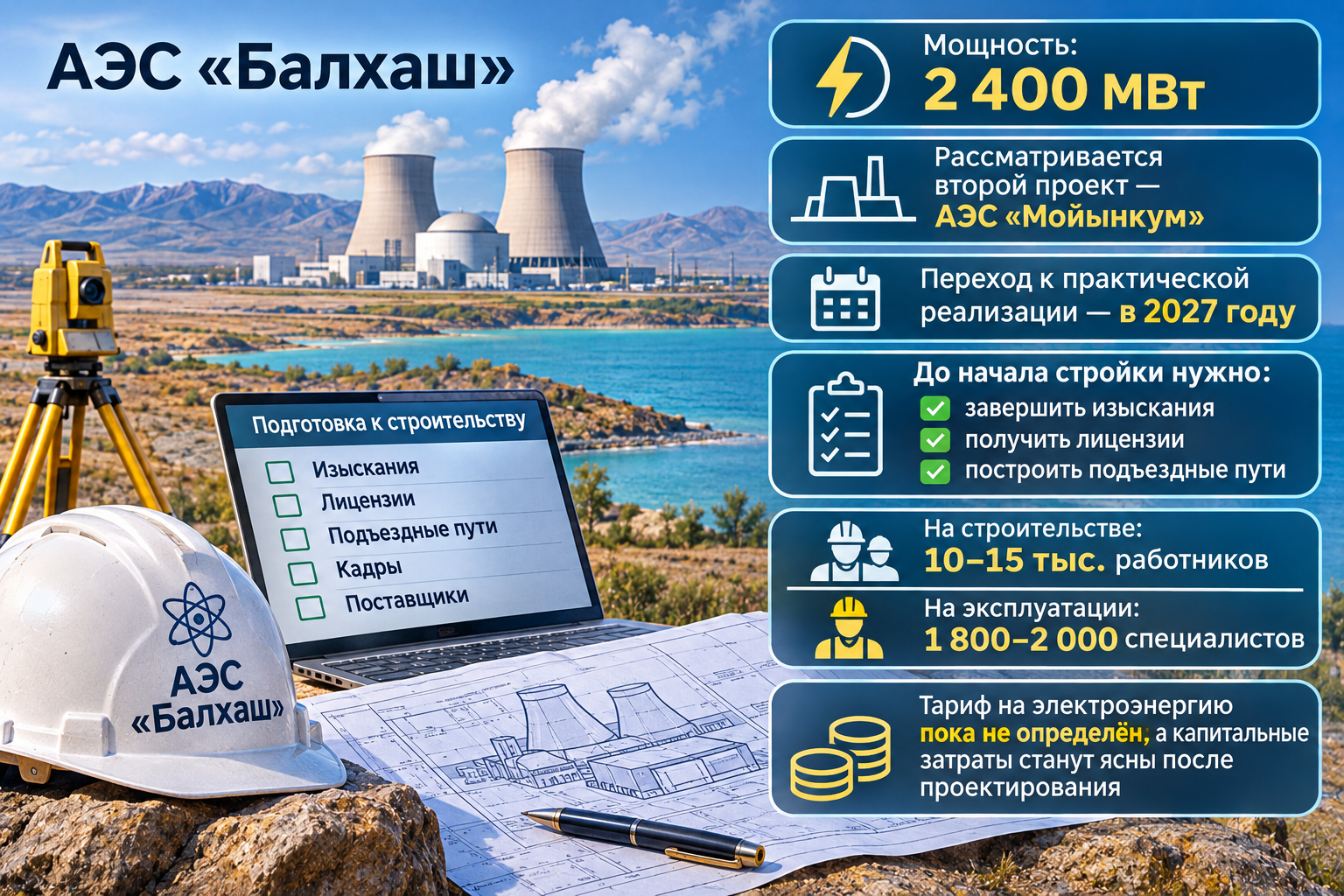
- The capacity of the Balhash NPP is 2,400 MW; a second project, Moyinkum, is being considered nearby.
- Before construction, surveys must be completed, licenses obtained, and access roads built.
- Construction will require 10-15 thousand workers, while operation will require 1,800-2,000 specialists.
- The electricity tariff for the NPP has not yet been determined, and capital costs will become clear after design.
What needs to be done before construction
First, engineering surveys must be completed and a site safety justification report prepared. Then it is necessary to obtain permitting documentation and licenses for the station siting: the operator is working on these with the Committee for Atomic Supervision and Control. In parallel, road and railway access routes will be built and the site will be provided with water, electricity, communications, and utility networks. In addition, a register of domestic suppliers must be formed and an assessment made of what Kazakh industry can contribute.
The IAEA is also assessing the country's readiness for its first NPP: in October, agency experts reviewed Kazakhstan's report in Astana.
Will there be enough water
KAES acknowledges that the resources of Lake Balkhash are limited. According to the operator's estimate, irreversible water losses for the project are comparable to approximately 0.3% of the lake's annual natural evaporation. For comparison, Berdigulov cited the Belarusian NPP, where such losses amount to about 63 million m³ per year. Both projects are considering dry cooling towers, that is, air cooling, which greatly reduces water consumption.
IAEA recommendations allow two stations to be located near each other, but this requires an assessment of their cumulative environmental impact.
How much electricity will cost
The final tariff has not yet been determined, and it is "premature" to talk about it, the head of KAES noted. Capital costs will become clear after surveys, design, and estimate documentation, and he did not name the total construction sum. Operating costs include fuel, salaries, and maintenance, and the cost of fuel depends not only on the price of uranium but also on conversion, enrichment, and fuel fabrication.
As an example, the operator cited Turkey's Akkuyu NPP: for part of the output of two units, a price of 12.35 cents per kWh has been fixed, while the system tariff is about 9.34 cents. According to KAES calculations, if the stations produce about 10% of the country's total electricity, their share in the final tariff will be approximately 6%.
Who will build and operate it
Construction will require from 10 to 15 thousand workers, mainly specialists who already work in the country: builders, installers, and engineers. Operation will require 1,800-2,000 people, of whom about 400 will be support and auxiliary personnel.
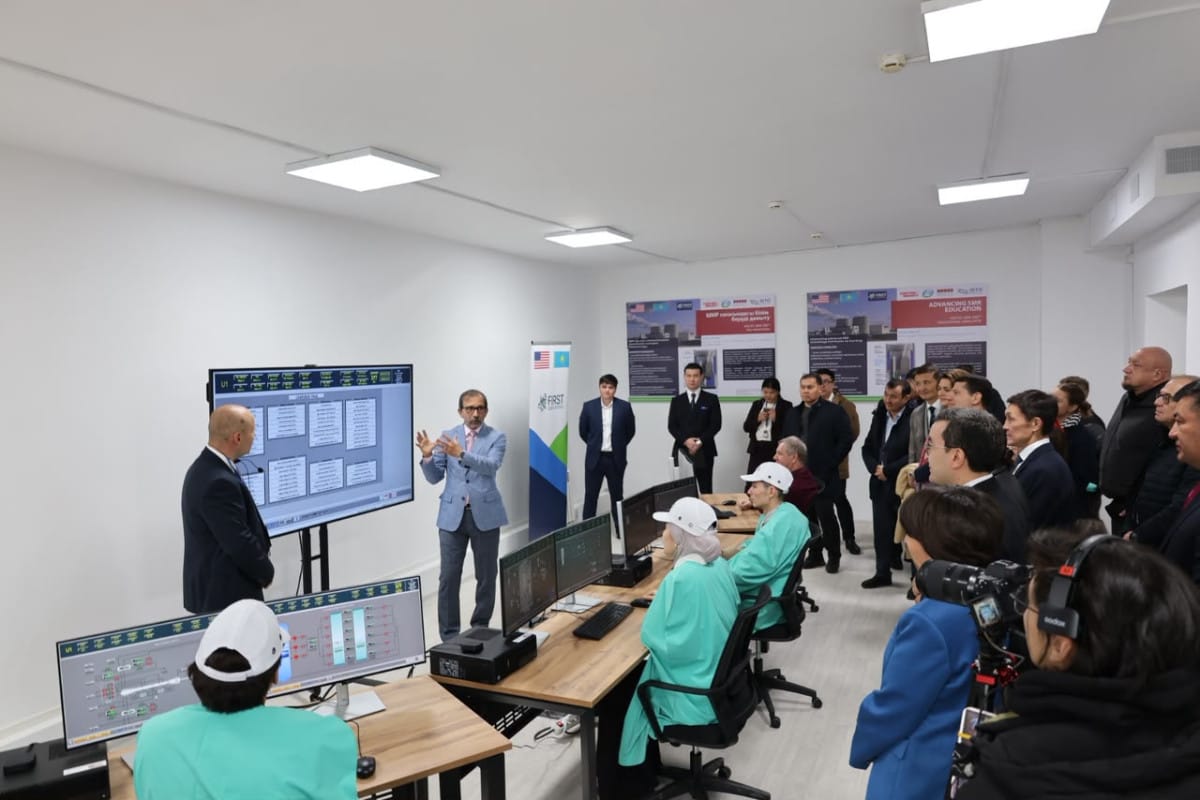
Training will be divided into three stages: basic education at more than ten specialized universities and research organizations, specialized training in Kazakhstan and abroad, and then practical training at operating NPPs, in training centers, and on simulators. This year, 20 grants were allocated under the Bolashak program, and within the project they plan to create their own training center. Practical training for nuclear specialists is already being developed elsewhere as well: at the Institute of Nuclear Physics in Almaty, a simulator for a small modular reactor has appeared to train specialists.
Where the fuel will come from
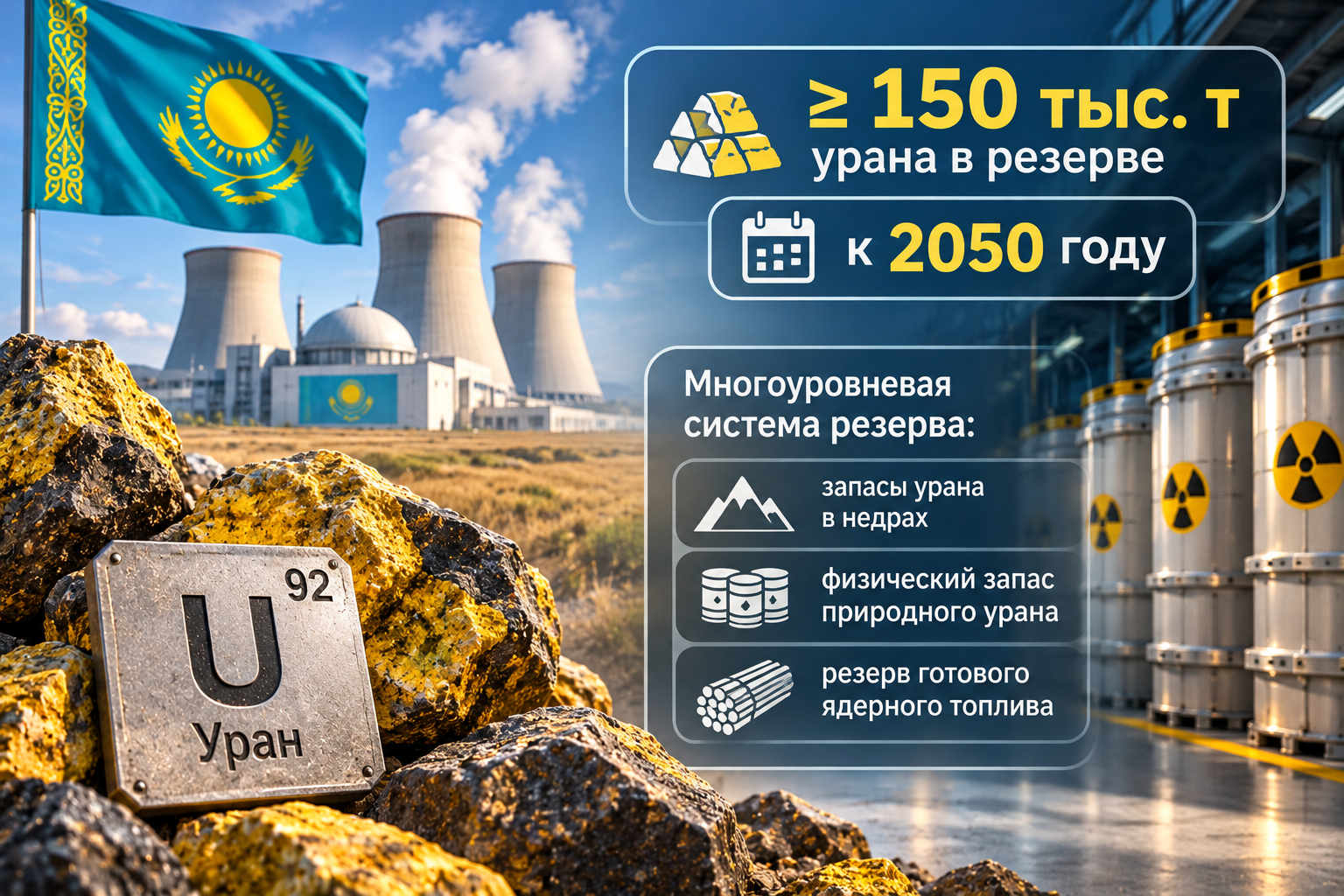
The country is also preparing a fuel reserve for future stations: the chairman of the Atomic Energy Agency, Almassadam Satkaliyev, said at a meeting of the Kurultai committee that by 2050 Kazakhstan will reserve at least 150 thousand tonnes of uranium. President Tokayev said that construction of the Balhash NPP could begin next year. The mechanisms, operator, cost, and storage of the reserve have not yet been determined.
Author's conclusion
For now, the operator names only the list of preparatory work and the timeframe within which the project should move to practical implementation, that is, 2027. The main figures for the reader, the tariff and construction cost, are being deferred until surveys and estimates are completed. From what is already known, there remain the capacity of 2,400 MW, the need for 10-15 thousand builders, and KAES's calculation that the NPP share in the tariff will be about 6%. Only the estimate will show the real price of electricity.
Comments ()