Artificial glaciers for irrigation in mountain villages receive unified guidelines in Kyrgyzstan
Kyrgyzstan has approved a policy document on creating artificial glaciers and a "glacier-reservoir-farmer" system with drip irrigation.
On November 5, the document was discussed in Bishkek at the final seminar on the results of pilot projects. This is stated on the website of the Association of Forest and Land Users of Kyrgyzstan.
The essence in brief
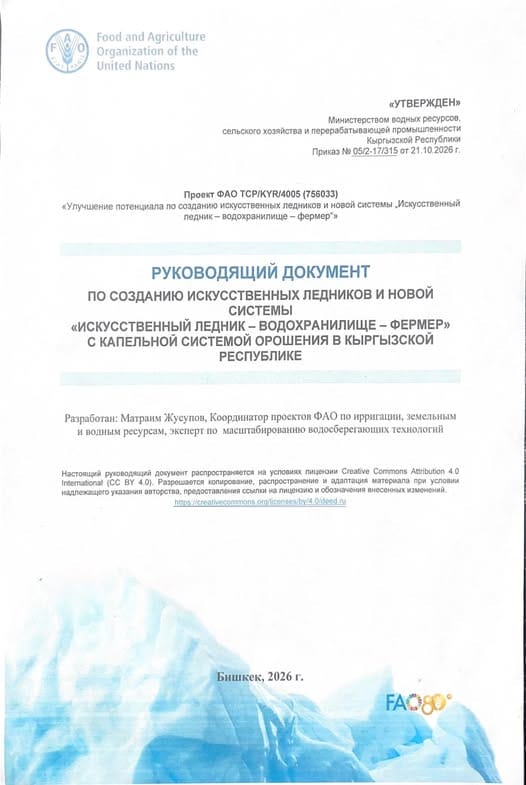
- The Ministry of Water Resources, Agriculture and Processing Industry of Kyrgyzstan approved the guidelines by order dated October 21, 2026, according to the document's title page.
- The final seminar on its validation was held on November 5, 2026 in Bishkek with the participation of FAO.
- According to FAO estimates, one artificial glacier can provide irrigation for 300-500 ha; there are already more than 30 of them in the country.
- The system connects a glacier, a small reservoir and drip irrigation so that meltwater is not lost on the way to the fields.
What was approved and who developed the document
The guidance document is titled "Guidelines for the Creation of Artificial Glaciers and a New System 'Artificial Glacier - Reservoir - Farmer' with a Drip Irrigation System in the Kyrgyz Republic." It was prepared within the framework of the Food and Agriculture Organization of the United Nations (FAO) project TCP/KYR/4005 and approved by ministry order No. 05/2-17/315 dated October 21, 2026. It was developed by the FAO project coordinator for irrigation, land and water resources Matraim Zhusupov.
What was discussed at the seminar on November 5
The final seminar was conducted by the Association of Forest and Land Users of Kyrgyzstan (AFLUK, KAFLU) and FAO. Participants were presented with the structure and main recommendations of the document, technical solutions, the integrated water supply system and the experience of creating glaciers and drip irrigation in pilot areas. Environmental, technical and organizational issues were discussed, and then final recommendations and next steps were agreed upon. The meeting was attended by representatives of government agencies, research institutions and experts; no names are given in the report.
How an artificial glacier works
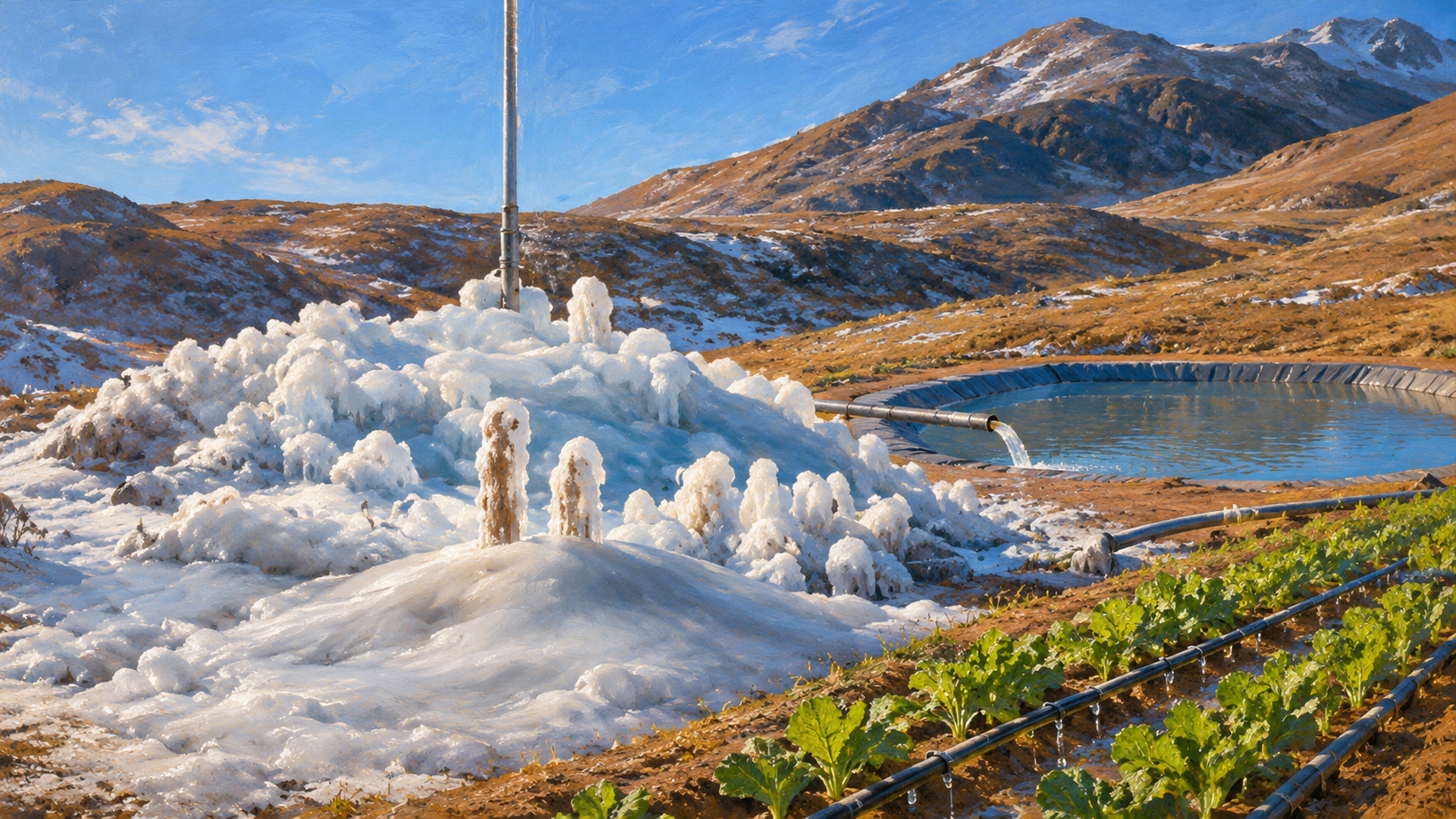
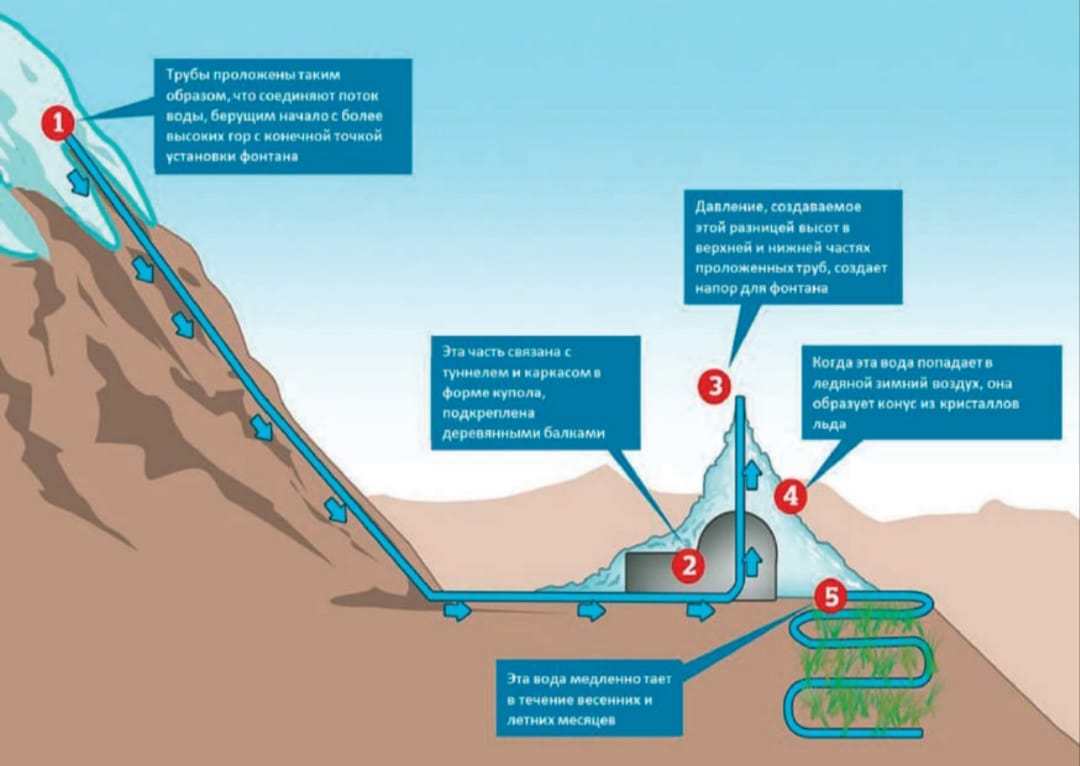
According to the description by FAO, water is taken from a mountain spring and supplied through a pipeline to the glacier site. At the end of the pipe, a vertical pipe 10-15 m high is installed; the elevation difference sprays the water into the air, and in winter it freezes, forming an ice cone. In summer, the meltwater is used for irrigation and livestock watering. In the new system, water first flows into small reservoirs with an anti-seepage lining, and from there through a pipeline to fields with drip or other modern irrigation.
What has already been done in practice
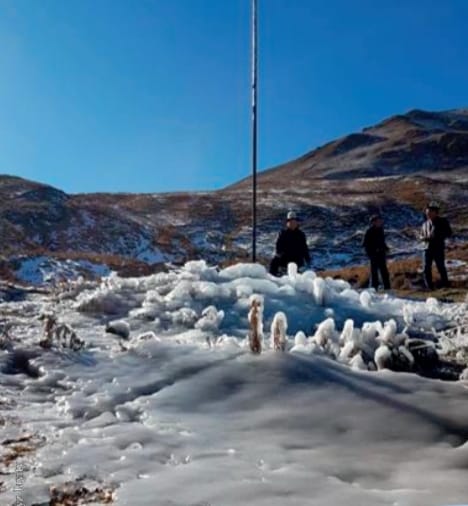
According to FAO data, more than 30 artificial glaciers have been built in Kyrgyzstan; one of them provides irrigation for 300 to 500 ha. In October 2026, according to the KAFLU feed, a glacier was being created in the village of Sumbula in Batken region within the framework of the "Artificial Glacier - Reservoir - Farmer" project, which KAFLU is implementing with FAO support.
What remains unknown
The KAFLU report does not contain quantitative data on the pilot projects: the number of areas, volumes of accumulated ice and water, area of irrigated land and cost. It also does not state how the guidelines will be applied in the regions and who will finance new glaciers.
What is happening with glaciers in Kyrgyzstan and the world
President of Kyrgyzstan Sadyr Japarov signed decree No. 313 dated September 4, 2026 on the creation of a fund to protect glaciers and Issyk-Kul: it is to attract grants and investments for projects to slow the rate of melting and introduce water-saving technologies.
In the highlands of Pakistan, residents are reviving the "glacier wedding": they move ice into high-mountain caves to grow a new glacier as a water source. Total ice losses have been measured by satellites: Greenland and Antarctica lost about 12.5 trillion tonnes over almost half a century of observations. In the Alps, due to melting ice, popular routes on Mont Blanc and the Matterhorn have been closed, and the Slovenian Triglav glacier has split into two parts with a total area of less than 0.2 ha.
What is happening with water and irrigation in Kazakhstan
According to UN data, the pressure on Kazakhstan's water resources is 34.6%, and the country is officially located in a zone of water deficit: agriculture consumes 65% of water, and about half of it comes from transboundary rivers. The Ministry of Water Resources and Irrigation plans to commission 962 km of reconstructed irrigation canals by the end of 2026, which will improve water supply to almost 200 thousand ha; in some systems, water losses during transportation reach 40-60%. And at the regional level, the World Bank has allocated $20 million for a program on transboundary water management in Central Asia: Kazakhstan and Kyrgyzstan are named among the countries whose water use is interconnected.
Author's conclusion
The approval of the guidelines by ministry order means that artificial glaciers in Kyrgyzstan are turning from a set of pilots into a standard solution with a single instruction for villages and farmers. To reduce water losses on the way to the fields, the document includes a small reservoir and drip irrigation. The indicator by which the return will be visible is the area of fields converted to drip irrigation from glacier water.
Comments ()