At Paks NPP power was reduced again — this time unrelated to the Danube
After a summer of problems caused by low water levels in the country's main river, Hungary's nuclear plant has hit a new failure.
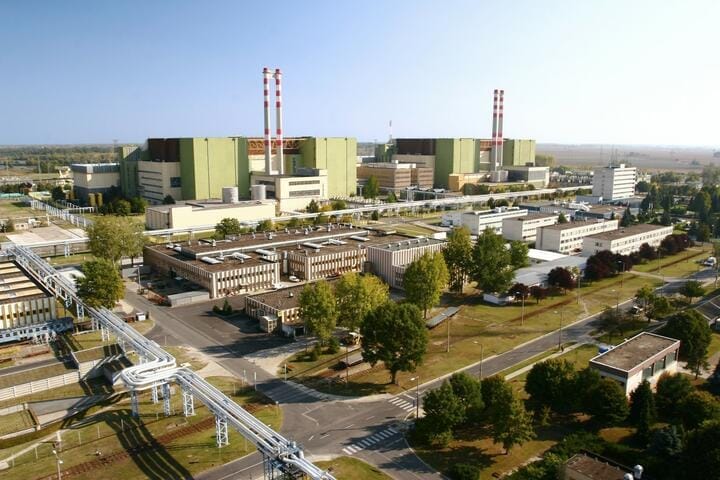
This time the cause turned out to be completely different, News.am writes.
The gist in brief
- From 7:35 on September 20, the capacity of the second power unit at Hungary's Paks NPP was reduced by 150 MW due to a malfunction of mechanical equipment — the plant's specialists are working to fix the breakdown.
- The plant operator separately emphasized: the current capacity reduction is not related to the Danube's water level — for the first time in several months, a problem at the plant arose for a reason unrelated to the river's low water levels.
- This summer, the plant had already faced serious restrictions precisely because of the record-low Danube level: at the end of July, the third power unit had to be fully shut down, and the second unit's capacity halved.
- In August, the authorities began constructing a bottom sill near Paks to raise the water level at the cooling channel by about one meter — and, according to Prime Minister Péter Magyar, it is precisely this measure that now allows the plant to continue operating without interruption.
A new problem, an old context
The fact that the plant operator felt it necessary to specifically clarify that the current breakdown is unrelated to the Danube's level is telling in itself — after months when virtually any news about Paks one way or another came down to the river, readers and journalists probably automatically assume a water-related cause for any failure. This time it is a mechanical equipment malfunction — a more routine problem for a nuclear power plant, one that can occur regardless of external climatic factors.
How the low-water crisis was tackled in summer
The summer crisis was far more serious than the current incident. The record-low Danube level forced a complete shutdown of the third power unit at the end of July and a halving of the second unit's capacity, and the plant directly warned that further drops in the river's level could require shutting down the entire NPP. In response, the authorities began constructing a bottom sill — a stone structure designed to locally raise the water level at the cooling channel by about one meter — and as a temporary backup, prepared two 80-meter barges that could be scuttled if necessary to briefly raise the river level by about another 20 centimeters. After the sill's completion and a general rise in water levels in August, the plant began gradually returning the shut-down units to operation.
Part of an already familiar story
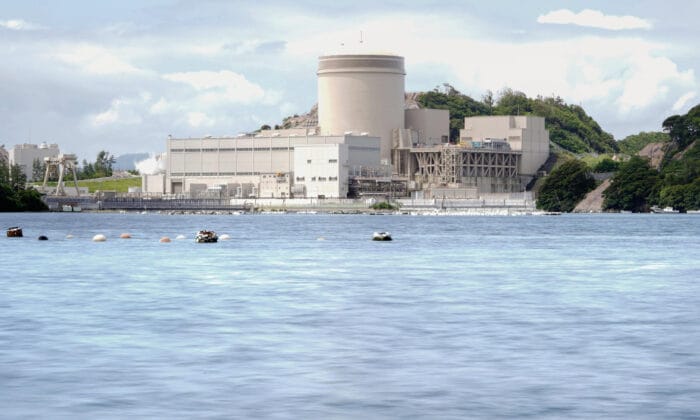
We have already written that this summer, the Paks NPP found itself under threat of a complete shutdown for the first time in 44 years due to the Danube's low water levels — against the backdrop of similar problems on several European rivers at once. In parallel, we noted that the Hungarian government decided to double funding for the new Paks-2 units under construction precisely at the moment when the existing plant was demonstrating the limits of its water resilience — on the assumption that the new reactors would require even more cooling water than the old ones that had already proven vulnerable. We observed a similar pattern in a far more alarming form in the case of Japan's oldest reactor at the Mihama NPP, which was shut down for the second time in four months — there too, after resolving one key problem (in Japan's case, obtaining a special permit to extend its service life), the plant continued to face a series of mechanical failures unrelated to the original cause. The current, far less dramatic incident at Paks is rather a reminder of the same principle: even after solving the water problem, a nuclear power plant remains a complex technical system subject to ordinary mechanical failures regardless of the river level outside.
Author's conclusion
A capacity reduction of 150 MW due to a mechanical malfunction is, by and large, a routine episode in the life of any large power plant, one that under ordinary circumstances would hardly make headlines. But against the backdrop of a dramatic summer season, even such a routine breakdown attracts heightened attention — and forces the plant operator to specifically clarify that this time the Danube is not to blame. For Hungarian nuclear energy, this may turn out to be an unexpectedly good sign: if the most notable news of September was an ordinary mechanical malfunction rather than yet another water crisis, then the bottom sill and the measures taken this summer apparently really are working.
Comments ()