Australia has lost the war against rabbits. Why the country failed to stop the invasion of 200 million animals
Experts estimate Australia now has about 200 million wild rabbits, causing billions in annual damage to agriculture and natural ecosystems.
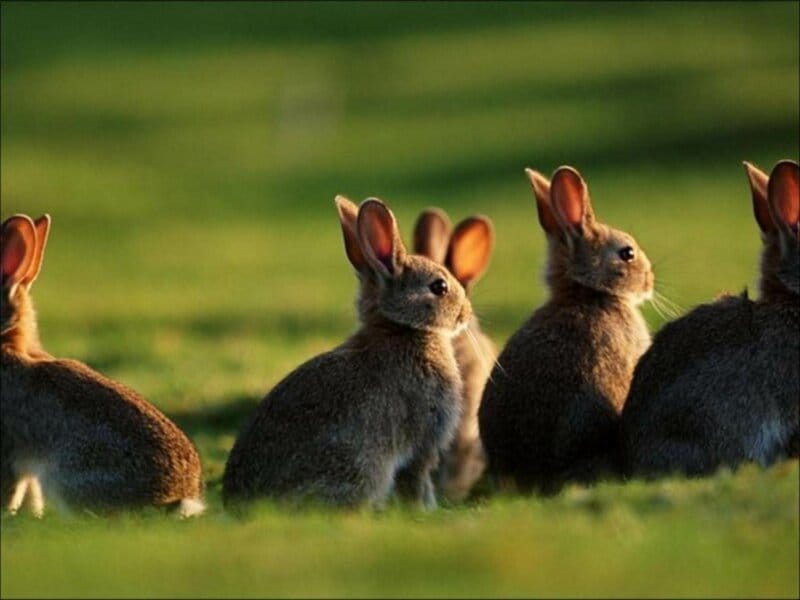
Australia is considered one of the world leaders in combating invasive species. It was here that the famous rabbit-proof fences, stretching thousands of kilometers, were built, and scientists spent decades developing viruses to control pest populations. However, almost a century and a half after the fight began, authorities are forced to admit: they have not been able to completely defeat the rabbits.
The history of the rabbit's spread shows how difficult it is to combat biological threats once they have become established in the environment. For Kazakhstan, this experience is interesting not only as an environmental case study but also as a warning about the consequences of insufficient control over invasive species.
The Gist
· In 1859, only 24 European rabbits were brought to Australia for hunting.
· In less than a century, their population grew to hundreds of millions.
· Despite fences, culling, and viral programs, today there are about 200 million rabbits in the country.
· Annual damage to agriculture is estimated in the hundreds of millions of dollars.
· Unlike rabbits, the problem of wild dingo dogs in Australia has been partially contained thanks to a large-scale barrier control system.
How 24 Rabbits Changed an Entire Continent
The story began in 1859, when English landowner Thomas Austin released 24 European rabbits on his property in the state of Victoria. He wanted to preserve the hunting tradition familiar to the British aristocracy.
The experiment was catastrophically successful.
In Australia, rabbits had virtually no natural enemies, the climate proved favorable, and vast expanses of pasture created ideal conditions for breeding. Within just a few decades, rabbits had spread across most of the continent.
By the beginning of the 20th century, their population numbered in the hundreds of millions.
Why Rabbits Proved More Dangerous Than Drought
The problem was not just the number of animals.
Rabbits destroy young plant shoots, damage crops, accelerate soil erosion, and prevent the regeneration of natural vegetation. In several regions of Australia, they became a key factor in pasture degradation.
The consequences were particularly painful for farmers. Rabbits directly compete with livestock for forage. One large infestation can consume as much vegetation as an entire flock of sheep.
According to Australian experts, annual losses to the agricultural sector and the costs of population control amount to hundreds of millions of dollars.
Fences Thousands of Kilometers Long Did Not Help
Australia has repeatedly made large-scale attempts to stop the pest's spread.
At the beginning of the 20th century, the famous Rabbit-Proof Fence was built — the world's largest anti-rabbit fence, with a total length of over 3,200 kilometers. It was intended to protect the agricultural areas of Western Australia from the animals' advance.
However, rabbits quickly found ways to bypass the barriers.
Some animals got through damaged sections of the fence, while others reached new territories via transport and human economic activity. In the end, even the largest engineering system of its time could not stop the expansion.
Biological Weapons Also Did Not Become the Solution
In the mid-20th century, Australia bet on biological control.
First, the myxomatosis virus was used, which drastically reduced the population. Later, the rabbit hemorrhagic disease virus (RHDV) was introduced.
The initial results were impressive: in some regions, animal numbers dropped by 80–90%.
However, over time, the population began to adapt. Some animals developed resistance to the diseases, and natural selection allowed the fittest individuals to restore numbers.
That is why today, after decades of fighting, Australia again estimates the population at around 200 million individuals.
Why It Worked Out Better with Dingoes
A comparison with another famous Australian problem — wild dingo dogs — is particularly interesting.
Unlike rabbits, dingoes also cause serious damage to livestock farming by attacking sheep and young cattle. However, the scale of the problem has been significantly limited.
The main tool was the famous Dingo Fence — the world's largest fence, about 5,600 kilometers long. It separated intensive sheep farming areas from the predators' habitats.
But the key difference is not the length of the fence.
Dingoes reproduce much slower than rabbits. A female produces offspring once a year, whereas female rabbits can have several litters annually. Furthermore, dingoes require large territories and depend on the food supply.
Simply put, a predator population can be contained with physical barriers and population control. A rabbit population, capable of colonizing vast territories in just a few years, is much harder to manage.
A Lesson for Kazakhstan
At first glance, the story of Australian rabbits seems far removed from Central Asia. However, its main conclusion is universal.
Any invasive species is easier to stop at an early stage than to fight after it has become established in the ecosystem.
Kazakhstan is already facing similar challenges. The spread of locusts, transboundary animal diseases, and the migration of alien fish and plant species show how quickly a local problem can escalate into a national one.
This is especially relevant in the context of climate change. Rising temperatures are expanding the ranges of many species that previously could not survive in certain regions.
Saiga: A Kazakh Example of How Fast a Population Can Grow
For Kazakhstan, the story of Australian rabbits is also interesting from the perspective of managing rapidly growing animal populations. Although the saiga is not an invasive species and belongs to the native fauna of the steppes, the dynamics of its numbers show how difficult it is to control a population after favorable conditions are restored.
Back in the early 2000s, the saiga was on the brink of extinction. However, thanks to a hunting ban, increased protection, and state conservation programs, the animal population began to grow rapidly. According to aerial survey data from 2025, the saiga population in Kazakhstan exceeded 4 million individuals.
Such rapid growth has created new problems for agriculture. In several regions, farmers report damage to crops, competition for pastures, and watering holes. Authorities have been forced to shift from a policy of purely protecting the species to seeking mechanisms for regulating its numbers.
The situation is fundamentally different from the Australian experience: the saiga is part of the natural steppe ecosystem and performs an important ecological function. However, both examples demonstrate the same pattern — when animal numbers reach millions of heads, population management becomes not only an environmental issue but also an economic one.
Furthermore, mass migrations of saiga create additional risks for the spread of transboundary animal diseases. This factor is currently being discussed in the context of the spread of Foot-and-Mouth Disease SAT-1 in Central Asia, as the migration routes of wild ungulates cross vast territories spanning several states.
When Victory Becomes Impossible
The history of Australian rabbits shows an important pattern: after a certain population size is reached, the goal of complete eradication becomes practically unattainable.
The strategy shifts from eliminating the threat to constantly managing it.
That is why modern Australian programs are no longer aimed at the complete eradication of rabbits, but at reducing damage to agriculture and preserving biodiversity.
Author's Conclusion
Australia lost the war against rabbits not because it didn't try to fight. On the contrary, the country used almost the entire arsenal of available methods — from multi-kilometer fences to biological technologies. However, the rabbits' reproduction rate and adaptability proved stronger than most control measures. The contrast with dingoes highlights an important principle: the earlier the fight against a threat begins, the higher the chances of success.
For Kazakhstan, the story of Australian rabbits is not just a tale of a distant environmental problem. It is a reminder that managing animal populations requires a long-term strategy. Today, the republic is discussing regulating the saiga population; tomorrow, it may face new invasive species or transboundary diseases. Australia's experience shows: if a problem gets out of control, solving it becomes many times more expensive and difficult.



Comments ()