ADB to allocate $60 million for climate-resilient livestock farming in Uzbekistan
The Asian Development Bank will provide Uzbekistan a $60 million concessional loan for a sustainable livestock development project.
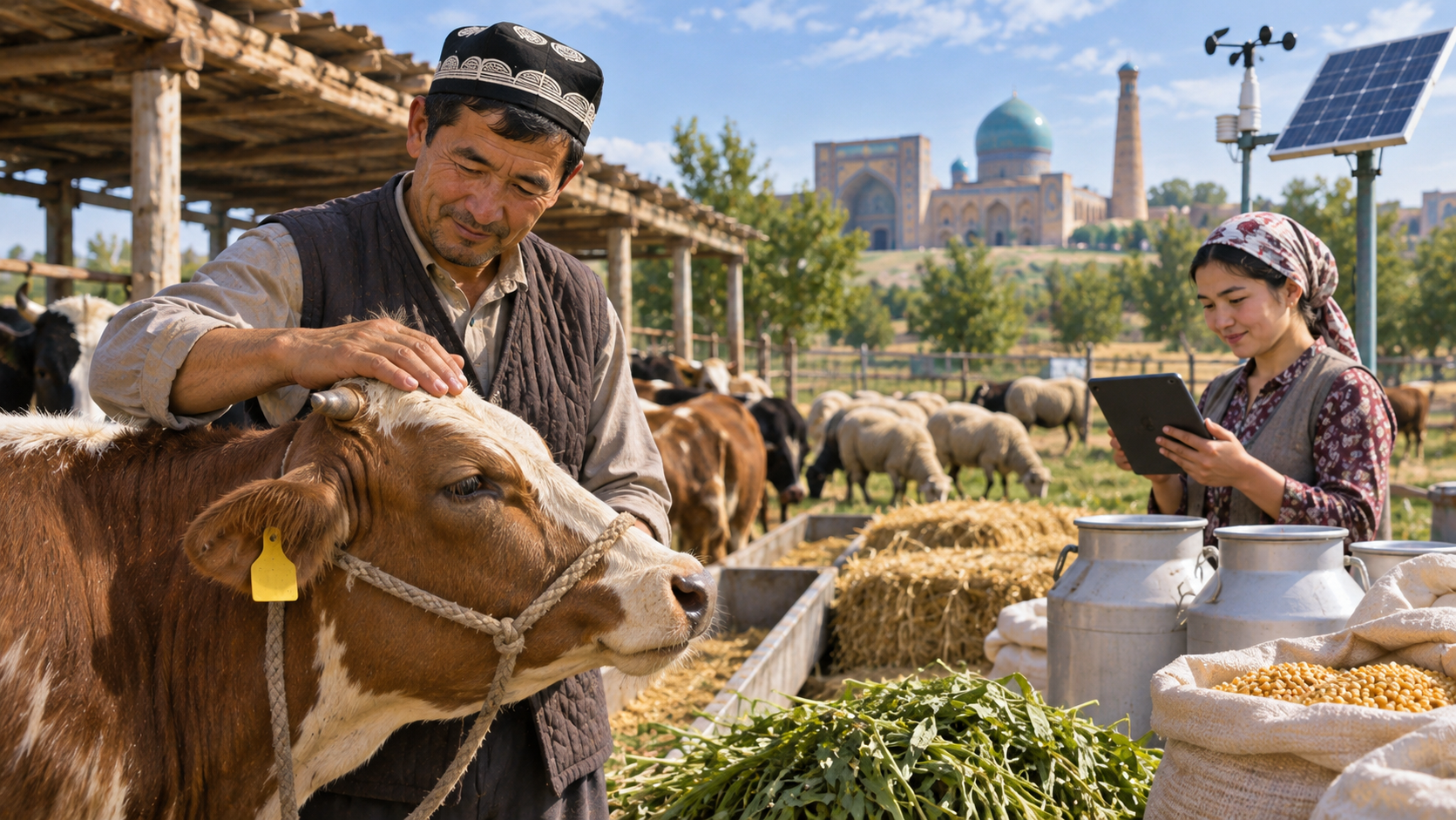
The project will cover about 29,000 small farms in five regions of the country, with another $8 million in grants, UzDaily reports.
The gist in brief
- The $60 million loan will be supplemented by a $5 million grant from the Green Climate Fund and a $3 million grant from the Japan Fund for a Prosperous and Resilient Asia and the Pacific.
- The project will cover about 29,000 small farms in Bukhara, Kashkadarya, Navoiy and Samarkand regions and in Karakalpakstan.
- The money will go to feed, veterinary services, pasture management and digital services for livestock farmers.
- Small farms in Uzbekistan produce about 94% of the country's beef and 95% of its milk.
What the money will go toward
The Sustainable Livestock Development project is intended to raise the sector's productivity and its climate resilience. It provides for improving farmers' access to feed, strengthening veterinary services and more efficient pasture management. To adapt to droughts, heat and water shortages, livestock watering points will be restored and drought- and salt-tolerant fodder crops will be grown. Digital veterinary and advisory services are also envisaged: pasture monitoring using artificial intelligence, a mobile app with recommendations and an early warning system. Part of the program is aimed at supporting women in livestock farming: training, assistance in feed production and expanded entrepreneurship opportunities.
ADB Country Director for Uzbekistan Kanokpan Lao-Araya noted that livestock farming remains an important source of income and food for rural residents, but the sector suffers from droughts, heat and water shortages.
Why the sector needs support
According to ADB data, dehkan farms produce about 94% of beef, 95% of milk and 83% of goat and sheep meat in Uzbekistan, but their productivity is low. The main reason is the shortage of feed, which is exacerbated by desertification, soil salinization and water scarcity. In 2022, the country imported 26,900 t of beef and 22,300 t of dairy products. In 2021, livestock farming accounted for 50% of agriculture's value added, but 67% of its greenhouse gas emissions.
What has already been done and what comes next
ADB has been preparing the project since 2023 through technical assistance worth $800,000, with Uzbekistan's Ministry of Agriculture as the executing agency. On November 10, the bank published tenders for technical training in the veterinary and laboratory fields and for capacity building of leasehold farms, cooperatives and pasture user groups. Applications are accepted until December 9, 2026.
Which figures diverge
On the project page on ADB's website, it is still listed with the status "proposed," and the planned approval date is October 28, 2026. UzDaily writes that the bank will allocate the loan.
What is happening with livestock farming in Central Asia
In all neighboring countries, the sector runs into the same issues: pastures, feed and breeding stock.
In Kazakhstan, environmentalists proposed creating an interagency commission to restore pastures: 26 million ha, almost 20% of all land, have degraded, and without urgent measures the area could grow to 40 million ha by 2030. No decision has yet been made. At the same time, Uzbekistan, which needs 2.15 million t of meat while producing about 1.6 million t itself, in August proposed leasing up to 50,000 ha in Kazakhstan for livestock fattening, but the location and terms have not been agreed. Domestically, Tashkent is stepping up support for the sector: it exempted imports of breeding stock from VAT until January 1, 2029, introduced subsidies of up to 700,000 soum and set a goal of raising the share of breeding cattle to 90% by 2028. With Tajikistan, Kazakhstan is preparing a roadmap for agricultural cooperation for 2027-2028, which will include livestock productivity and veterinary safety, while exports of Kazakh lamb to the republic in 2025 grew 26-fold and beef 2-fold, albeit from a low base. In Kyrgyzstan, the International Fund for Agricultural Development (IFAD) will provide a concessional loan of $21.4 million, with about 69% of the funds going to management of pasture and forest ecosystems, because more than 82% of winter pastures have severely degraded. A parliamentary committee has so far approved ratification of the agreement only in the first reading.
Author's conclusion
The project is betting not on herd growth but on feed and pastures: ADB names the shortage of feed as the main reason for the low productivity of small farms, which supply almost all of the country's beef and milk. This means that the returns from the $60 million loan can only be assessed after several seasons of pasture restoration and the emergence of drought-resistant fodder crops, and for now the project is at the starting line: tenders for training farmers and veterinarians are open until early December.
Comments ()