Can a nuclear power plant explode like an atomic bomb — examining the future reactor near Balkhash
As the Balkhash NPP moves from talks to concrete engineering, a key safety question arises: can a reactor explode like a nuclear bomb?
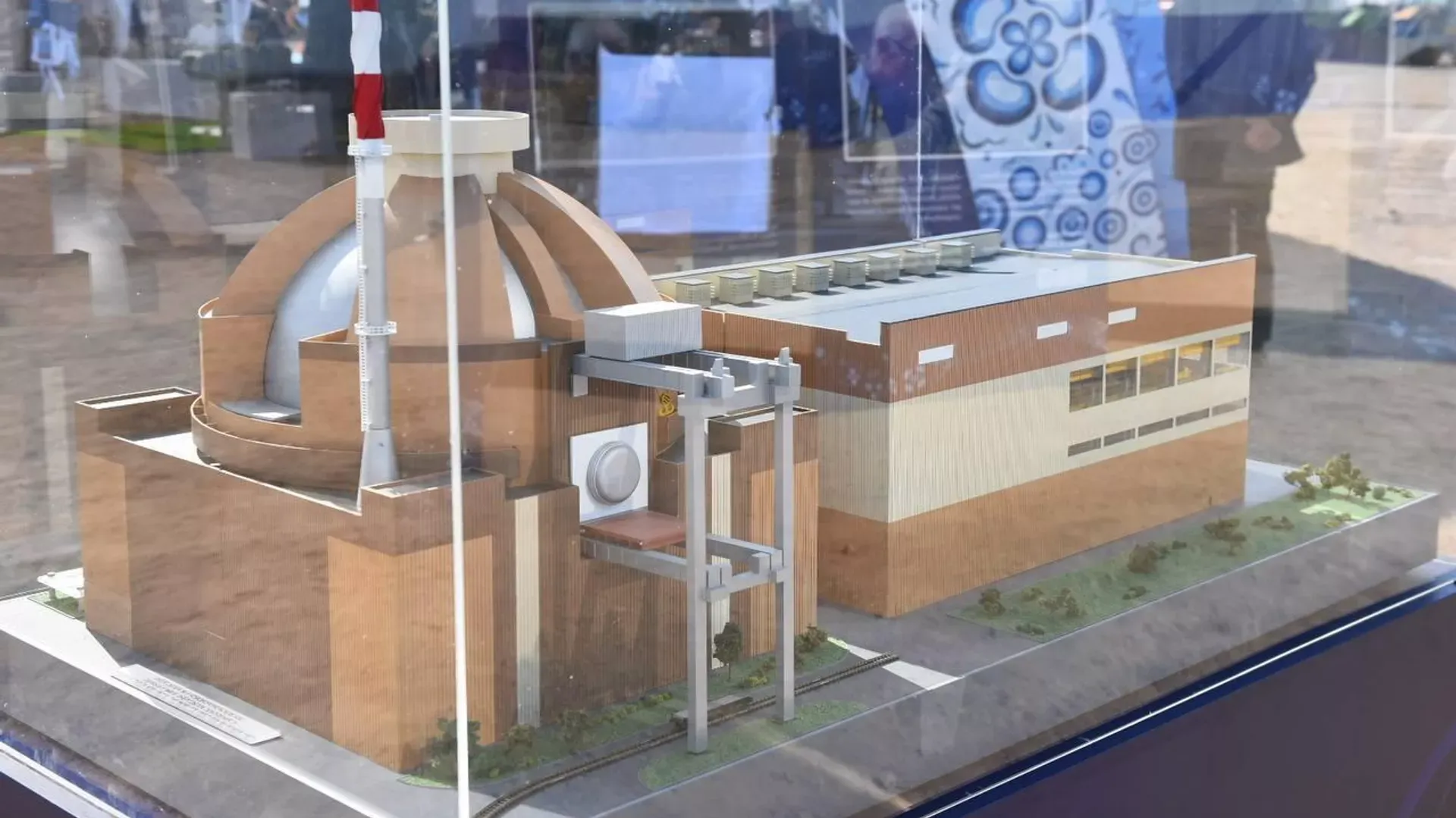
The answer is physically no, and the difference between these two technologies lies in the very nature of how the fission chain reaction works.
The gist of it
- A nuclear reactor physically cannot explode like an atomic bomb: both devices use nuclear fission, but they are fundamentally different in design — a bomb creates an uncontrolled explosion in microseconds, while a reactor sustains a controlled reaction stretched out over time.
- In a bomb, explosives rapidly compress weapons-grade uranium or plutonium to a supercritical mass, while in a reactor the chain reaction is controlled by rods and the fuel is enriched to just 3–5%, making an explosive scenario physically impossible.
- The largest accidents in the history of nuclear power — Chernobyl, Fukushima, Three Mile Island — were core meltdowns with radiation releases, not nuclear explosions, and these are fundamentally different phenomena in terms of mechanics.
- The VVER-1200 reactors planned for the Balkhash NPP are Generation III+ and are equipped with a "core catcher" — a device capable of localizing and cooling molten fuel even with a complete failure of cooling systems.
The physics of a bomb and the physics of a reactor
A nuclear bomb and a nuclear reactor use the same physical phenomenon — the fission of heavy atomic nuclei with the release of energy — but they organize this process in fundamentally different ways. In a bomb, conventional explosives instantly compress the fissile material (weapons-grade uranium-235 or plutonium-239), bringing it to a supercritical mass in fractions of a second; neutrons are then injected into the material, triggering an uncontrolled chain reaction that releases virtually all available energy almost instantaneously. It is this speed and lack of control that create the explosive effect. A reactor is designed in exactly the opposite way: it is engineered so that the reaction is slow, controlled, and stretched out over time — the heat from nuclear fission heats water, turning it into steam that spins a turbine and generates electricity, rather than being released all at once.
Why a reactor cannot reach explosive supercriticality
The key limitation is the level of fuel enrichment. Weapons-grade uranium for a bomb is enriched to 90% or higher in the uranium-235 isotope, whereas fuel for power reactors, including the VVER-1200, is enriched to just 3–5% — enough to sustain a controlled chain reaction, but physically insufficient for explosive supercriticality, which requires a completely different concentration of fissile material and rate of compression. An additional barrier is provided by control rods made of neutron-absorbing materials: they constantly regulate the intensity of the reaction, and if any parameters deviate from normal, they automatically lower into the core, stopping the chain reaction. This is why even in a scenario of complete failure of control systems, a reactor cannot "explode" in the physical sense of the word — the worst that can happen is overheating and damage to the fuel, not a nuclear explosion.
What happens during accidents, if not an explosion
The three largest accidents in the history of nuclear power illustrate well what happens instead of a nuclear explosion. At Three Mile Island in 1979, a partial core meltdown was contained by the reactor's containment structure, and no significant radiation was released beyond it. At Chernobyl in 1986, there was a steam explosion followed by a fire in the graphite moderator — a design feature of the Soviet RBMK reactor that does not exist in modern VVERs — which led to the destruction of the building and a massive release of radioactive material, but this was not a nuclear explosion in the physical sense, but rather a thermal and chemical process caused by an uncontrolled power surge. At Fukushima in 2011, the failure of cooling systems after the tsunami led to fuel melting and subsequent hydrogen explosions resulting from the chemical reaction of zirconium fuel cladding with steam — again, the explosions were chemical, not nuclear, in nature. All three cases share one thing: even in the worst-case scenarios, what occurs is a core meltdown and the release of radioactive substances, not a nuclear explosion comparable in mechanics to a weapon.
What is provided for in the reactor for Balkhash
The VVER-1200 reactors planned for the Balkhash NPP are Generation III+ — the next step in evolution after the reactors that were in operation during all three of the aforementioned accidents. The key difference is the "core catcher," a device located beneath the reactor vessel designed to receive, localize, and cool molten fuel in a hypothetical beyond-design-basis scenario where all standard cooling systems fail simultaneously. This device is intended to prevent molten fuel from reaching the soil and groundwater even in the worst theoretical scenario. Additionally, the VVER-1200 is equipped with a passive heat removal system capable of operating without electrical power or staff intervention, as well as a number of other safety barriers that did not exist in earlier generations of reactors. The project fully complies with IAEA safety standards.
Author's conclusion
The question "can a nuclear power plant explode like a bomb" arises from an intuitive but physically incorrect conflation of two different technologies that use the same phenomenon of nuclear fission. The real risks of nuclear power are not an explosion comparable in scale to a weapon, but rather the possibility of a core meltdown and the release of radioactive substances, which is itself serious and requires full public oversight and transparency on the part of the future plant's operator. For the discussion around the Balkhash NPP, this distinction matters: what should be discussed are the real and verifiable safety parameters — the characteristics of the core catcher, the independence of expert review, transparency of reporting to the IAEA — rather than a hypothetical scenario that reactor physics simply does not allow.
Comments ()