China decides to integrate artificial intelligence and nuclear energy
China unveils a national roadmap for AI integration in nuclear energy. Developers say the technology will boost safety, efficiency, and cost-effectiveness in the nuclear sector.
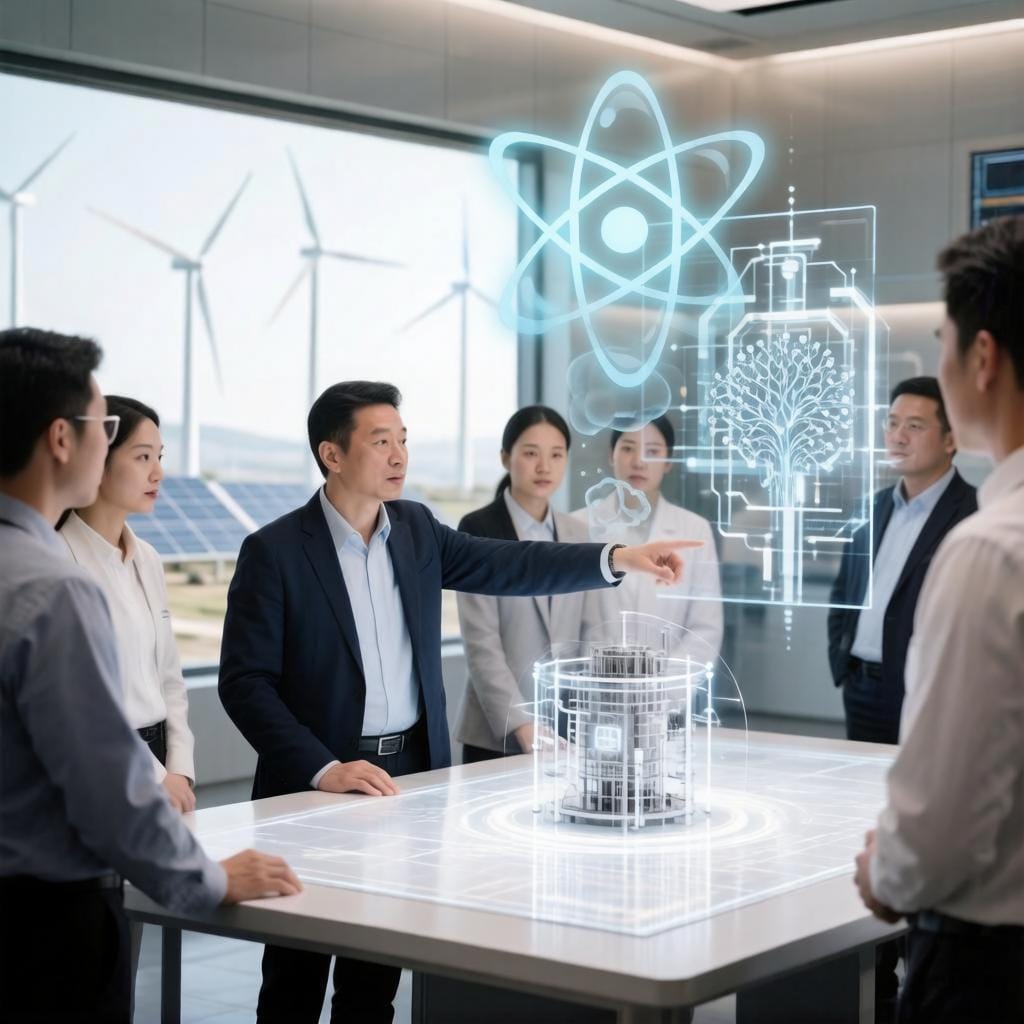
The document provides for the use of AI at all stages of the nuclear power plant lifecycle — from design and construction to operation, maintenance, and decommissioning of reactors, writes Interesting Engineering.
In a nutshell
· China has published a roadmap for integrating AI into nuclear energy.
· Artificial intelligence is planned to be used at all stages of the NPP lifecycle.
· Priority areas will include digital twins, intelligent control, and predictive equipment maintenance.
· The document emphasizes the need to maintain human control over critical decision-making.
· The initiative reflects China's ambition to accelerate the digital transformation of one of its key energy sectors.
AI becomes part of the nuclear industry
The roadmap was prepared by the Chinese Nuclear Society in collaboration with representatives from scientific organizations and industry enterprises and was presented at the World Artificial Intelligence Conference (WAIC) in Shanghai. The document defines the strategy for integrating artificial intelligence into nuclear energy for the coming years.
It is expected that AI will be used at virtually all stages of the lifecycle of nuclear facilities: in the design of new power units, construction, operation, maintenance, data analysis, as well as in decommissioning plants.
Digital twins and intelligent control
One of the key areas will be the development of digital twins — virtual models of nuclear power units that allow real-time analysis of equipment condition, prediction of its behavior, and simulation of various operating scenarios.
Additionally, AI is planned to be used for:
· automatic equipment diagnostics;
· failure prediction;
· optimization of reactor operating modes;
· analysis of large volumes of production data;
· improving maintenance efficiency.
This approach will help identify potential problems before emergency situations arise and reduce equipment downtime.
Safety remains the top priority
Despite the active implementation of artificial intelligence, the developers emphasize that critical decisions must remain under the control of specialists.
AI is seen as a tool to support operators, not as a fully autonomous control system for a nuclear plant. Particular attention is paid to the reliability of algorithms, cybersecurity, and the transparency of decisions made.
China accelerates nuclear energy development
The development of the new roadmap coincides with a massive expansion of nuclear energy in China. The country is simultaneously building more nuclear power units than any other nation in the world, viewing nuclear generation as a key element in achieving carbon neutrality.
The use of artificial intelligence is expected to help reduce construction timelines for new facilities, improve the operational efficiency of existing plants, and lower operating costs.
What this means for Kazakhstan
For Kazakhstan, the Chinese initiative is of interest in several areas. The country is discussing the development of its own nuclear energy, while simultaneously accelerating the implementation of artificial intelligence technologies in industry.
If AI becomes the standard for managing modern nuclear facilities, it means that digital technologies will play an important role already at the design and operation stages of future NPPs.
The Chinese initiative shows that artificial intelligence is no longer perceived solely as a tool for creating chatbots or analyzing data. Increasingly, it is being considered as the foundation for managing critical infrastructure — from nuclear energy to transportation and industrial systems.
For Kazakhstan, this trend is also becoming relevant. The country is already betting on developing its own artificial intelligence ecosystem and corresponding digital infrastructure.
Earlier, Hunn.kz reported that Kazakhstan requested $75 million from the World Bank to support AI startups, develop digital technologies, and build an innovation ecosystem. If today the main focus is on developing AI companies and training personnel, China's experience shows that the next stage could be the introduction of artificial intelligence into strategic sectors of the economy, including energy, industry, and transportation.
Author's conclusion
If just a few years ago artificial intelligence was viewed primarily as a digital assistant, today the largest economies are beginning to integrate it into the management of critical infrastructure facilities. The Chinese roadmap shows that competition is unfolding not only in the development of AI models but also in the ability to apply them in nuclear energy, industry, and other high-tech sectors. For Kazakhstan, this means that investments in its own artificial intelligence ecosystem could become not just support for the IT industry, but part of a long-term strategy for the country's technological modernization.


Comments ()