China has tamed the country's largest desert — and is now sharing its experience with Central Asia
In November 2024, China completed a 3,046 km green belt around the Taklamakan Desert, named one of 2025’s top ten engineering feats by WFEO.
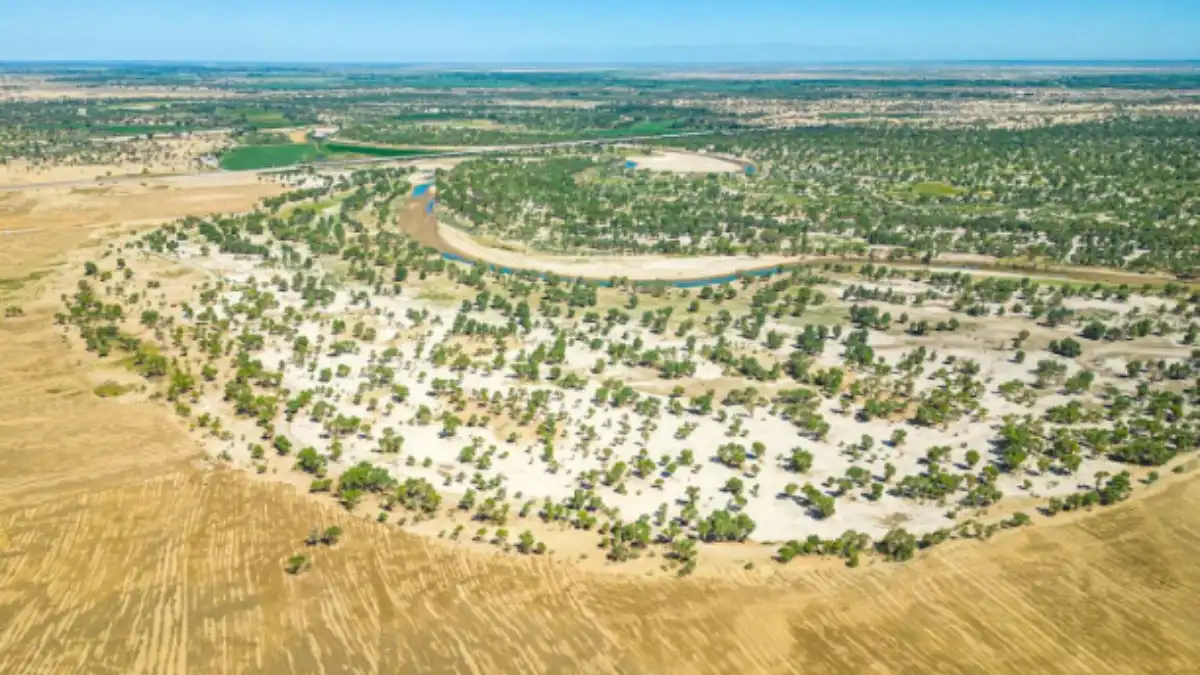
Behind this record are 40 years of continuous work, millions of planted trees, and hundreds of thousands of residents lifted out of poverty, writes SteppeNews.kz. Now, China is intensifying cooperation with Central Asian countries. For Kazakhstan, whose steppes have been degrading since Soviet times, this experience is not an abstract lesson but a practical guide.
The Gist
- In November 2024, Chinese scientists managed to tame the Taklamakan Desert: a protective ring 3,046 kilometers long closed around it — the world's longest green belt for sand containment, created in 500 days by the labor of over 600,000 people.
- In 2026, China intensified cooperation with Central Asian countries by launching the China-Central Asia Center for Desertification Prevention.
- In the new wave of projects, innovative materials are being used: basalt fibers from volcanic rock and fly ash, a byproduct of coal-fired power plants. According to scientists' estimates, the new technologies increase the efficiency of desertification control by 50%.
- The Kekiya Project in Xinjiang is a 40-year flagship experience: from a barren gravel desert to 3,000 hectares of forests, orchards, and stable jobs for thousands of local residents.
- About 40% of the world's land is covered by deserts and arid territories. Most "green wall" projects in Africa, India, and the Persian Gulf countries have failed. The Chinese experience is one of the few large-scale exceptions.
The Taklamakan: The Desert That Was Stopped
The Taklamakan is China's largest desert and the world's second-largest shifting sand desert. Over 70% of its surface consists of shifting dunes, rising up to 300 meters in height. During hurricane-force winds, they can move at speeds of 60–70 km/h, burying roads, fields, and settlements.
The fight against this desert had been waged for decades — but it was November 28, 2024, that became a historic milestone. The 3,046-kilometer ring was closed: 500 days of work, over 600,000 participants, planting drought-resistant plants, and installing artificial sand barriers along the entire perimeter of the world's second-largest shifting sand desert.
The Kekiya Project: Forty Years of One Experiment
The story of the victory over the Taklamakan is unthinkable without the Kekiya Project — an experiment that turns forty this year. It was here in Xinjiang that the model that became a template for all of China was developed: not just planting trees, but creating an economy around greenery.
In Bai County, along the Tarim River, a comprehensive project has been implemented since 2023, where over 3,000 hectares of artificial forests have already grown.
The working principle is simply stated: "Greening is determined by water availability, water use must match its reserves." Instead of groundwater — river irrigation through existing canals and widespread drip irrigation.
Salt-tolerant crops are planted under the forest canopy: watermelon, red peony, and tree peony. Nearby grow apricots, jujube, and yellowhorn — valuable local species with commercial potential. The result: the desert is turning green, and local residents get jobs and income.
"There used to be many poor families in our village, but now, thanks to working on the forest plantations, people are building new houses and buying new cars," project participants say.
Annually, over 1,000 people are employed here, with each household earning an additional 2,000–3,000 yuan per year.
Future Technologies at the Service of the Desert
A new wave of projects using innovative materials has started in China. Among the solutions are basalt fibers made from volcanic rock: they help strengthen sand dunes on the desert's edge. Fly ash, a byproduct of coal-fired power plants, is also being used. According to scientist Pei Liang's estimates, the new materials could increase the efficiency of desertification control by 50%.
Supercomputers and neural networks analyze satellite images and wind roses in real-time for optimal forest plantation design. Drones with multispectral cameras monitor the condition of each section of the protective belt, identifying risk zones before erosion begins.
Why It Works Where Others Have Failed
About 40% of the world's land is covered by deserts and arid territories, where life is difficult for over 2 billion people. Most "green wall" projects in Africa, India, and the Persian Gulf countries have failed due to tree die-off and funding cuts.
The Chinese approach stands out against this backdrop for several reasons. First is systematicity: the program is planned until 2050 and is backed by stable state funding.
Second is the local economy: trees are planted not for the sake of trees, but for the income of local residents, who become interested participants rather than outside observers.
Third is the scientific foundation: every solution is tested, data is collected, and methods are adapted.
The Kazakhstan Context
In 2026, China intensified cooperation with Central Asian countries on desertification prevention issues, launching the China-Central Asia Cooperation Center for Desertification Prevention using advanced environmental technologies.
For Kazakhstan, this is not abstract diplomacy. According to the Ministry of Ecology and Natural Resources of the Republic of Kazakhstan, over 70 million hectares of the country's pastureland are subject to degradation — a colossal area comparable to several Western European states. Desertification is advancing from the south and southwest; dust storms from Kazakhstan and Central Asia are an annual occurrence.
A tree-planting project exists in Kazakhstan: the state program "Zhasyl El" involves planting billions of seedlings. But between planting trees and creating a sustainable ecosystem with economic returns for local residents lies the very distance that Kekiya took forty years to overcome.
Author's Conclusion
China has proven that victory over the desert is possible. But it requires not a single impulse, but 40 years of consistent work, the integration of science, the local economy, and state will. For Kazakhstan, whose pastures are degrading faster than they can be restored, cooperation with the Chinese desertification prevention center is an opportunity to obtain a proven methodology, rather than inventing one from scratch.


Comments ()