Critical minerals are becoming the new oil. Kazakhstan finds itself at the center of the global technology race.
Just a few years ago, global powers competed for oil and gas. Today, lithium, rare earths, graphite, cobalt, and uranium are increasingly becoming the focus of geopolitics.
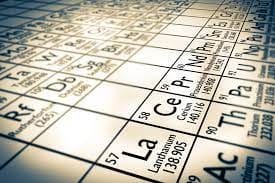
At the G7 summit, leaders of the world's largest economies adopted a separate declaration on securing supply chains for critical minerals, effectively recognizing them as a strategic resource of the 21st century. For Kazakhstan, this trend holds particular significance: the country is simultaneously strengthening its position in the uranium market, developing critical mineral processing projects, and recently joined the international initiative Pax Silica, which unites states around the new technological economy.
The world is entering a new raw materials era
The G7 declaration focuses not on extraction per se, but on control over the entire value chain — from mineral exploration to processing, battery and microchip production, and subsequent raw material recycling.
The leaders of the G7 countries agreed to jointly develop critical mineral processing, create strategic reserves, increase waste recycling, implement digital traceability of raw material origin, and reduce dependence on individual suppliers. Special attention is given to investments in countries capable of ensuring sustainable supplies of strategic resources.
In effect, this marks a shift from simple commodity trading to a struggle for control over the industrial chains of the future.
Why it's not just about electric vehicles
Critical minerals are often associated exclusively with "green" energy. However, their importance today is far broader.
Without them, development is impossible in:
· artificial intelligence;
· data centers;
· semiconductors;
· batteries;
· the defense industry;
· modern energy.
This is why the following formula is increasingly heard:
Whoever controls critical minerals controls the development of technology.
Kazakhstan unexpectedly finds itself at the center of a new strategy
For Kazakhstan, these changes open a new window of opportunity.
Recently, the republic joined the Pax Silica initiative, promoted by the United States as a platform for cooperation in artificial intelligence, semiconductors, energy, and critical minerals. Among the initiative's key goals are forming reliable technological chains between partner countries and reducing dependence on unstable supplies.
Importantly, the focus is no longer solely on resource extraction.
Official statements following Kazakhstan's accession emphasized the development of:
· critical mineral processing;
· production of battery components;
· high-tech industry;
· artificial intelligence infrastructure.
Why this changes Kazakhstan's role
For decades, Kazakhstan was primarily perceived as a supplier of oil, gas, and uranium.
However, the global economy is gradually changing.
If hydrocarbons were once the strategic resource, today materials essential for the digital economy are gaining increasing value.
Therefore, the struggle is no longer so much over deposits, but over the ability to create high-value-added products.
This is why Western countries are increasingly talking not about buying raw materials, but about investing in processing, joint production, and creating new technological chains.
Author's conclusion
Not long ago, countries competed for oil fields and gas pipelines. Today, the center of the global economy is gradually shifting towards critical minerals, without which the development of artificial intelligence, microelectronics, batteries, and modern energy is impossible. The G7 decisions and the expansion of the Pax Silica initiative show that the struggle is now unfolding not just for the resources themselves, but for control over the entire technological chain — from extraction to the production of high-tech goods. For Kazakhstan, this means an opportunity to move beyond the role of a raw material exporter. However, seizing this chance will only be possible if the country can develop its own processing capabilities, attract investment in high-tech projects, and gradually become part of global production chains, rather than just a supplier of raw materials.
Comments ()