Dispute over oil, gas and coal derails final decision at Antalya climate conference
The UN climate conference (COP31) in Antalya, Turkey, ended without a final political decision: countries failed to agree on fossil fuels or on funding for adaptation to warming.
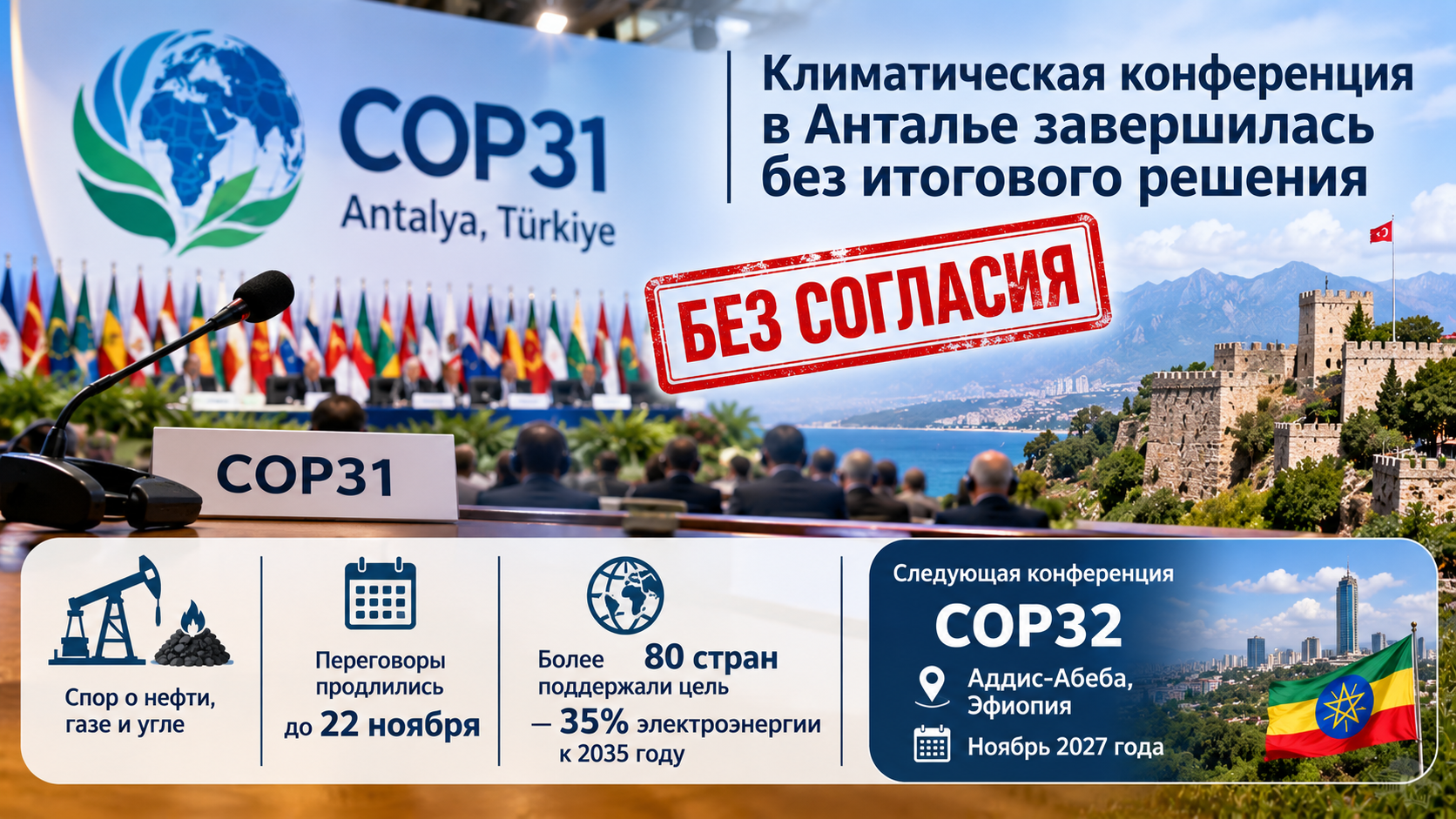
UN Secretary-General António Guterres said he was deeply disappointed: "There may be no consensus in the negotiating hall, but there is no ambiguity in the science." The talks ran two days longer than scheduled. The next conference, COP32, will take place in Addis Ababa, Ethiopia, according to UN News.
The gist in brief
- The conference ended without a final political agreement: the latest draft did not directly mention fossil fuels.
- The talks were supposed to conclude on Friday but continued until Sunday, November 22.
- More than 80 countries supported Turkey's goal of raising the share of electricity in global energy consumption to 35% by 2035.
- The next conference, COP32, will be held in November 2027 in Addis Ababa.
Why no agreement was reached
On Sunday night, delegates were presented with a new draft agreement, but it did not contain the words "fossil fuel." Coal, oil and gas were referenced only indirectly through a reference to the decision of the 2023 COP28 conference, where countries agreed to "transition away from" fossil fuels in energy. This is reported by BBC. The draft final decision published on November 16 mentioned fossil fuels six times, but that version did not suit oil-producing countries. The chair of the negotiations, Chris Bowen, acknowledged that this point would provoke sharp discussions and would change.
The European Union (EU), Panama and the Marshall Islands opposed the final text. The EU representative, Ireland's minister Daragh O'Brien, called a climate pact without any mention of fossil fuels unacceptable. The Marshall Islands, according to UN News, refused to support the text. Saudi Arabia's delegate Mohammad Ayoub said that Arab countries "continued to participate in good faith" but account for a small share of historical greenhouse gas emissions. Russia warned that too rapid a phase-out of coal, oil and gas would lead to "fuel poverty."
What about money for adaptation to warming
Poor countries objected to the absence of clear financial obligations from rich countries. At last year's COP30 conference in Brazil, countries agreed to triple adaptation financing, but this year the final text contains neither specific figures nor a baseline from which to measure the promise. This raised concerns that rich countries would be left with too much freedom.
The group of African countries, according to UN News, acknowledged the shortcomings of the text on climate finance and loss and damage compensation but said it would not block consensus.
What was said at the UN
Guterres urged not to allow the transition away from fossil fuels to be dragged out and to do more right now.
"You cannot put out a fire by pouring fuel on it," he said regarding the interests of the fossil industry.
The president of the conference, Turkey's Minister of Environment Murat Kurum, acknowledged that there was no agreement on the text and no decisions had been adopted.
UN Executive Secretary on Climate Change Simon Stiell said the world cannot afford a repeat of such a moment. He recalled the progress achieved and added that COP32 must build on what has been done rather than retreat.
What was nevertheless agreed
Despite the failure of the main agreement, there are separate arrangements. Countries made progress on the "just transition mechanism" - a framework for supporting workers and communities as economies shift to clean energy. The president of the conference announced that more than 80 countries supported Turkey's goal of increasing the share of electricity in global energy consumption to 35% by 2035. The "35 by 35" initiative was launched on November 10 in Antalya, and more than 180 companies have already expressed support for it. Stiell also called the COP31 Action Plan on electrification, resilience and investment a success.
What about the 1.5 degree goal
COP31 became the first annual UN conference to officially discuss that one of the key international goals for limiting warming will not be met. The goal of 1.5 degrees above pre-industrial levels was enshrined in the 2015 Paris Agreement. According to UN estimates, under current government policies, warming will reach about 2.8 degrees by 2100. The world will likely exceed 1.5 degrees in the coming years; returning warming to that mark will only be possible with carbon dioxide removal technologies that do not yet exist at the required scale.
What next
Simon Stiell said he would seek advice on a possible reform of the climate process, which relies on consensus.
"It has helped us get to where we are today," he told the BBC, but acknowledged that on Sunday it was not enough.
The next conference, COP32, is scheduled for November 2027 in Addis Ababa.
What HUNN.KZ wrote about COP31
The editorial team has been closely following the conference and has covered it from the very beginning. Even before the opening, tens of thousands of people took part in a climate march in Brussels: according to police estimates, there were 45 thousand participants; according to organizers, about 60 thousand. On November 13, Kazakhstan opened a national pavilion at the conference, where projects on the Northern Aral Sea, saigas and methane are being showcased.
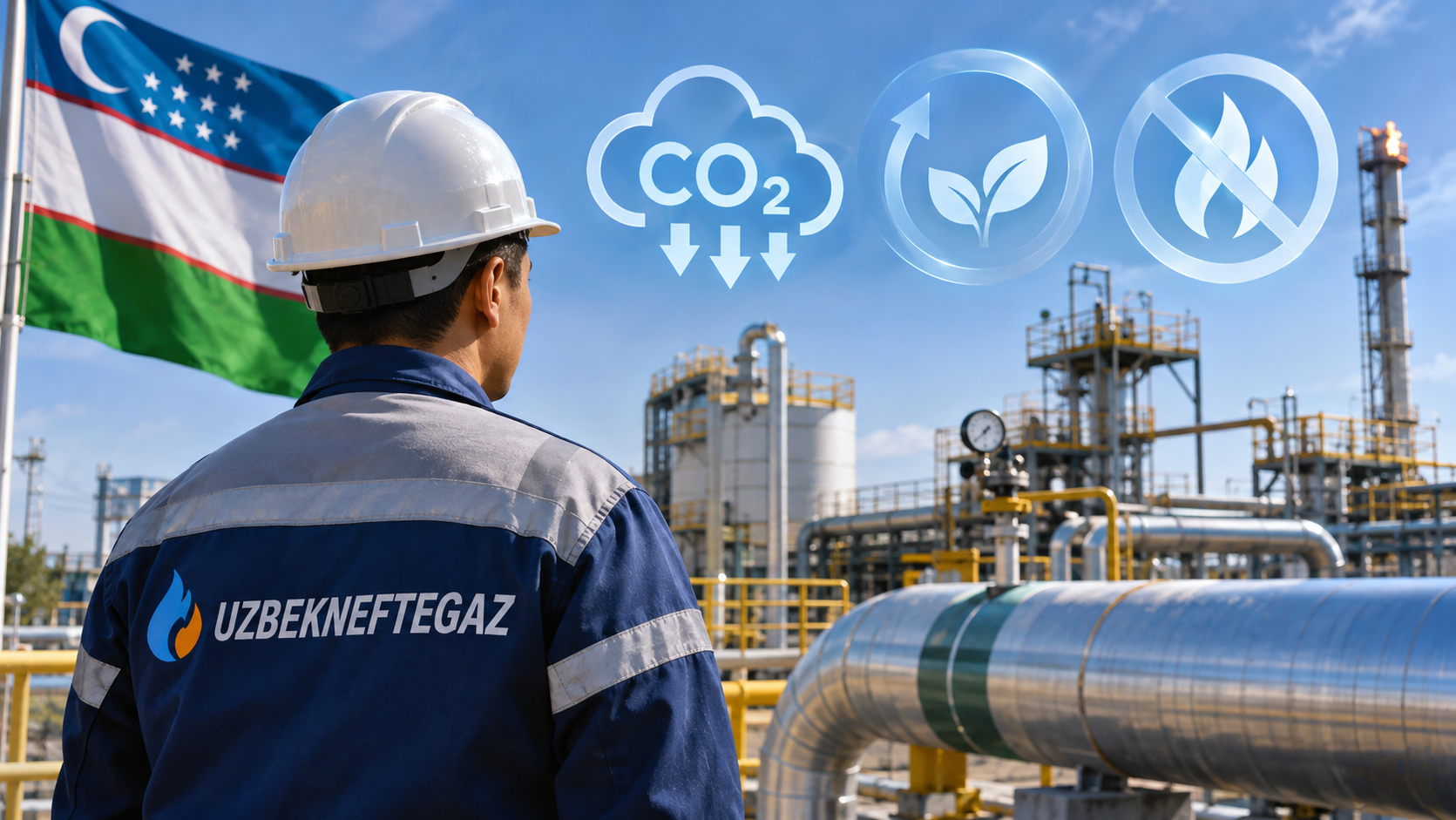
At Azerbaijan's venue on November 18, Vice-Minister of Ecology and Natural Resources of Kazakhstan Mansur Oshurbayev reported that Kazakhstan's part of the Caspian Sea has shrunk by more than 16 thousand square kilometers over 25 years, and Kazakhstan proposed that Caspian countries jointly monitor the state of the sea. On November 16, Turkey presented the TULIP platform for climate projects in cities of Turkic countries, and Uzbekneftegaz was named among the participants of the Global Charter for Decarbonization of the Oil and Gas Industry.
Author's conclusion
The conference showed that a process where decisions are made only by consensus runs up against the position of individual countries: the final text retained only an indirect reference to the COP28 decision on transitioning away from fossil fuels, and on adaptation money there are neither figures nor a baseline. Reform of the process is still at the consultation stage, so the next test is COP32 in November 2027.
Comments ()