Drought hits crops, Black Sea burns — Kazakh grain under double pressure
Drought in Kazakhstan’s key grain regions has cut harvest forecasts below last year’s records. Meanwhile, rising Black Sea tensions threaten to redirect Russian grain to Central Asian markets.
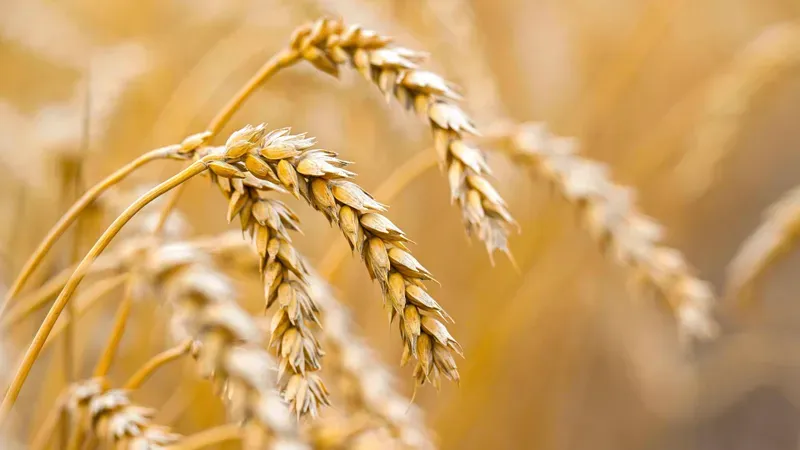
The Kazakh grain sector is entering the 2026 harvest season under extremely difficult conditions. Drought in key grain-producing regions has already lowered harvest forecasts below last year's record levels. Simultaneously, the escalating situation in the Black Sea threatens to redirect Russian grain to Central Asian markets — which could collapse domestic prices and undermine farmers' incomes. This was warned by the head of the Analytical Committee of the Grain Union of Kazakhstan, Yevgeny Karabanov.
The Gist
- The drought has affected the southern districts of Akmola Region, Karaganda Region, Pavlodar Region, East Kazakhstan Region, and the Abai Region — the country's key grain-producing regions. The harvest is expected to be lower than last year's record.
- Drone attacks on civilian vessels and strikes on Black Sea port infrastructure threaten one of the world's main grain corridors. Over 70% of Russian grain exports pass through the Azov-Black Sea Basin.
- Together, Russia and Ukraine provide more than 60 million tons of export capacity in the global wheat market, which totals about 200 million tons. Disruptions in the Black Sea could force Russian exporters to redirect to overland routes into Central Asia.
- Cheap Russian grain on the Kazakh market threatens to collapse domestic prices and deprive farmers of the ability to service loans and finance the next planting season.
- The Ministry of Agriculture of the Republic of Kazakhstan has imposed a six-month ban on grain imports, with exceptions for millers, poultry farmers, and the Food Contract Corporation.
Drought: Each Region in Its Own Way, One Outcome
According to Yevgeny Karabanov, prolonged heat and a lack of precipitation hit several of the country's main grain-producing regions at a critical moment in crop development — when the grain is filling and forming the yield.
This is not the first alarming signal of the season. We have previously written that a livestock farmer from the Abai Region, Kuanysh Suleimenov, warned of the risk of mass livestock slaughter due to scorched pastures and feed shortages, and European farmers have been forced to bring livestock down from Alpine pastures ahead of schedule for the same reason. The picture for 2026 is forming a single global pattern: extreme heat and El Niño are simultaneously pressuring the agricultural sector in several regions of the world.
The Black Sea: A Second Front of Pressure
A reduced harvest alone is already a cause for concern. But Karabanov points to a second, less obvious risk: Black Sea geopolitics.
Russia is the world's largest wheat exporter. Ukraine is in the top six. Together, they control about 60 million tons of the 200 million ton global wheat export market. And over 70% of Russian grain exports go through the Azov-Black Sea Basin.
If drone attacks and threats to shipping safety make the Black Sea route economically unattractive for Russian exporters, they will have to look for alternatives. The nearest one is overland routes into Central Asia, where Kazakhstan is the main transit hub and a major market for wheat and flour.
Cheap Grain — An Expensive Problem
Karabanov warns: an influx of cheap Russian grain into the Kazakh market will create a classic trap for domestic farmers. Low prices look like a boon for consumers — bread becomes cheaper, inflation decreases. But for producers operating on razor-thin margins, it is a catastrophe: the inability to service loans and finance the next planting season.
It is in this logic that the recent order of the Ministry of Agriculture on a six-month ban on wheat imports should be understood. The ban was introduced as a protective measure for domestic producers — and Karabanov confirms that the risks it protects against are quite real.
An important nuance: the ban was made with surgical precision. Millers, poultry farmers, and the Food Contract Corporation can continue to import — by rail and without the right to sell the grain on the market. The goal: to provide processors with raw materials without opening the market to commercial arbitrage.
Walking a Tightrope
Karabanov clearly articulates the dilemma for the Kazakh government: on one hand, to curb food price inflation; on the other, to prevent a collapse in farm incomes. Under conditions of price pressure, these goals contradict each other.
Low grain prices in the short term do make life easier for consumers. But if they persist for a long time, farmers reduce acreage or leave the market, production falls, and in a year or two a real shortage emerges with a much sharper price spike.
Author's Conclusion
Kazakh grain is caught in a pincer movement from two sides: nature is destroying the harvest domestically, and geopolitics is threatening prices from abroad. Last year, a record harvest allowed for optimism about the future. This year, the ban on wheat imports looks not like protectionism for its own sake, but like a forced defense of farmers against a double blow. The state's task is to maintain a balance between the affordability of bread for consumers and the profitability of the field for producers. This is one of the most difficult equations in agricultural policy — and 2026 is testing Kazakhstan's ability to solve it.

Comments ()