FAO: hunger recedes for third consecutive year — but 520 million more people will go hungry by 2030
FAO released its annual SOFI 2026 report: three years of steady progress cut global hunger to 645 million people, or 7.8% of the world population.
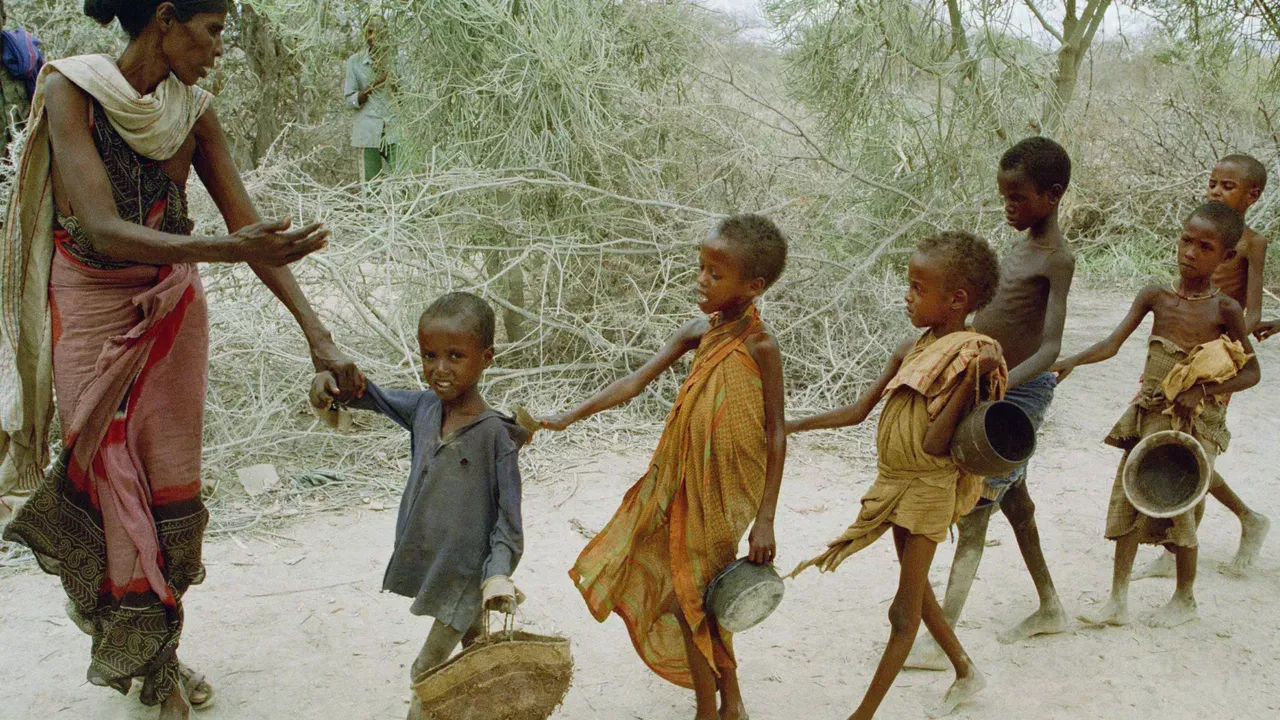
Director-General of the Food and Agriculture Organization of the United Nations (FAO) Qu Dongyu stated: "Hunger is not inevitable." However, by 2030, without additional efforts, 520 million people will still be hungry — the goal of zero hunger remains unattainable.
In Brief
- In 2025, hunger affected 645 million people — 14 million fewer than in 2024, and 43 million fewer than the 2022 peak. The share of hungry people in the global population is 7.8%.
- Moderate and severe food insecurity decreased to 2.1 billion people — 86 million fewer than the previous year. The greatest progress was seen in South America and South Asia.
- Africa recorded its first interruption of the upward hunger trend since 2017: the share of hungry people fell from 20.3% to 20.0%. However, in absolute numbers, 309 million people on the continent are still undernourished.
- If current trends continue, by 2030 about 520 million people will be hungry — the UN's "Zero Hunger" goal will not be achieved. Risks are amplified by El Niño and cuts in humanitarian funding.
- Nearly one-third of the world's population cannot afford a healthy diet. Nutritious foods remain expensive due to weak infrastructure, inefficient storage and transport chains.
Three Years of Progress — For the First Time in a Decade
The report "The State of Food Security and Nutrition in the World" (SOFI) has been published annually since 1999. In 2020–2022, the pandemic, climate shocks, and the war in Ukraine sharply pushed the number of hungry people up to a peak of 688 million in 2022. Three consecutive years of decline are a rare occurrence in the history of this indicator.
Qu Dongyu used the launch of the report in Rome to emphasize a systemic conclusion: "These numbers are important because they show that hunger is not inevitable. With strong economic policies, social protection, and sustainable investments in more efficient, inclusive, resilient, and sustainable agrifood systems, we can change the hunger trend."
Troubling Arithmetic: Progress is Made, the Goal is Unattainable
For all its optimism, the report contains a stark warning. Even if current rates of decline are maintained, by 2030 about 520 million people will still be hungry — 2.6 times more than zero, the stated global sustainable development goal SDG 2.
Moreover, the model may underestimate risks: it does not fully account for the consequences of El Niño and recent cuts in humanitarian and development funding. FAO directly states that reduced support for the poorest countries is one of the main factors that could reverse progress.
Why is There Less Hunger, But People Still Can't Eat Healthily?
The most alarming finding of the report is the gap between the retreat of hunger and the persistent inaccessibility of healthy diets. Hunger is an acute calorie deficit. A healthy diet is a diverse diet with sufficient protein, vegetables, fruits, and micronutrients. And it is the latter that remains unattainable for nearly a third of humanity.
SOFI 2026 explains the mechanism: global food production is growing, but nutritious foods — fruits, vegetables, animal-source foods — remain expensive. Costs accumulate at every stage of the chain: storage, processing, transport, retail. Weak cold chain infrastructure, unreliable energy supply, and inefficient markets make a healthy diet unaffordable for low-income households.
What FAO Considers Priorities
The report is accompanied by specific recommendations. In the short term: keep food, energy, and agricultural input markets open, avoid export restrictions, and strengthen social protection for vulnerable groups. Ensure farmers have access to fertilizers, seeds, water, and credit — before planting decisions become irreversible.
In the long term: invest in irrigation, storage, cold chains, transport infrastructure, and early warning systems. These investments reduce the cost of nutritious foods and increase the resilience of agrifood systems to shocks.
Kazakhstan Context
Kazakhstan is not among the hungry countries — the nation is a net food exporter and harvests record grain crops. However, the SOFI 2026 report touches Kazakhstan in two dimensions.
First, as an exporter. FAO directly warns of the danger of export restrictions for global food security. In this context, Kazakhstan's recently introduced ban on wheat imports is a legitimate protective measure, but also a signal of the need for a delicate balance between the interests of domestic producers and the responsibility of a major player in the grain market.
Second, as a country with 44% of its population living in rural areas, where, according to FAO, rural residents are most vulnerable to problems of healthy diet affordability. Our earlier article noted: 14% of Central Asia's population cannot afford a healthy diet — an indicator directly correlated with the findings of SOFI 2026.
Author's Conclusion
Three years of progress in the fight against hunger is a rare and important achievement. FAO is right: hunger is not inevitable. However, it is not a stage that has been overcome either — 520 million people by 2030 at current rates is not a victory, but an acknowledgment of insufficient effort. For Kazakhstan, aspiring to be an agricultural hub of Central Asia, contributing to regional food security is not only an export opportunity but also a responsibility.

Comments ()