First VVER-1200 reactor in Turkey set to generate power by year-end
While field work at Balkhash winds down and Kazakhstan prepares for the active phase of its first NPP, Turkey is set to launch the world's first serial reactor of the exact type Rosatom will build in Kazakhstan.
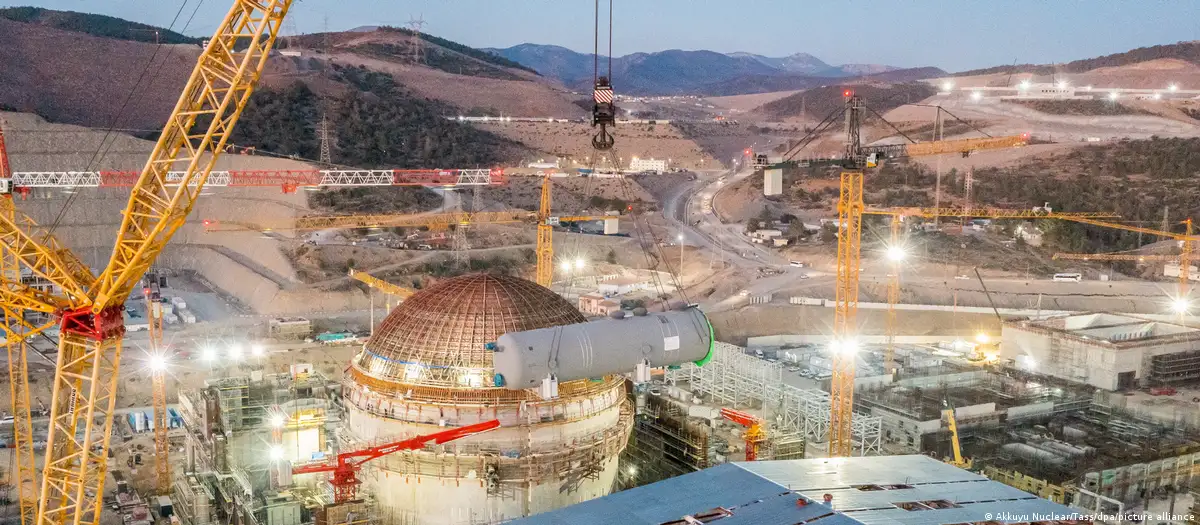
Turkey's Minister of Energy Alparslan Bayraktar has stated that test electricity generation at the first power unit of the Akkuyu NPP could begin before the end of 2026, reports the publication Atomic Energy 2.0.
The gist in brief
- Turkey's Minister of Energy Alparslan Bayraktar said that work on launching the first power unit of the Akkuyu NPP is in full swing, and test electricity generation is planned to begin before the end of 2026.
- Before launch, approximately 2,000 tests must be carried out; testing is ongoing as of the statement.
- Akkuyu is being built by Rosatom — the plant will feature VVER-1200 Generation III+ reactors, the same type being considered for the future Balkhash NPP in Kazakhstan.
- In total, four power units are planned at Akkuyu; under current plans, all of them should be commissioned within 2026.
What is happening at the site
Bayraktar's statement is not the first such promise: back in 2022, Turkish authorities expected to launch the plant before the end of 2023, then deadlines were pushed to 2024, 2025, and now the target is the end of 2026. Such schedule shifts are typical for lead power units of a new generation of reactors — the first unit of a series almost always goes through a longer testing and commissioning cycle than subsequent units. Bayraktar emphasized that both the Russian and Turkish sides are focused on completing about two thousand tests required before the start of commercial operation.
The same reactor as for Balkhash
The significance of the Turkish project for the Kazakh reader lies not in Turkey itself, but in the reactor type. The VVER-1200 Generation III+ is the very project that Rosatom — a partner officially established by intergovernmental agreements — will build, with characteristics already familiar from our materials: a core catcher under the reactor vessel, a passive heat removal system, and compliance with IAEA safety standards. Akkuyu is the first foreign plant where a serial VVER-1200 goes through the full cycle from construction to startup, and the entire process of testing, commissioning, and the first months of operation will become a practical precedent for what the Kazakh project will face at a similar stage.
Why this matters for Kazakhstan
For Kazakhstan, where field work at the Balkhash site is only just being completed and the active construction phase is scheduled for 2027, the Turkish experience with the same reactor type becomes a rare opportunity to observe a real, not theoretical, precedent. All the technical questions that are still discussed hypothetically in Kazakh materials — how many tests are required before launch, how long the final phase before commissioning actually takes, what delays are typical for the lead unit of a series — are receiving concrete, measurable answers at Akkuyu. There is also a staffing dimension: Kazakhstan will have to train plant personnel from scratch — reactor department operators, nuclear engineers, radiation safety specialists — and how the Turkish side is navigating the final stage of preparing its own personnel for the startup of the same reactor type is also worth keeping an eye on.
Author's conclusion
The Turkish project is of interest to Kazakhstan not as a reason to compare political systems or economies, but as a practical testing ground for one specific technology. If test generation at Akkuyu does indeed begin before the end of 2026, it will be the first real confirmation that a serial VVER-1200 is capable of completing the full journey from excavation to the power grid within reasonable timeframes outside Russia. That is what the Kazakh reader should watch in the coming months — not the political statements around the plant, but how many of the promised two thousand tests are actually completed and how quickly.
Comments ()