Five Central Asian countries launched a program to restore the Amu Darya and Syr Darya basins.
Kazakhstan, Kyrgyzstan, Tajikistan, Turkmenistan, and Uzbekistan have joined the CAWLN program to restore watersheds of Central Asia's two major rivers, the Amu Darya and Syr Darya.
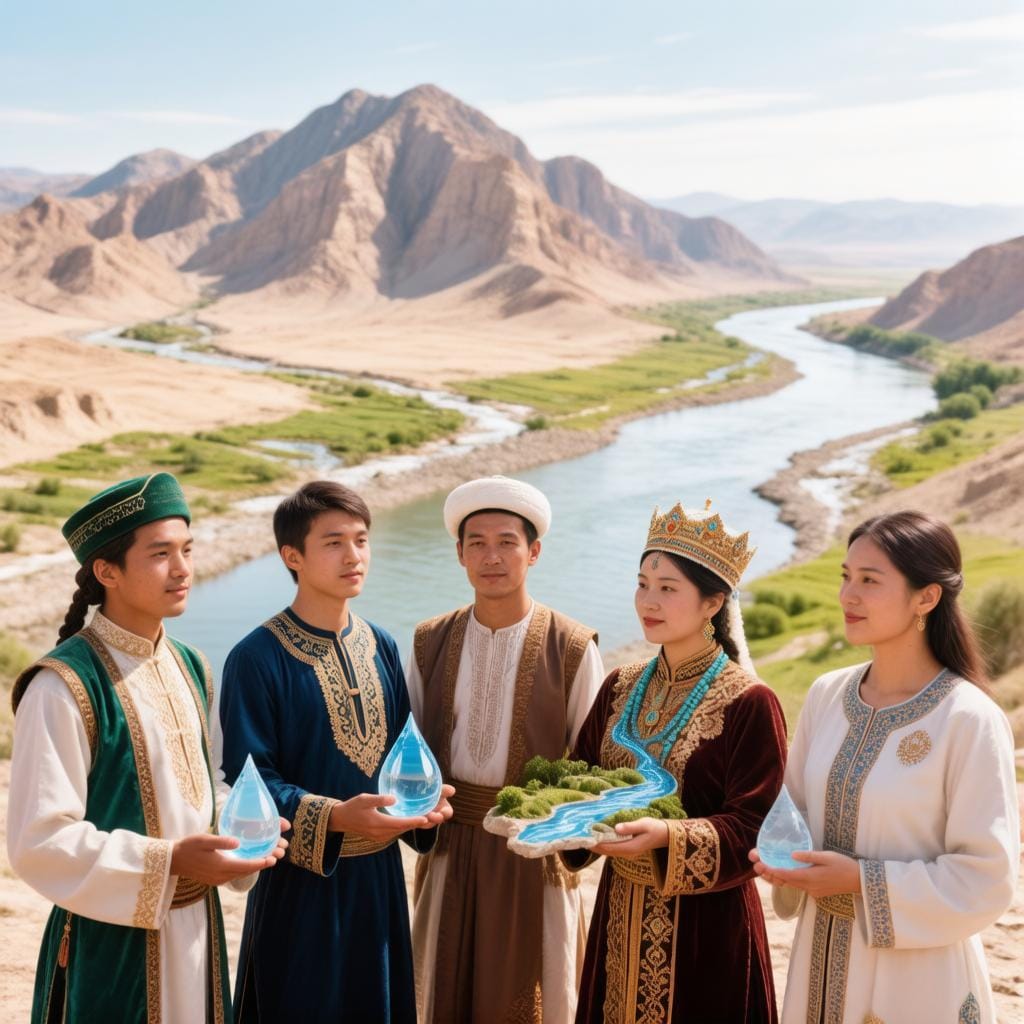
Financing in the amount of $30 million was provided by the Global Environment Facility (GEF), and the program is being implemented by the Food and Agriculture Organization of the United Nations (FAO).
The gist in brief
- Five Central Asian countries have launched the CAWLN program with $30 million in financing from the Global Environment Facility, implemented by FAO.
- The region's wetlands, rivers, arid plains, and mountains provide food, water, and income to 84 million people, while agriculture, energy, and 80% of the region's population directly depend on the Amu Darya and Syr Darya rivers.
- A century and a half of intensive water withdrawal for irrigation, combined with declining precipitation, has depleted both rivers to a small fraction of their original volume; the Aral Sea, into which they flow, has shrunk to 10% of its historical size.
- Pasture degradation, desertification, deforestation, and abandoned cropland cost Central Asia approximately $6 billion annually.
What the program provides
CAWLN is built on the "nexus" principle — the recognition that water, agriculture, and natural ecosystems cannot be considered separately, as they are interconnected and must be managed as a single system. The program includes three regional projects aimed at restoring key aquatic and terrestrial habitats, protecting native species, and improving rural livelihoods, as well as four country-level projects addressing specific environmental priorities in Kazakhstan, Kyrgyzstan, Turkmenistan, and Uzbekistan along river channels. Practical measures include pilot agroforestry projects in selected catchment areas of the Aral Sea basin, demonstrating the benefits of sustainable land use through concrete examples, as well as the creation of information centers and educational tools targeting primarily the region's youth.
Technologies serving watersheds
The program will provide participating countries with access to modern monitoring tools — satellite imagery-based systems and decision support systems that will help manage agricultural lands and watersheds more effectively. These include early warning systems designed to mitigate the impacts of natural disasters and long-term regional trends such as prolonged droughts. Ecosystem degradation has already dealt a significant blow to the region's biodiversity: the white-headed duck and the false shovelnose sturgeon — endemic species inhabiting these river basins — are now threatened with extinction or in critical condition.
Why this matters for Kazakhstan
Kazakhstan is one of the four participants in the program's country track, which logically continues the work already underway in the country on the same issues. We have previously written that Kazakhstan had to nearly halve its Syr Darya quotas for 2026 due to insufficient filling of the cascade's reservoirs, and that a significant portion of Kazakhstan's irrigation canals loses most of their water before it reaches the fields due to dilapidated infrastructure. The international program involving FAO and GEF adds a regional dimension to these domestic efforts — transboundary dialogue, unified watershed management standards, and technology exchange among all five basin countries, without which restoring only the Kazakhstani part of the Syr Darya will not solve the problem entirely.
Author's conclusion
The scale of the problem that CAWLN seeks to address extends far beyond the capacity of any single country: the Amu Darya and Syr Darya form a shared water system for five states, and ecosystem degradation in the upper reaches inevitably affects the lower reaches, where Kazakhstani fields and what remains of the Aral Sea are located. The program's effectiveness can be judged by whether international financing and coordination can achieve what individual national programs have failed to accomplish for decades — halting the depletion of rivers on which 84 million people in the region directly depend.

Comments ()