Phosphogypsum from fertilizer waste tested to restore saline soils on the Aral Sea bed
Central Asian scientists met in Taraz to discuss using phosphogypsum, a fertilizer byproduct, to restore saline soils on the dried bed of the Aral Sea.
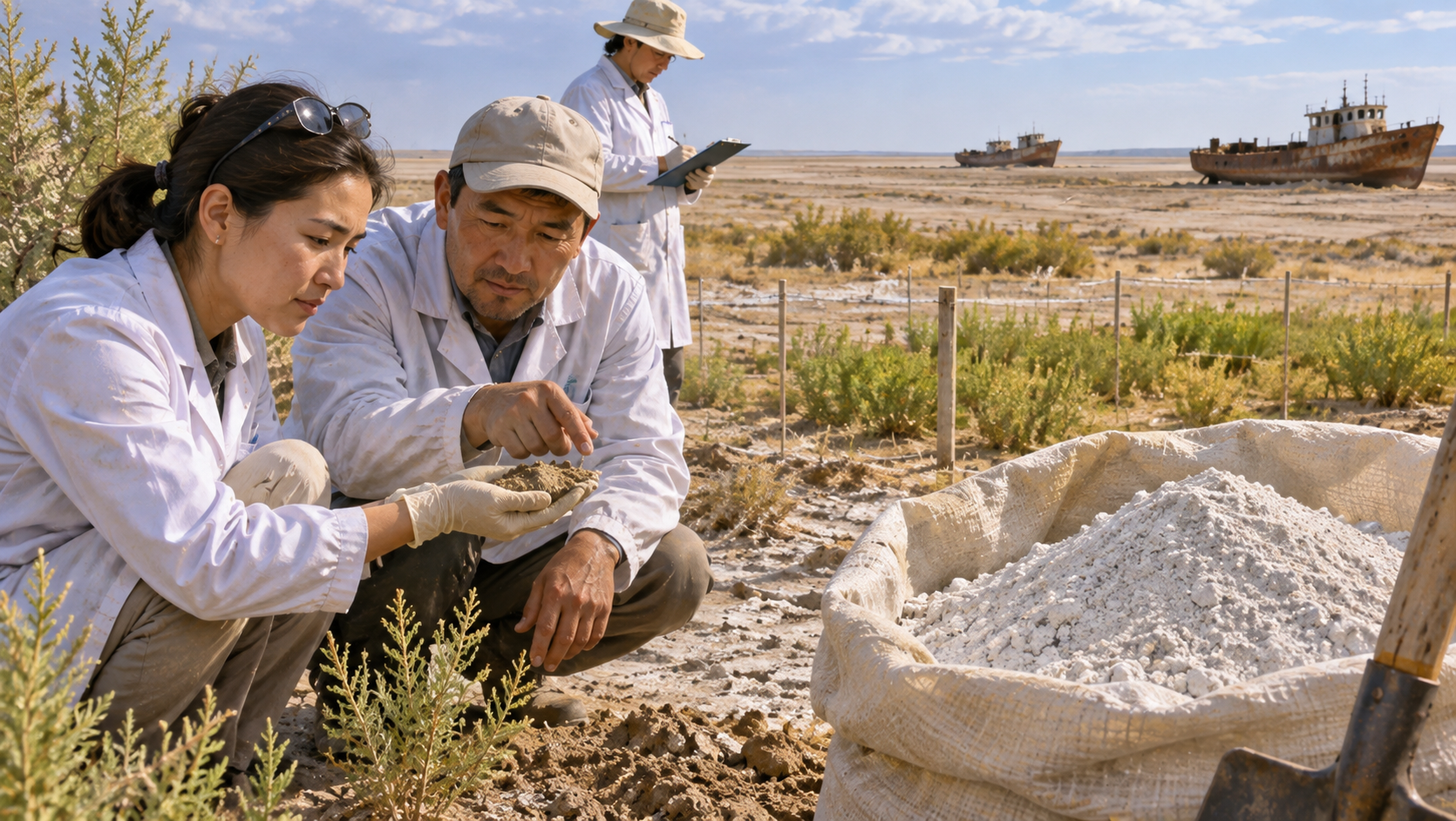
The experiment on four plots has been running for about three years, and according to the head of the executive directorate of the International Fund for Saving the Aral Sea in Kazakhstan, salinity there is decreasing. Reported in a story by Khabar.
The gist in brief
- Phosphogypsum is applied to four experimental plots on the bottom of the Aral Sea, with up to 40 t per hectare on some plots.
- The experiment has been running for about three years; saxaul grows on the plots with phosphogypsum, and the seedlings are taller than on plots without it.
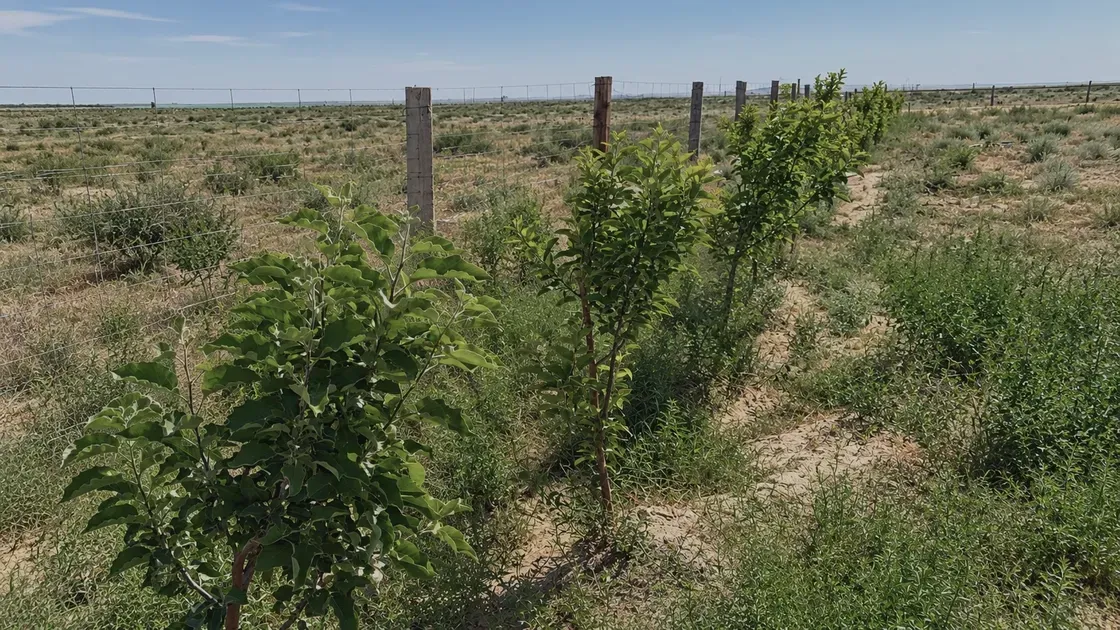
- On a separate 1 ha plot near Lake Kambash, fruit trees were planted, and the survival rate was 70%.
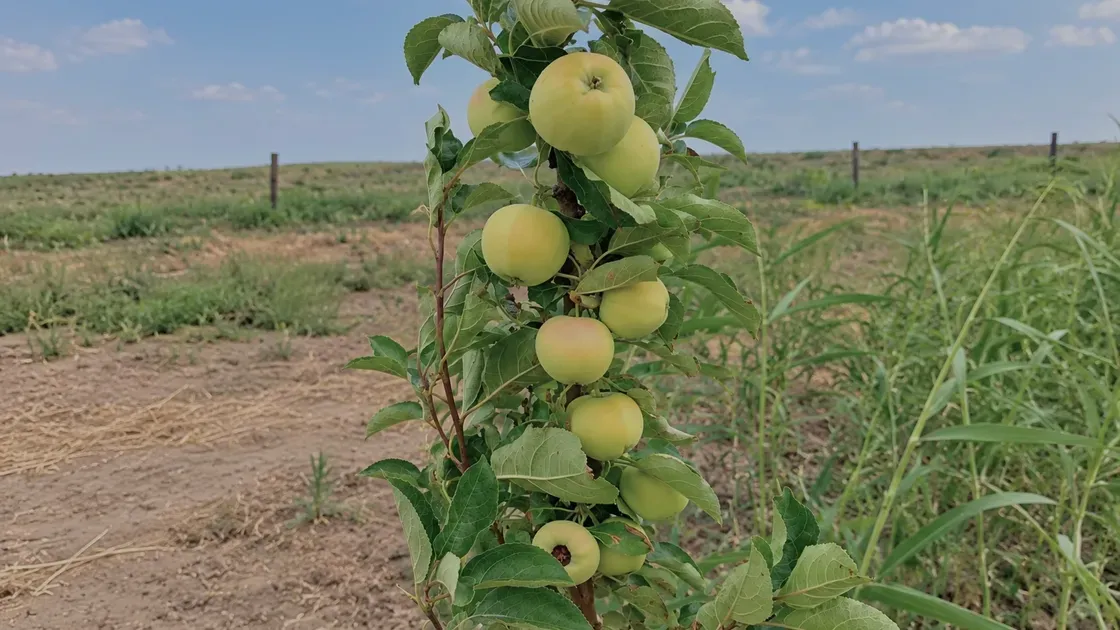
- 120 t of phosphogypsum were applied to four plots; by 2026, the first apples and grapes appeared on one of them.
What was discussed at the conference
The international conference "Scientific-Experimental and Innovative Experience of Using Phosphogypsum to Improve Irrigated and Degraded Lands" was held on November 5, 2026, in Taraz. According to Nur.kz, it was organized by Kazphosphate LLP, the executive directorate of the International Fund for Saving the Aral Sea in Kazakhstan, and the Kazakh Research Institute of Water Management. Specialists from Kazakhstan, Kyrgyzstan, Tajikistan, Turkmenistan, and Uzbekistan participated.
How the method works
Phosphogypsum is a chemical production waste. Serikali Mukatayev, director of the fund's executive directorate in Kazakhstan, explained that when it reacts with saline soil, it reduces its salinity and makes the soil looser. According to observations, the content of harmful sodium decreases, soil structure improves, and the content of exchangeable calcium increases. On plots with phosphogypsum, saxaul produces taller seedlings than on plots without it. Besides saxaul, according to Nur.kz, sarsazan and karabarak were also planted.
What was achieved on the experimental plots
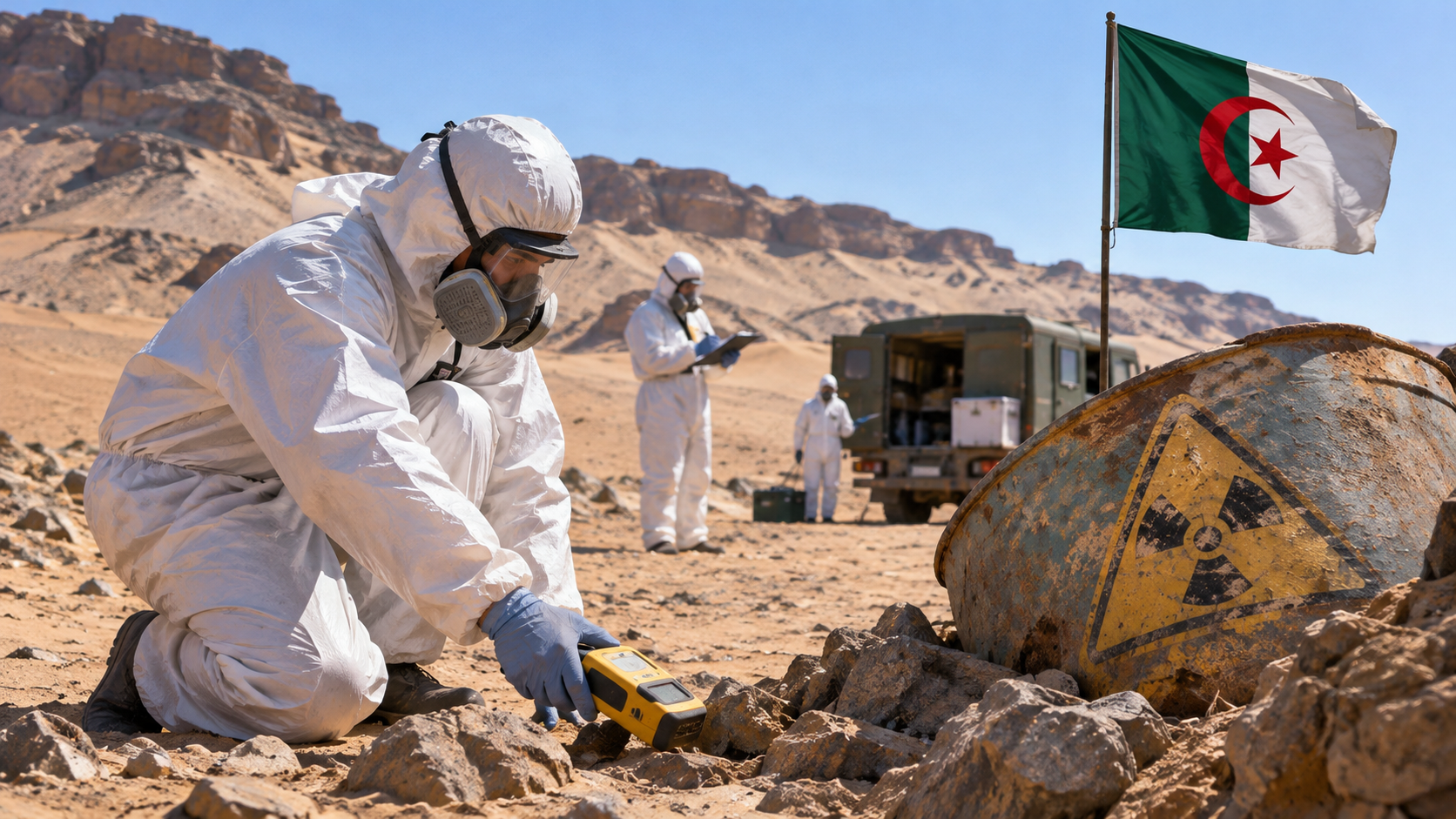
There are four experimental plots on the bottom of the Aral Sea. A separate 1 ha plot has fruit trees, with a survival rate of 70%. In 2026, the first apples and grapes appeared on one of the plots. Mukatayev noted that in the Aral region the soil is not irrigated; the only moisture comes from winter precipitation.
What's next
Specialists are still studying optimal application rates and the influence of irrigation water quality. The method is planned to be extended to the Zhambyl, Turkestan, and Kyzylorda regions; state support and testing of phosphogypsum in road construction and the cement industry are being discussed.
Which figures diverge
The duration of the experiment is stated differently: Khabar writes about three years, Nur.kz about field research since 2024. The volume of phosphogypsum is also given in different units: 120 t for four plots (Nur.kz) and up to 40 t per hectare (Khabar). The area of the plots cannot be derived from these figures, and it is not stated in either material.
What remains unknown
The areas of the four experimental plots, the doses for each of them, the exact salinity values before and after application, and data on saxaul seedlings in figures are not stated. So far, the results are reported by the organizers of the experiment; there is no independent assessment in the materials. The cost of delivering phosphogypsum from the Zhambyl region to the Aral region is also not stated.
What is happening with the Aral Sea
The government, together with the World Bank and the EBRD, plans to bring the area of the Northern Aral Sea to 3.9 thousand km² and the water volume to 34 km³: currently the sea holds about 23.4 billion cubic meters of water versus 18.9 billion cubic meters at the beginning of 2022. The World Bank approved a $20 million grant for a regional water program expected to benefit about 40 million people. Spanish scientists calculated that since the 1960s the exposed bottom of the Aral Sea has emitted about 748 million t of CO₂, and according to their estimate, emissions can only be stopped by returning water, since greening has almost no effect on carbon absorption.
Author's conclusion
For now this is a pilot: four plots and one hectare with fruit trees against the backdrop of the vast area of the dried bottom of the Aral Sea. The main question now is not whether the method works on small plots, but who will transport phosphogypsum over hundreds of kilometers and how, and how much it will cost. Without these figures, scaling up remains a plan rather than a calculation.
Comments ()