Forest belt being created near Astana with participation of Chinese scientists
On the outskirts of Astana, an unusual test site has appeared—a forest plot where trees never grown in Kazakhstan before have been planted.
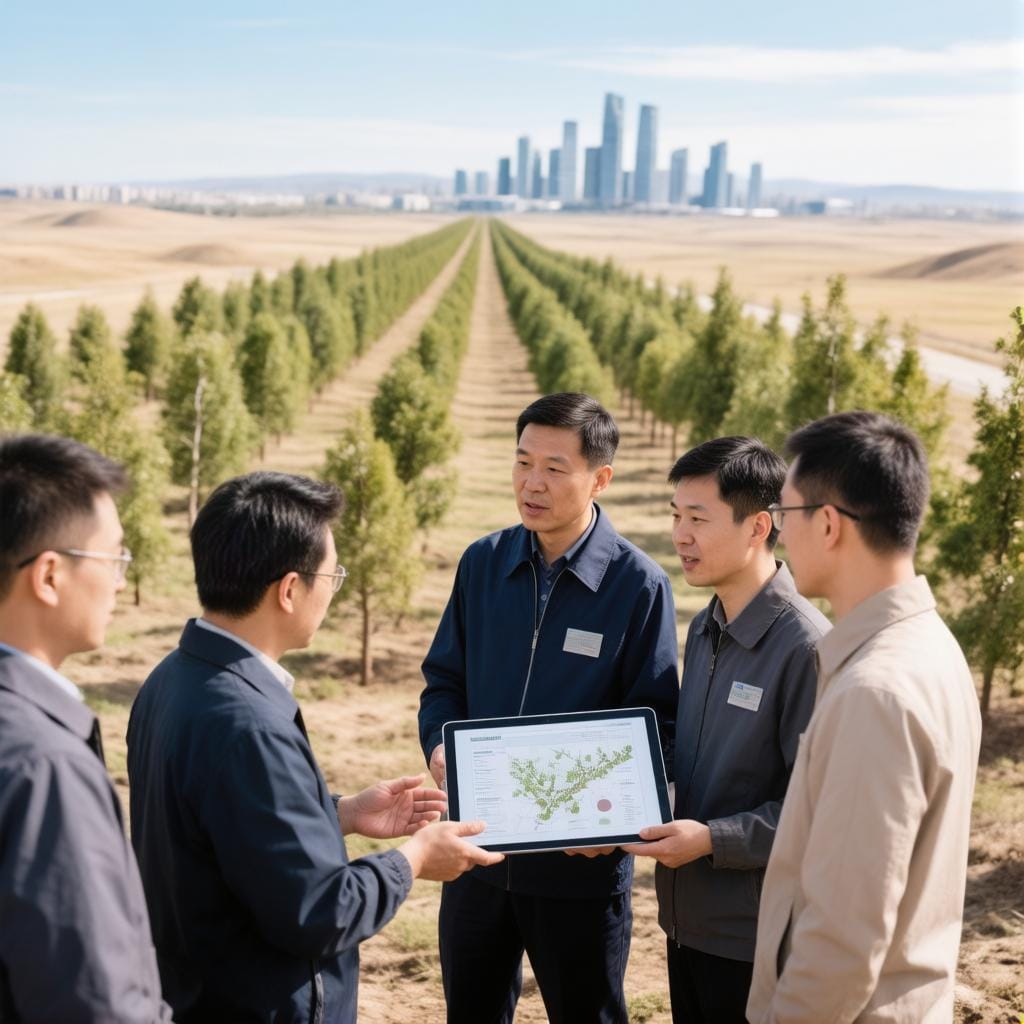
An experiment involving Chinese scientists is expected to show which plants can truly withstand the steppe frosts, winds, and winter blizzards around the capital, writes Dknews.kz.
The gist
- With the participation of the Xinjiang Institute of Ecology and Geography of the Chinese Academy of Sciences, a demonstration protective forest belt covering more than 20 hectares has been created near Astana, where tree species capable of withstanding steppe frosts, winds, and winter blizzards are being tested.
- The site is part of the larger Astana "Green Belt" project, which has been implemented since the late 1990s and today covers over 14,800 hectares with more than 13.5 million trees and shrubs.
- Among the species planted on the experimental site are some that have never been grown in Kazakhstan before — according to Dana Sarsekova, Associate Professor at the Kazakh Agrotechnical Research University, these plants should more effectively withstand local climatic conditions.
- The project is part of broader Kazakhstan-China environmental cooperation: a joint laboratory operates at Al-Farabi KazNU, and a work plan for the Kazakhstan-China Commission on Environmental Protection Cooperation has been approved for 2026.
The Green Belt and its experimental site
Astana has been tackling the same natural challenge for decades — how to create sustainable forest plantations around a city where strong winds combine with harsh winters and difficult soil conditions. The "Green Belt" project began phased implementation back in the late 1990s, and today its area exceeds 14,800 hectares with more than 13.5 million trees and shrubs that mitigate the adverse climatic conditions around the capital. Against this backdrop, the experimental site of just over 20 hectares looks modest, but it serves a different function — it is a demonstration platform for finding solutions that can later be applied in the far more challenging conditions of the entire forest belt.
Species never before seen in Kazakhstan
The key detail of the experiment is the selection of plants itself. The Xinjiang Institute of Ecology and Geography of the Chinese Academy of Sciences, together with the Saken Seifullin Kazakh Agrotechnical University and other organizations, selected seedlings capable of adapting to the local environment and also applied terrain modification approaches to improve conditions for forest growth. According to Doctor of Agricultural Sciences, Dean of the Faculty of Forestry, Wildlife and Environment at KazATIU Dana Sarsekova, the demonstration forest belt features a number of innovative solutions, and among the planted species are those that have never been grown in Kazakhstan before — it is expected that such plants will be able to more effectively withstand local climatic conditions, including winter blizzards. The practical meaning of the experiment lies precisely in this: for Astana, it is not enough to simply plant a tree — one must select species capable of surviving severe frosts, winds, and the peculiarities of steppe soils.
Institutional framework for cooperation
The work around Astana is not an isolated experiment but part of a systematic exchange of technologies between Kazakhstan and China. A joint laboratory with the same Xinjiang Institute of Ecology and Geography operates at Al-Farabi KazNU, which the Ministry of Science and Higher Education of the Republic of Kazakhstan describes as a center for natural resource monitoring and sustainable development research in Central Asia. At the interstate level, cooperation is formalized through the Kazakhstan-China Commission on Environmental Protection Cooperation, which has approved a work plan for 2026 — meaning the experimental forest belt is backed not by a one-off initiative but by a long-term institutional framework.
Part of a regional trend
The forest belt experiment near Astana logically continues a topic already familiar to us: we have written about how China created a protective green ring over 3,000 km long around the Taklamakan Desert over 40 years and is now sharing this experience with Central Asian countries through a specialized desertification prevention center. Kazakhstan already has its own state reforestation program, "Zhasyl El," which envisions planting billions of seedlings — but, as the Chinese experience with the "Kekiya" project shows, the distance between simply planting trees and creating a sustainable ecosystem with economic benefits for local residents can span decades. Similar logic applies to the experiment near Astana — except here the task is not to stop the advance of a desert but to strengthen the protective forest belt around the capital against steppe winds and frosts. The region as a whole is actively adopting Chinese environmental technologies in various formats: Chinese corporation M-Grass Ecology and Environment Group has already signed an agreement with Uzbekistan's Green University on restoring degraded pastures, a solid waste-to-energy plant with a capacity of up to 30 MW is already operating in Bishkek, and the Central Asia Research Center for Ecology and Environment has been operating in the Aral Sea region since 2013, working on restoring saline lands and combating desertification.
Author's conclusion
Just over twenty hectares near Astana is a modest scale compared to the 14,800 hectares of the entire "Green Belt," but it is precisely such small experimental sites that determine which solutions are scaled up to the entire project and which are not. If the tree species selected through this cooperation indeed prove more resilient to Kazakhstan's steppe winter than traditionally used species, the results of this small testing ground could, over time, reshape the entire green belt around the capital.

Comments ()