France has imposed water restrictions across almost the entire country.
French summer, which already halted nuclear reactors and claimed thousands of heat-related lives, hit a new milestone: water-use restrictions now cover nearly 70% of the country.
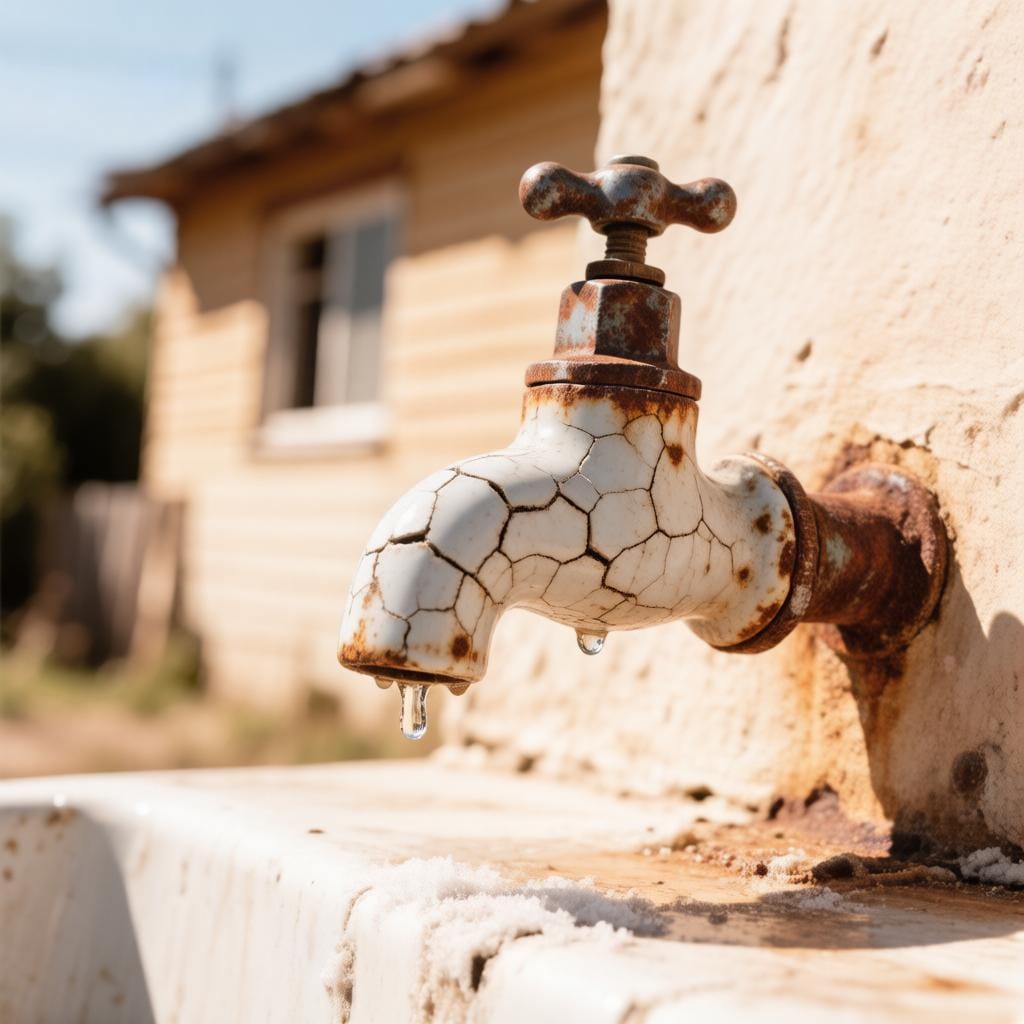
All 99 departments of mainland France have been placed on drought alert, with 67 of them under the highest "crisis" level, EuroNews reports.
In brief
- All 99 departments of mainland France, including Paris, have been placed on drought alert; 67 of them are under the highest "crisis" level.
- At the "crisis" level, water is reserved only for priority needs — healthcare, civil protection, drinking water supply and sanitation; at lower levels, garden watering, pool filling, car washing and agricultural irrigation are banned.
- July 2026 became the hottest month in France's meteorological history and the third driest — the national precipitation deficit reached nearly 70%.
- Water supply disruptions have already affected more than 30,000 people — residents are being supplied with water by tanker trucks and bottled water.
From crisis level to empty taps
By Monday, the green color — denoting the absence of restrictions — had completely disappeared from the water monitoring map of the French state service. The French Geological and Mining Research Bureau (BRGM) reported that water levels in two-thirds of the aquifers supplying most of the country's drinking water have fallen below normal — groundwater depletion occurs every summer, but this year it is especially noticeable due to the lack of rainfall in July and the simultaneous increase in water demand for agriculture and tourism. Environment Minister Monique Barbu acknowledged that drinking water supplies are "under threat in several areas" and will hold an emergency meeting this week on overcoming the crisis, which forecasters predict could worsen.
The same crisis that already halted reactors
The current water restrictions are not an isolated episode but a continuation of the same wave that already halted France's nuclear reactors in late June due to overheating water in the Seine and Rhône and led to more than 10,000 excess deaths across Europe in a single week. Back then, June 2026 became the hottest on record in Western Europe; now July has suffered the same fate. For three consecutive months, abnormal heat and lack of precipitation have been pressing on the same system from different sides — first on energy, then on public health, and now directly on water supply.
Water becomes a political issue
Water scarcity has already become one of the issues on France's election agenda: politicians from different camps are publicly formulating positions on water resource management, including proposals to redraw administrative boundaries along watershed basins for more efficient reserve management. The very fact that the water issue has taken a prominent place in political discourse shows how differently water security is now perceived in a country that until recently had not faced such a deficit on this scale.
Author's conclusion
Three months, three different types of consequences from the same anomaly — halted reactors in June, thousands of heat-related deaths, and now a crisis-level water management regime across 70% of the country — show that for France this is not an episodic drought but a systemic strain on the entire infrastructure at once. For readers following this topic on hunn.kz in the context of water security in Kazakhstan and Central Asia, the French scenario is a rare example of how quickly a problem can escalate even in a country with developed infrastructure and large water reserves, if abnormal heat persists long enough.
Comments ()