From hydrogen planes to AI: how Bertrand Piccard sees a 'green' future
While much of the world still sees the green agenda as restrictions, Swiss explorer Bertrand Piccard offers a radically different view.
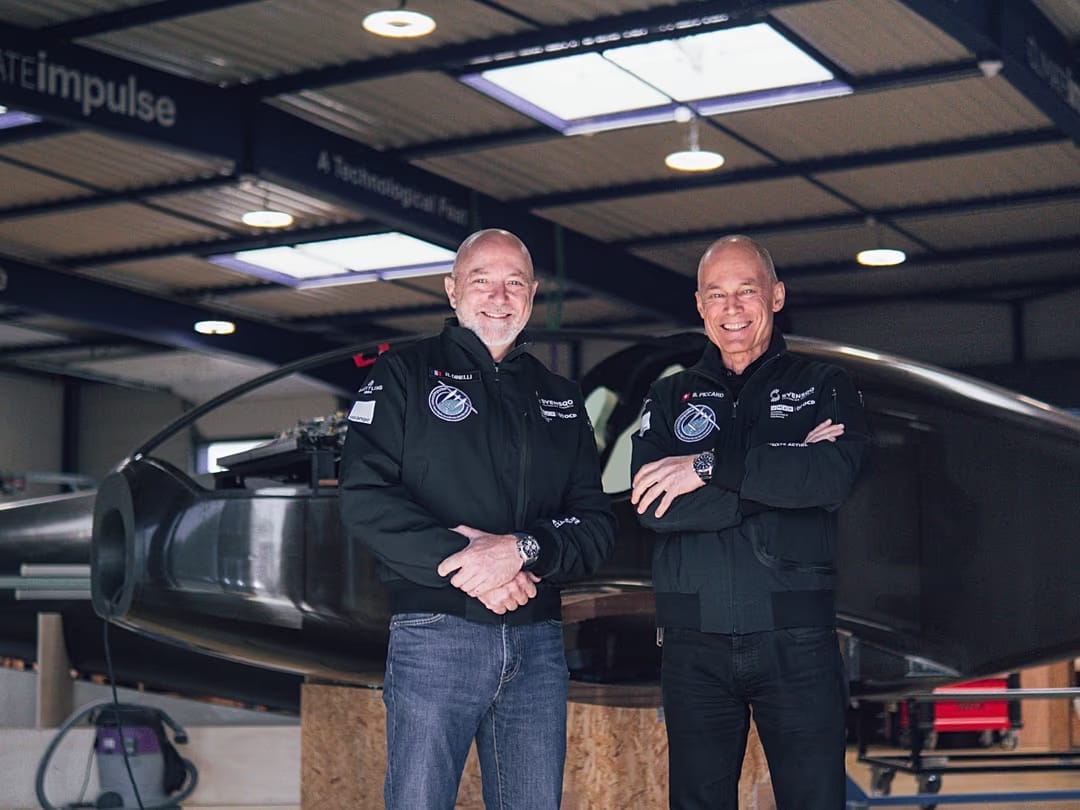
The future of sustainable development is not about abandoning technology, but about actively implementing it — from hydrogen aviation to artificial intelligence, according to Swiss researcher Bertrand Piccard.
Famous for the first round-the-world flight powered by solar energy, Piccard is now working on a new ambitious project — an aircraft powered by liquid hydrogen that aims to fly around the Earth without stopping, proving that eco-friendly technologies can work even in the most challenging industries, reports Euronews.
In a Nutshell
· Bertrand Piccard is preparing the world's first round-the-world flight on a hydrogen-powered aircraft.
· The first test flights of the Climate Impulse project are scheduled for 2027.
· According to Piccard, ecology should be associated not with restrictions, but with new markets and technologies.
· He believes that artificial intelligence can both accelerate the green transition and increase the strain on the energy system.
· For Kazakhstan, this discussion is important against the backdrop of the development of hydrogen energy and the digital transformation of the economy.
Hydrogen Instead of Kerosene
Piccard's new project is called Climate Impulse. Its goal is to make the first-ever non-stop flight around the Earth on an aircraft powered by green hydrogen.
The technology involves using hydrogen produced from solar, wind, or hydro energy. It is then converted into a liquid state at a temperature of around minus 253 degrees Celsius and used to generate electricity through fuel cells. This energy powers the aircraft's electric motors.
The first tests of the aircraft are expected to begin in early 2027. If the project is successful, it will become a strong argument in favor of developing hydrogen aviation, which is currently considered one of the most promising areas for decarbonizing transport.
Ecology as a Source of Profit
One of Piccard's main ideas is the assertion that the environmental agenda is losing the battle for public opinion due to poor messaging.
"Many presented ecology as something off-putting, expensive, associated with sacrifices — as a factor that shrinks the economy and limits mobility," said Piccard.
Instead, Piccard proposes viewing ecology as a driver of innovation.
His foundation, the Solar Impulse Foundation, has already selected over 1,650 technological solutions that simultaneously reduce emissions and generate economic benefits. According to the researcher, it is this combination of ecology and profit that can ensure the mass adoption of green technologies.
Artificial Intelligence: Helper or Threat?
Piccard pays special attention to the development of artificial intelligence.
He is convinced that AI can significantly improve the efficiency of the energy sector, industry, and urban infrastructure. Algorithms can optimize power grids, reduce resource waste, and increase enterprise productivity.
However, there is also a downside.
If artificial intelligence is used primarily for increasingly resource-intensive entertainment and digital services, the demand for new data centers could negate the environmental benefits of the technology. According to Piccard, much depends not on AI itself, but on how humanity decides to use it.
"All the positive impact we could have on the environment could be completely nullified by unnecessary, poorly implemented AI applications using polluting technologies," says the researcher.
The problem is already becoming global. According to data from the international C40 Cities network, the number of data centers will continue to grow rapidly in the coming years, and their energy and water consumption are causing concern among city authorities worldwide.
Why This Matters for Kazakhstan
For Kazakhstan, Piccard's ideas are not just of theoretical interest.
The country is already considering projects for the production of green hydrogen and aims to secure a place among future suppliers of clean fuel for Europe and Asia. If the hydrogen economy develops successfully, Kazakhstan could gain a new export market comparable in significance to its traditional raw materials sector.
At the same time, the republic is actively implementing artificial intelligence technologies in public administration, industry, and the agricultural sector. This means that issues of energy efficiency in digital infrastructure will become increasingly relevant for Kazakhstan as well.
Author's Conclusion
The story of Bertrand Piccard shows that the next technological revolution may be not so much environmental as economic. Hydrogen aircraft, smart power grids, and artificial intelligence are becoming competitive not because they are "green," but because they are gradually beginning to offer more efficient solutions. For Kazakhstan, this is an important signal: in the coming years, the battle will no longer be between ecology and economy, but between old and new technologies. And the countries that can integrate into this transformation the fastest will be the winners.


Comments ()