German startup wants to build the world's first commercial laser fusion power plant
At the site of one of Germany's largest decommissioned nuclear plants, something quite the opposite of dismantling is being prepared.
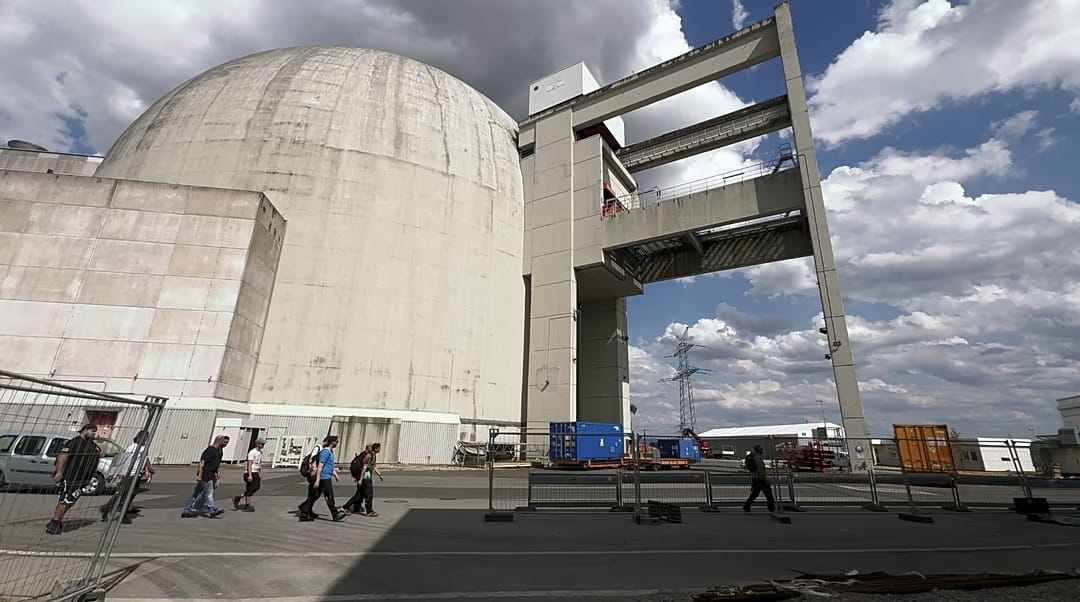
Instead of dismantling the reactor domes, they plan to fill them with a new technology — laser-based thermonuclear fusion, reports Euronews.
The gist in brief
- The German startup Focused Energy from Darmstadt intends to build the world's first commercial laser fusion power plant at the site of the former Biblis nuclear power plant, using existing infrastructure — from grid connections to the buildings and reactor domes themselves.
- The company's roadmap envisions three stages: a demonstration facility in 5 years, a pilot power plant in 10 years, and the world's first commercially competitive laser fusion station in 15 years.
- The stated capacity of the future station is nearly 1 GW, enough to supply about 2 million households with electricity.
- This spring Focused Energy raised $240 million in its first funding round — a record amount for such a round in the global fusion industry; the energy concern RWE, one of the largest in Europe, invested €60 million in the company.
Why Biblis specifically
Focused Energy Vice President Ulrich Siegel explained the choice of site pragmatically: the conditions here are simply ideal, since the company can use ready-made infrastructure — from grid connections to the buildings themselves. The station's reactor domes will physically remain in place, but in the future what happens inside them will be not nuclear fission but thermonuclear fusion — specifically, the pilot laser fusion power plant is planned to be built in the former reactor unit A. Germany, which is consistently phasing out nuclear power based on fission — decontamination of reactor vessels and demolition of cooling towers continues across the country — thus gets a chance to turn a symbol of a departing technology into a site for a technology of the future.
Skepticism remains justified
Even the company itself admits: the remaining technical challenges are colossal, including unresolved problems of the fuel cycle and scaling encouraging but still laboratory results to an industrial level. Critics point out directly that fusion technology remains insufficiently mature and excessively expensive for real commercial use in the foreseeable future. At Focused Energy, however, they insist on the opposite — by their calculations, laser fusion will be able to compete in cost even with already well-established fission power and renewable sources, although for now this remains a calculation on paper rather than a result confirmed by practice.
Two different paths for preserving nuclear energy
The fate of Biblis is especially telling against the backdrop of what is happening with another decommissioned Soviet-era station — Lithuania's Ignalina nuclear power plant. We have already repeatedly written that the dismantling of its RBMK-1500 graphite reactors has dragged on and costs significantly more than the original estimates — Lithuania chose the path of complete and maximally cautious disassembly of confidential workers down to the last element. Germany with Biblis is taking a fundamentally different path: instead of dismantling the reactor domes and preserving them and through new production. This does not mean that the German path automatically becomes cheaper or faster — thermonuclear fusion remains unproven at the commercial level — but the very fact that European countries are constantly choosing such different strategies for handling the nuclear legacy of the last century shows that a simple answer to the question "what to do with old nuclear infrastructure" does not yet exist.
Author's conclusion
The announced 15-year roadmap of Focused Energy is a typical example of how ambitious and at the same time uncertain the timelines in the fusion industry are: virtually all such projects around the world have for years promised a commercial power plant "in 10–15 years," and so far none of them has confirmed this timeline in practice. But the scale of the capital raised and the willingness of a major energy concern like RWE to invest real money in a specific site is a far more weighty signal of seriousness of intent than the ambitious roadmap itself. Whether the German startup will manage to outpace competitors from the US and China will be shown precisely by the next five years — the very period by which the company promises to show its first working demonstration facility.
Comments ()