Global nuclear power must triple capacity by 2050
The World Nuclear Association has released its flagship industry report of the year — and its findings are both encouraging and sobering.
Declared national ambitions are sufficient to triple global nuclear capacity by mid-century, but current reactor construction rates must increase sixfold for these ambitions to become reality.
The Bottom Line
- Global nuclear generation reached a record 2,702 TWh in 2025—9% of global electricity production, with an average reactor capacity factor of 83.7%.
- The goal of tripling global nuclear capacity by 2050, agreed at COP28 in Dubai in 2023, is now supported by 38 countries—up from 25 countries a year earlier.
- If all declared national targets and already identified projects are implemented, global capacity could reach 1,457 GW by 2050—but for this, the rate of new reactor construction must increase approximately sixfold compared to current levels.
- In 2025, construction began on only 11 new reactors worldwide (nine in China, two in Russia)—such high figures have been achieved only twice in the last 40 years, in 2009 and 2010.
Five Categories of Country Readiness
The report's key methodological innovation is a systematic assessment of how ready different countries actually are to implement their nuclear ambitions, rather than merely declaring them. The authors divide states into five groups.
"Pacesetters"—China, Russia, and South Korea—operate continuous serial construction programs, giving them predictable timelines and control over project costs.
"Expanders," including the US, India, the UK, and France, have recent construction experience but have not yet turned individual projects into sustainable serial programs—this explains the large-scale delays and budget overruns at sites such as Hinkley Point C or Flamanville-3.
"Restarters"—among them Armenia, Belgium, Sweden, and Ukraine—have mature institutions and operating reactor fleets but have not built new reactors continuously for a long time.
"Newcomers"—Bangladesh, Belarus, Egypt, Kazakhstan, Poland, Turkey, the UAE, and Uzbekistan—are building or preparing to build their first reactor.
Finally, "Candidates," including Indonesia, Vietnam, and Saudi Arabia, have only determined their intention to develop nuclear energy.
Where the Bulk of Capacity Is Concentrated
The report shows that global success in the tripling task depends not on dozens of countries evenly, but on a relatively small group of states. Five countries—China, France, India, Russia, and the US—will collectively account for 986 GW of the projected 1,457 GW of global capacity in 2050. At the same time, the largest volume of potential capacity is concentrated specifically in the "expanders" category—about 530 GW—but it is precisely this group that shows the largest gap between declared political readiness and the actual maturity of specific projects. In other words, the global outcome will depend primarily on whether already experienced but non-serial nuclear plant builders can transition to sustainable programs, rather than on the emergence of new countries on the global nuclear map.
Kazakhstan as an Example of a Newcomer
Among the "newcomers," the report specifically mentions Kazakhstan, noting that the country "has advanced far in plans to build its first reactor at Balkhash," and an interstate agreement on construction and an export credit contract have already been signed with Russia. We have already written that this process has since moved to an even more practical stage—the contract for the design, supply, and construction of Kazakhstan's first NPP was signed at the Eastern Economic Forum in Vladivostok. For countries in this category, the report formulates its main recommendation: to use the first project as a platform for a subsequent program, preserving the accumulated personnel, institutions, and supply chains, rather than starting everything from scratch if the country decides to build more than one reactor.
Uranium Countries as a Separate Opportunity
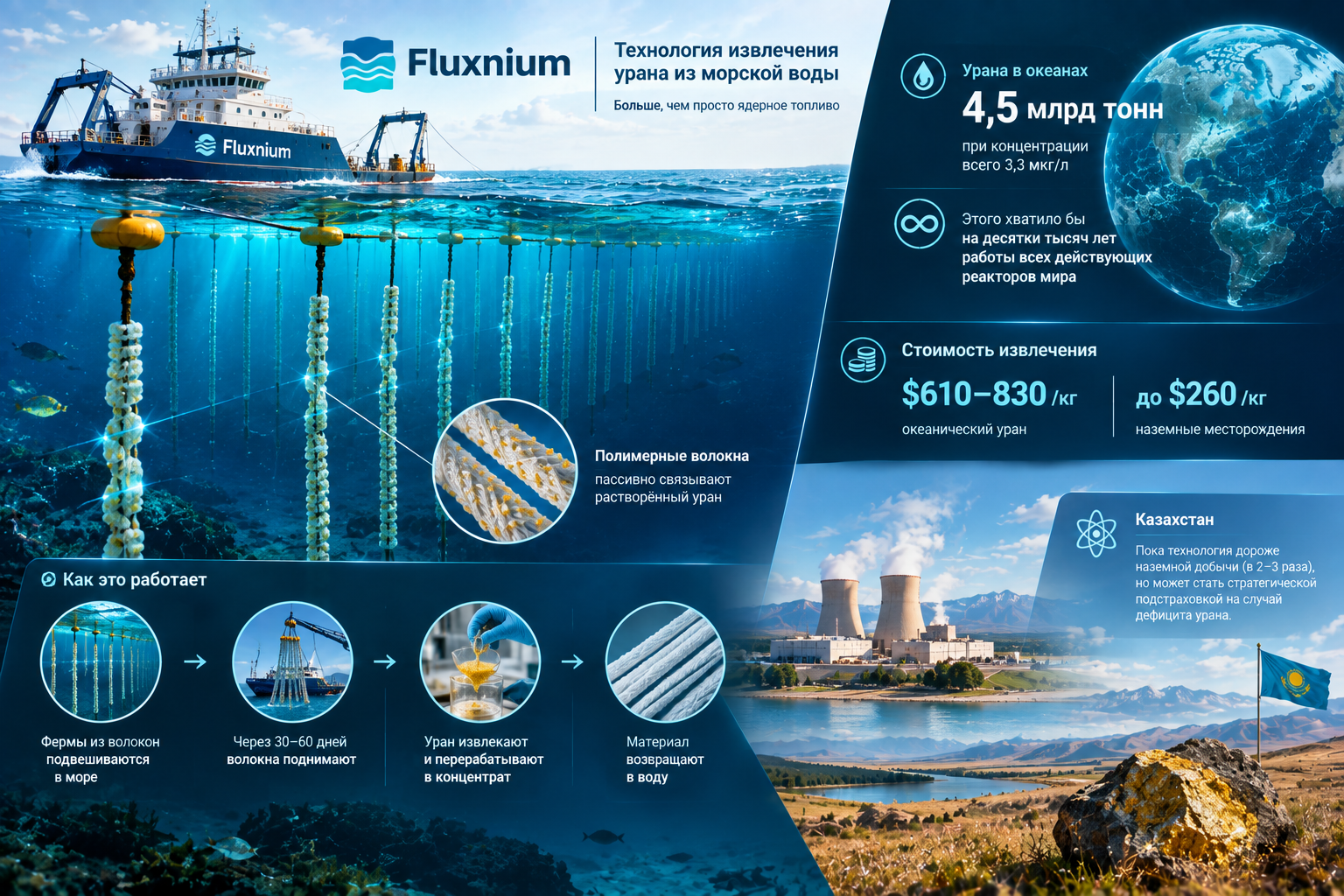
A separate recommendation in the report concerns countries in Africa and Central Asia with significant uranium reserves and resources: the authors indicate that such states would benefit from linking uranium resources to the development of their own nuclear energy—thereby creating reliable low-carbon energy to support sustainable mining and other energy-intensive industries. Kazakhstan—remaining the world leader in uranium production, over a third of all global output—emerges as one of the most obvious examples of such a strategy being implemented already, and not only in theory.
Author's Conclusion
The report's main thesis is not whether the world has enough political will to triple nuclear capacity: judging by the collected national targets, there is more than enough ambition. The problem lies in the gap between declarations and the real capacity of the system—regulators, supply chains, financing, trained personnel—to bring these ambitions to actually commissioned reactors. For countries like Kazakhstan, which are at the beginning of this path, the report provides not so much grounds for optimism as a clear benchmark: the success of the first project is determined not only by whether it will be built, but also by whether the accumulated experience can be turned into the foundation for a sustainable program, rather than a one-off achievement.
Comments ()