GMOs: Prospects and Challenges for Central Asia
GMOs give farmers tools to boost yields and cut chemical use. Studies confirm their economic benefits for approved crops. Yet, despite these advantages, debates over environmental and ethical concerns persist.
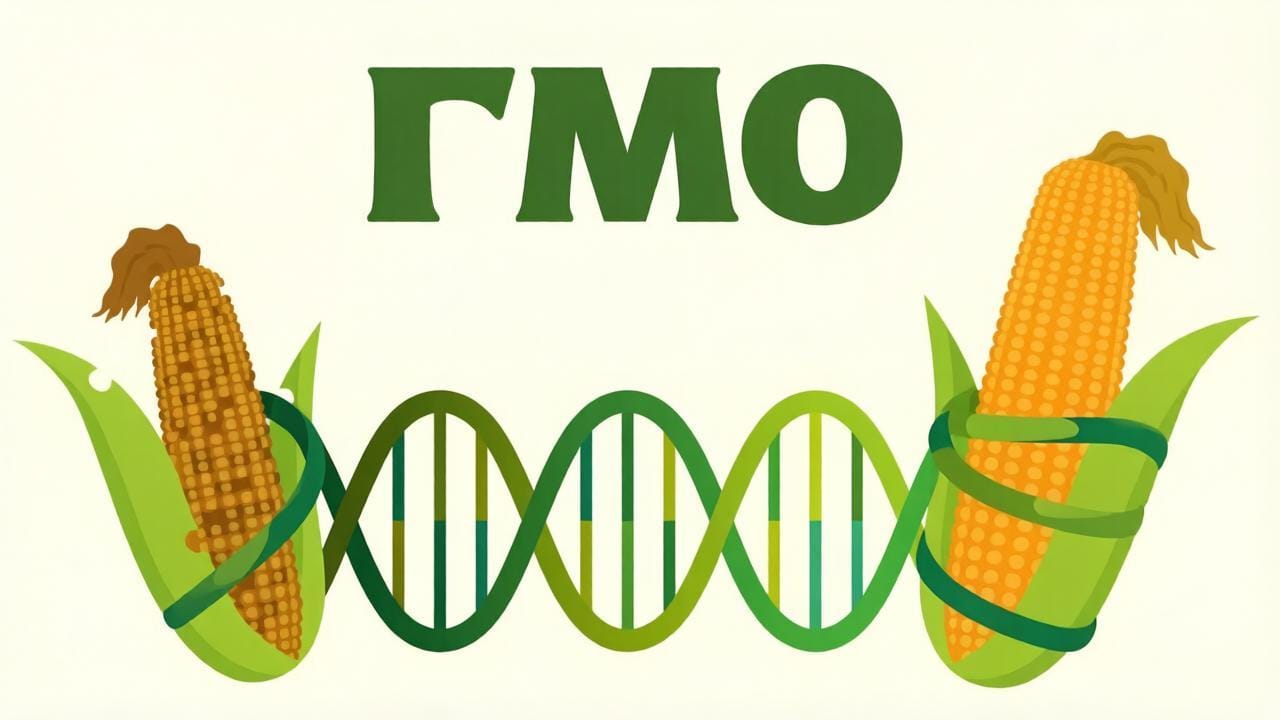
Genetically modified organisms have been shaping the global agricultural landscape for more than 25 years. While Ukraine and the European Union are transitioning to new regulatory rules in 2026, the question of implementing GMO technologies remains open for Kazakhstan and Central Asian countries — given climate risks, drought, and the need to enhance food security.
In brief
• Global areas under GMO crops have reached 210 million hectares in 28 countries, with 90% concentrated in the USA, Brazil, Argentina, India, and Canada
• New genomic techniques (NGTs), including CRISPR, allow genome editing without introducing foreign DNA — the EU has already introduced differentiated regulation
• For Central Asia, where drought and soil salinization are becoming critical, precise genome editing could serve as an alternative to traditional GMOs
• The registration process for GMO crops is significantly stricter than for conventional varieties and includes assessments of toxicity, allergenicity, and ecosystem impact
Global context: who grows what
As reported by ProAgro, as of 2024, commercial GMO crops occupy approximately 210 million hectares in more than 28 countries. The leaders are soybeans, corn, cotton, and canola. Five countries — the USA, Brazil, Argentina, India, and Canada — control over 90% of these areas. Meanwhile, the share of developing countries continues to grow.
For Kazakhstan, where cotton farming is traditionally developed in the Turkestan region, and soybeans and corn are promising crops, the experience of neighboring countries is of interest. However, Kazakhstan is not yet among the countries actively adopting GMOs, maintaining a conservative stance.
Technologies: from transgenes to CRISPR
Traditional GMOs involve the transfer of foreign DNA — for example, a gene from the soil bacterium Bacillus thuringiensis for insect protection (Bt crops). Modern technologies, particularly CRISPR-Cas9, allow editing a plant's own genome with single-nucleotide precision, without introducing foreign material.
In June 2026, the European Parliament approved differentiated regulation for new genomic techniques (NGTs):
Category NGT1 — treated as equivalent to conventional varieties, without additional labeling or enhanced risk assessment
Category NGT2 — retains strict requirements comparable to traditional GMOs
This decision paves the way for faster adoption of crops resistant to drought or diseases, which is critically important for the arid zones of Central Asia.
What this means for Kazakhstan and the region
For Central Asian countries, where the problems of soil salinization, water scarcity, and declining fertility are becoming acute, precise genome editing technologies could offer solutions without the political and regulatory barriers associated with traditional GMOs.
"New genomic techniques allow for changes that mimic natural mutations or classical breeding, but tens of times faster," notes the analytical material from ProAgro.
However, implementation requires transparency in patent issues, monitoring of ecosystem impacts, and farmer access to technologies. For Kazakhstan, which is harmonizing its standards with EAEU norms, the experience of Ukraine and the EU could serve as a benchmark.
Regulatory risks and prospects
The registration process for each new GMO crop includes a multi-level review: molecular characterization, assessment of toxicity, allergenicity, compositional equivalence, and environmental impact. This process is significantly stricter than for varieties developed through classical methods.
For Kazakhstan, where agriculture faces moisture deficits, salinization, and declining yields, the introduction of drought-resistant crops through NGTs could be a pragmatic solution. However, this would require legislative adaptation and the creation of a risk assessment system comparable to international standards.
Author's conclusion
The global trend toward differentiated regulation of GMOs and NGTs creates a window of opportunity for Central Asia. While the region maintains a conservative stance, neighboring countries and the EU are already shaping new rules of the game. The question is not whether to adopt genome editing technologies, but how to do so safely, transparently, and to the benefit of farmers who lose crops annually due to climate stresses.


Comments ()