Heat kills 540,000 people a year, and two-thirds of these deaths are linked to climate
The Lancet Countdown 2026 report finds climate change's health harms are growing faster than the measures to counter them.
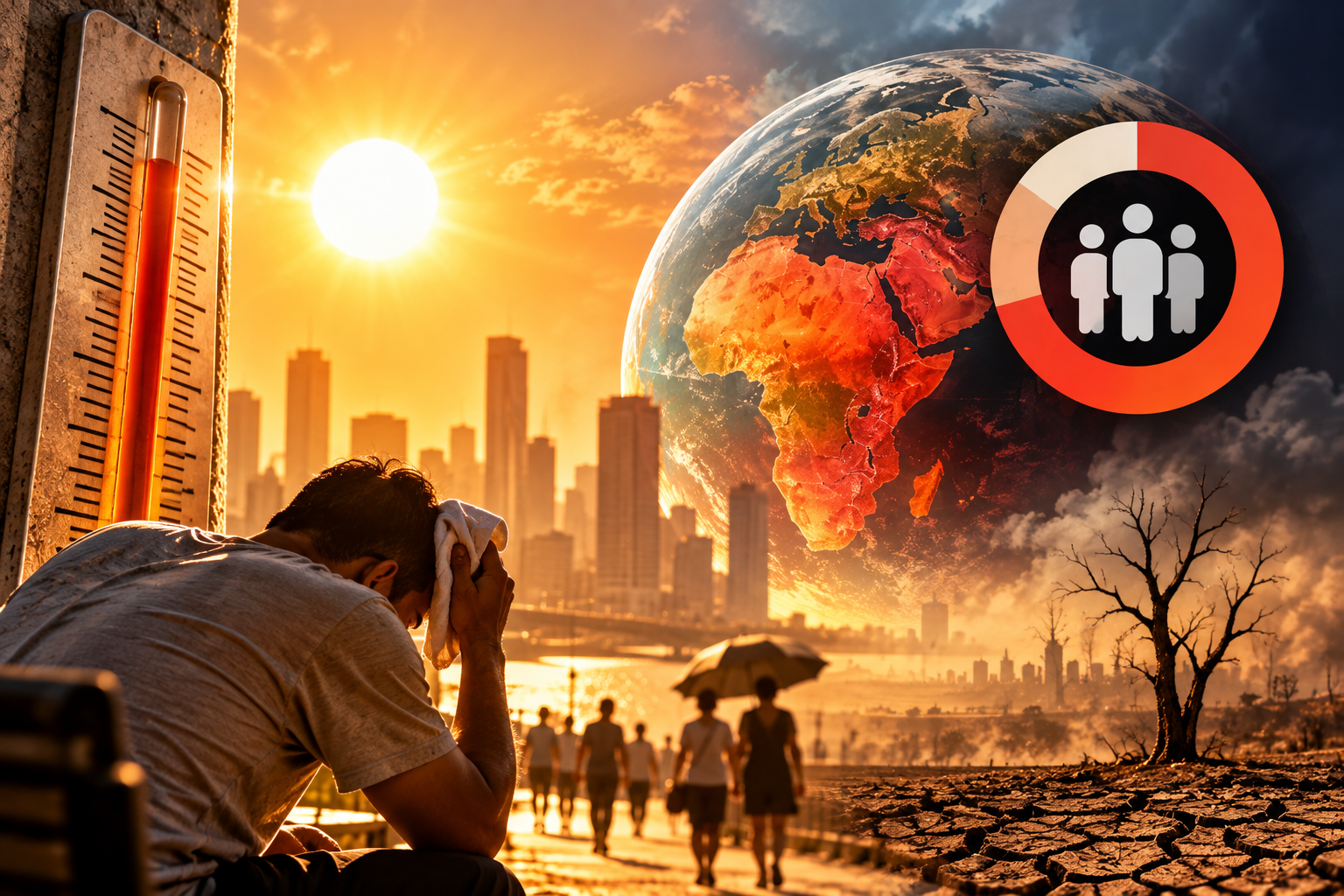
In 2016-2023, an average of 540,800 people died from heat worldwide each year, and 68% of these deaths are linked to climate change, reports News-Medical. The report was published on October 27 in The Lancet journal ahead of the UN climate conference COP31.
The essence in brief
- In the record year 2023, 710,000 people died from heat, more than from malaria or HIV.
- Lost working hours due to heat in 2025 cost the world $1.07 trillion, the third year in a row above one trillion dollars.
- In 2025, 51.8% of land experienced at least one month of extreme drought.
- Investments in clean energy reached $2.1 trillion, but fossil fuels still provide more than 80% of global energy.
What the report is about
Lancet Countdown is an international project that annually tracks the link between climate and health. The 2026 report was prepared under the leadership of University College London (UCL) together with the World Health Organization (WHO): 146 researchers from more than 100 institutions in more than 30 countries took part in the work. The authors track 54 indicators, four of them new, including water availability on land and funding for climate and health research.
The main conclusion: in the decade after the Paris Agreement (2016-2025), many types of health harm grew faster than in the previous ten years. Clean energy, health system readiness and health protection laws have produced results, but not enough to offset the harm from climate change caused by fossil fuels.
What about heat
In 2006-2015, 55% of heat deaths, or 219,100 per year, were linked to climate change. In 2016-2023, this share rose to 68%, or 369,900 deaths per year. According to the authors' estimate, climate change in 2016-2023 caused almost 3 million heat deaths.
In 2025, heat reduced work capacity, and the world's potential income shrank by $1.07 trillion, or 0.91% of global output. Southeast Asia was hit hardest (3.9% of GDP), followed by Africa (3.2%) and the Americas (1.5%); in Europe losses amounted to 0.2%. Agriculture accounted for 38% of losses, construction for 29%, and in Africa agriculture accounts for 71% of heat-related losses.
Droughts and precipitation
In 2025, 51.8% of the world's land experienced at least one month of extreme drought. This is the second-highest result after 2023. Since 2003, 43% of land has become drier and 37% wetter. Extreme precipitation in 2016-2025 covered about 17.2% of land per year versus 14.8% in the previous decade, which increases the risk of floods, landslides and waterborne diseases.
What has been improved
Investments in clean energy reached a record $2.1 trillion in 2025, 7.2% more than a year earlier. This is 82% more than the $1.16 trillion invested in fossil fuels. The share of renewable sources in electricity generation grew from 5.5% in 2016 to 13.5% in 2023.
Cleaner air prevents about 323,000 deaths per year in at least 77 countries where fossil fuel pollution has declined since 2016. But it still kills about 2.73 million people a year.
National health adaptation plans for climate now exist in 56 of the 194 WHO countries, compared with 14 in 2015. Funding for climate and health research grew from $42 million in 2016 to $316 million in 2024, but 84% of this money goes to researchers in the richest countries.
How much is spent on fossil fuels and on adaptation
The hundred largest oil and gas companies plan to extract 150% more fossil fuel by 2040 than is compatible with the 1.5°C target. Global net subsidies for fossil fuels reached record levels in 2022-2024; since the Paris Agreement they have amounted to $6.20 trillion. Ten countries in 2024 spent more on these subsidies than on healthcare.
Developing countries estimate minimum health adaptation costs at $3.3 billion per year, while about $1.1 billion was pledged in 2024.
What the authors propose
The authors call for officially recognizing climate change as a global health emergency, creating a new WHO instrument for this, putting health at the center of every climate decision, and urgently and equitably reducing greenhouse gas emissions. Climate financing for health, in their view, should be provided as grants rather than loans.
Lancet Countdown Executive Director Marina Romanello said that climate harm to health is growing faster than the world's response to it. The chair of the project's board, former Prime Minister of New Zealand Helen Clark, noted:
"What is missing is not the evidence, but the political will to act."
What else is happening with the climate in the world and in Kazakhstan
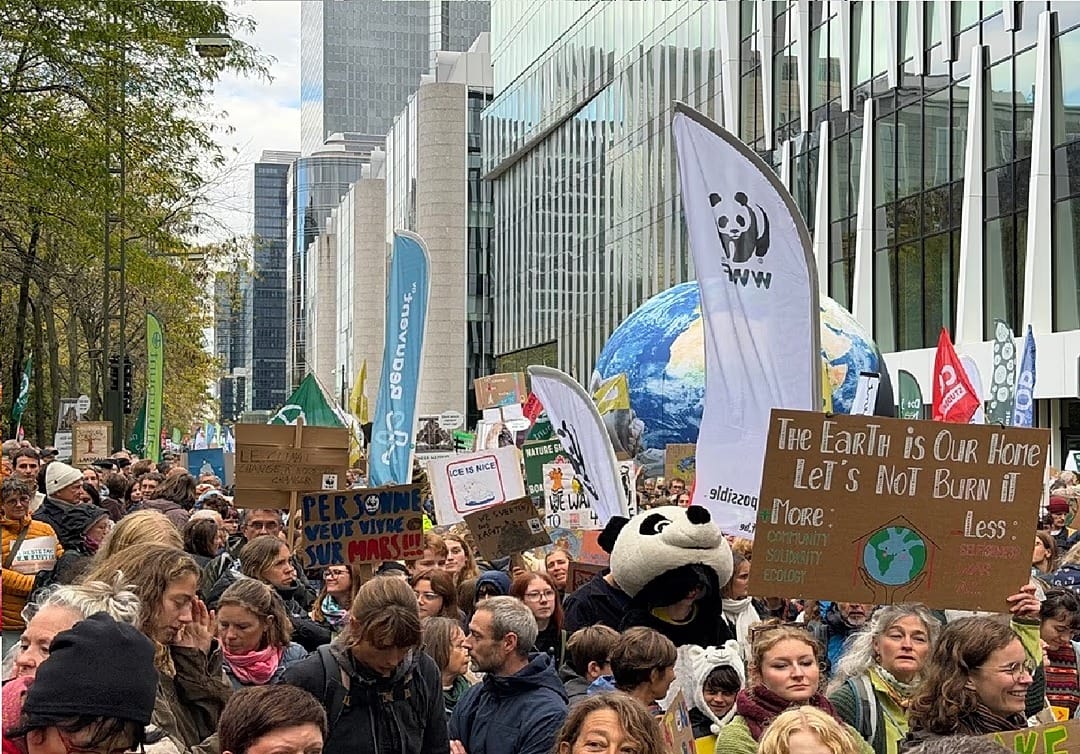
Heat remains the main threat of this year. According to an estimate by the Climate Impact Lab at the University of Chicago, from June 2026 to February 2027, due to the super El Niño, 451,000 more people may die from heat than in a normal year. Scientists also identified five areas where climate decisions may become irreversible, and named clean energy as the main driver of change. Ahead of COP31, which will be held in November in Antalya, 45,000 people took part in a climate march in Brussels according to police estimates, while organizers speak of 60,000. Participants demand an end to fossil fuel subsidies and a tax on the sector.
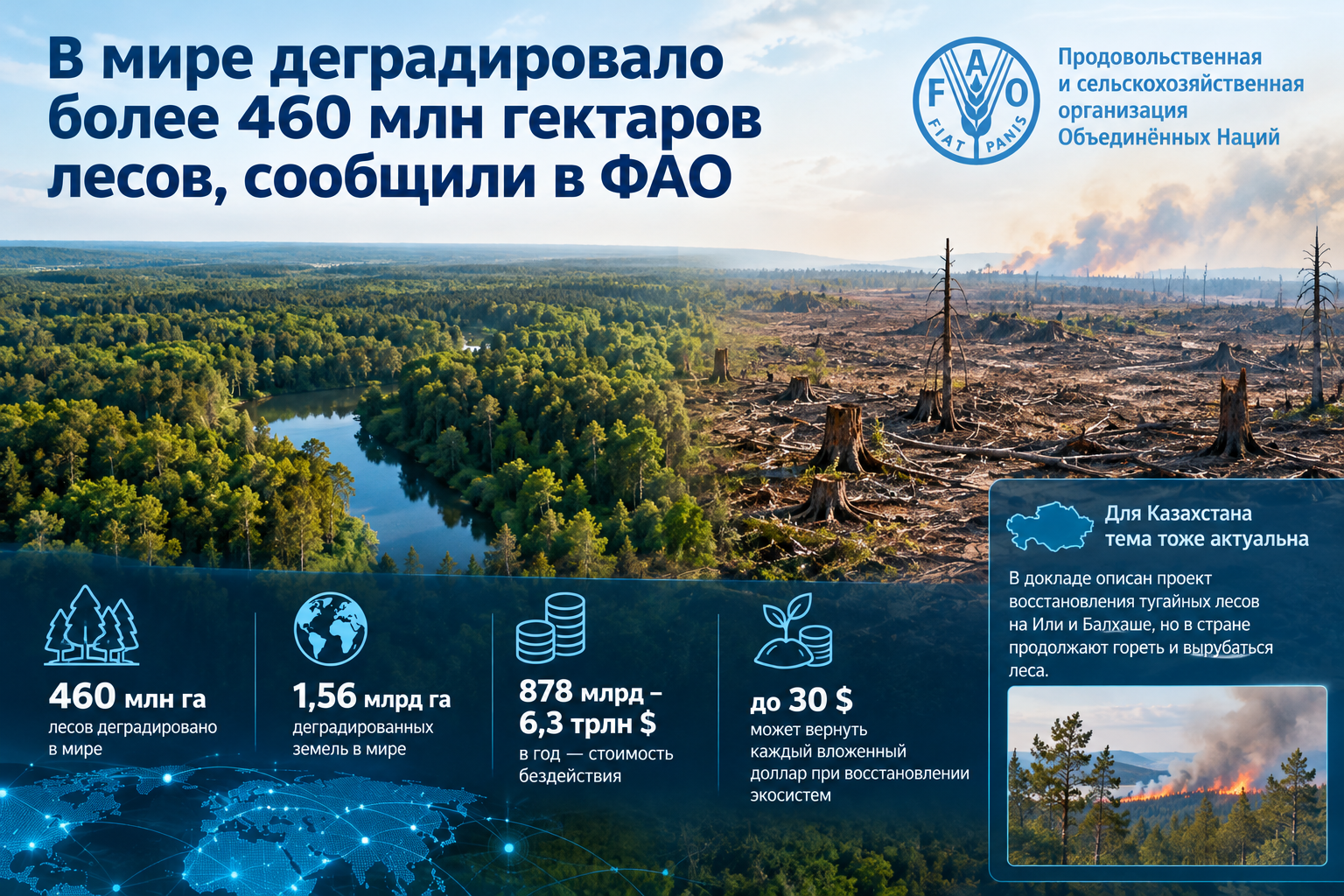
As for forests, more than 460 million ha have been degraded worldwide, reported the FAO. In Kazakhstan, tugai forests on the Ili and Balkhash are being restored from 2018 to 2048, with work so far underway on 25,500 of the planned 200,000 hectares. Nature protection is also being discussed at the UN biodiversity conference COP17 in Yerevan: according to preliminary data, countries are lagging on all 23 targets adopted in Montreal in 2022, and Tokayev took part in the leaders' summit on October 16. More than $4 million could be allocated to the country's climate projects, but most of these funds are still under discussion rather than approved.
Author's conclusion
Two figures stand side by side in the report: $2.1 trillion in clean energy investments in 2025 and $6.20 trillion in fossil fuel subsidies since the Paris Agreement. The first is growing, but the second has accumulated over the same decade, and ten countries in 2024 spent more on subsidies than on healthcare.

Comments ()