Hungary to double funding for Paks-2 NPP even after cooling crisis
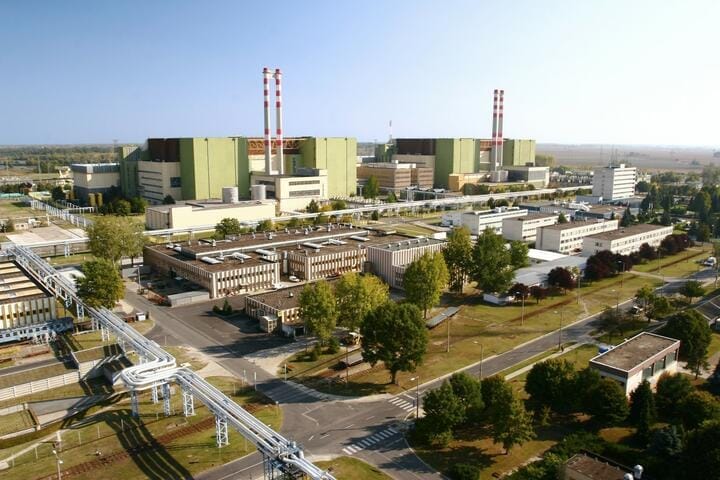
Just weeks after the Danube halted the Paks nuclear plant for the first time in 44 years, Hungary nearly doubled funding for two new units there.
Notably, according to engineers' calculations, these new reactors will require even more water for cooling from that very same depleted river.
The gist in brief
- The Hungarian government plans to nearly double funding for the under-construction Paks-2 nuclear power plant in 2026 — from the originally planned HUF 95 billion to HUF 206.6 billion, meaning an additional HUF 111.6 billion.
- Over the 12 years of the project's implementation, the state has already allocated HUF 628.7 billion to it, and with the 2026 tranche taken into account, the total will reach HUF 834 billion — only about a quarter of the originally stated project cost.
- The funding increase comes amid the fact that the new VVER-1200 reactors (total capacity 2,400 MW) will require more than twice as much cooling water from the Danube as the four existing Paks-1 units (2,000 MW) — the very ones that this summer had to be completely shut down for the first time in 44 years.
- Hungary's National Atomic Energy Agency has already stated that some of the construction permits for Paks-2 may be declared invalid in light of the crisis; Prime Minister Péter Magyar said the government will make a final decision on the project's fate only after a full audit is completed.
Money grows, reactors aren't built
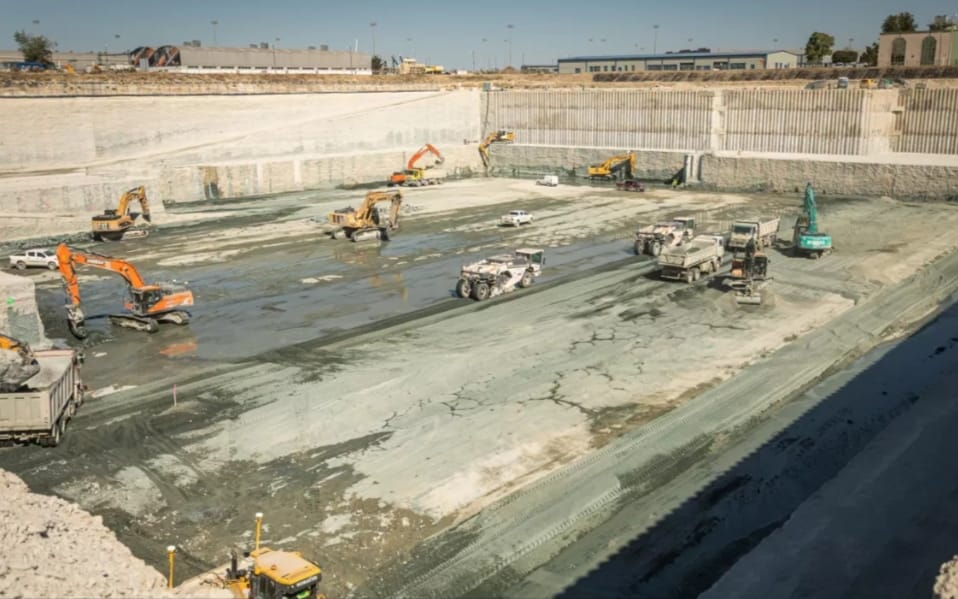
The project's timeline shows a gap between promises and reality. The agreement to build Paks-2 was signed in January 2014, with Rosatom committing to bring the first reactor into operation "turnkey" by 2024 and the second by 2026, for €10 billion (equivalent to about HUF 3 trillion at the time) for both units. None of this happened: the project stalled for years because the Russian supplier could not adapt the design documentation, prepared according to Russian standards, to meet European Union requirements. To date, only earthworks and the pouring of the foundation slab for Unit 5 have been completed, and earthworks for Unit 6 have begun. Even if the project does not require a full revision, current estimates suggest the first reactor may not be launched before 2032 — and, as the publication notes, the chances of meeting even that deadline are slim. Meanwhile, the already spent HUF 834 billion accounts for only 25–28% of the originally stated cost, and by some estimates the final price tag could rise to HUF 5–6 trillion — double the original estimate.
The cooling math doesn't add up
The technical argument that makes the decision to double funding look particularly controversial is the cooling issue. The four existing Paks-1 units with a total capacity of 2,000 MW have already demonstrated what happens when the Danube hits record low levels in the summer of 2026 — the plant had to be completely shut down. The two new Paks-2 units of the VVER-1200 type are expected to generate a combined 2,400 MW — meaning that even without accounting for differences in cooling efficiency, the new reactors will need more water than the old ones, which have already proven their vulnerability. Some industry experts pointed out this problem at the very start of construction, insisting that cooling for the new reactors should be made independent of the Danube — that is, by building cooling towers rather than relying solely on river water, as is done at Paks-1.
Audit instead of an immediate decision
After the near-complete shutdown of the operating plant, representatives of Hungary's National Atomic Energy Agency acknowledged that some of the already issued construction permits for Paks-2 may be declared invalid in light of what happened. Prime Minister Péter Magyar has repeatedly stated in recent weeks that the government has not yet made a final decision on the project's fate, and is instead conducting a full audit of the entire project, based on the results of which the question of continuing construction will be decided. At the same time, the government is nevertheless submitting budget amendments to parliament providing for increased funding as early as this year — meaning money continues to be allocated for the project even while its future formally remains in question.
Part of an already familiar story
This is a direct continuation of a story we have already covered: in the summer of 2026, the Paks nuclear power plant completely shut down all four reactors for the first time in 44 years due to record-low water levels in the Danube — the third such case in Europe in a single season, following shutdowns in France and Romania. At the time, we noted that for Kazakhstan, which has in parallel signed agreements to build a nuclear power plant at Balkhash, the three European precedents are not distant chronicles but a direct warning about the need to think through the plant's water resilience at the design stage. The Hungarian case now adds another layer to this lesson: even when the cooling problem has already manifested itself in practice, the inertia of already invested money and political commitments can override engineering arguments in favor of revising the project.
Author's conclusion
The decision to increase funding for Paks-2 precisely now, when the operating plant has just demonstrated the limit of its water resilience, shows a typical conflict between sunk costs and rational revision of plans. Formally, the Hungarian government is not closing the question — the audit is ongoing, and a final decision on continuing the project has not yet been announced — but continued funding amid the unresolved technical issue of cooling speaks volumes about where real political will is leaning, regardless of the audit's outcome.
Comments ()