India launches $2.9 billion tender for construction of four new nuclear power units
India launches one of its biggest nuclear tenders in years: state-run NPCIL seeks bids for nuclear islands of four 700 MW heavy-water units at Mahi Banswara.
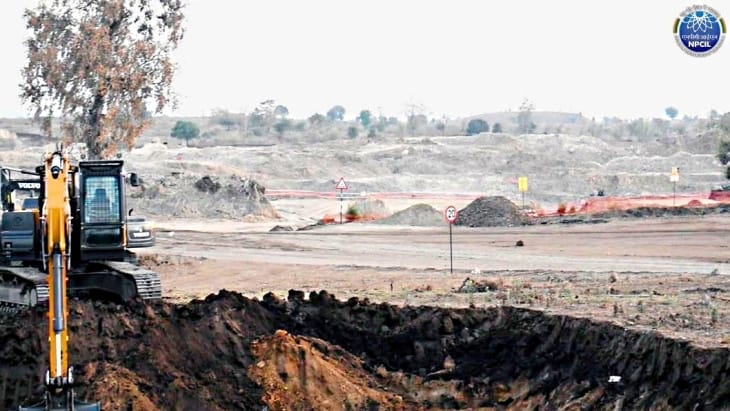
As reported by the publication Atomic Energy 2.0, the total contract value is estimated at approximately $2.9 billion, and the project will become an important part of the country's program for a sharp expansion of nuclear energy.
The Gist
· India launches a tender for the construction of nuclear islands for four PHWR-700 units.
· The project cost is estimated at approximately $2.9 billion.
· The total capacity of the new plant will be 2.8 GW.
· This will be one of the largest projects in India's heavy water reactor development program.
· The country plans to nearly triple its nuclear capacity by 2031–2032.
What is a "Nuclear Island"
The tender concerns the construction of so-called nuclear islands — the key part of a nuclear power plant, which houses:
· the reactor;
· steam generators;
· cooling systems;
· safety equipment;
· control and instrumentation systems.
This segment is considered the most complex and technologically sensitive element of a nuclear power plant.
The project is being implemented by the state-owned company Nuclear Power Corporation of India Ltd (NPCIL).
Four New PHWR-700 Reactors
At the Mahi Banswara site, it is planned to build four power units with PHWR-700 (Pressurized Heavy Water Reactor) type reactors.
Each unit will have an electrical capacity of 700 MW, and the total capacity of the plant will reach 2800 MW.
The PHWR-700 reactors are an indigenous Indian development, based on many years of experience operating heavy water reactors in the country.
Why India is Betting on PHWR
Unlike many countries that use enriched uranium reactors, Indian heavy water reactors are capable of operating on natural uranium.
This allows:
· reducing dependence on external fuel supplies;
· utilizing domestic uranium resources;
· localizing a significant portion of the equipment.
India views the PHWR-700 as a base technology for rapidly scaling up nuclear capacity.
Part of a Large-Scale Nuclear Program
The Mahi Banswara project is part of the state program for expanding nuclear energy.
Today, India's installed nuclear capacity is about 8 GW, but the government intends to increase it to 22–23 GW by 2031–2032.
To achieve this, several major projects are being implemented simultaneously:
· new PHWR-700 units;
· reactors of foreign design;
· advanced fast reactors.
What This Means for the Global Nuclear Market
The $2.9 billion tender shows that India is becoming one of the most active nuclear construction markets in the world.
Unlike Europe, where new nuclear power plants often face delays and cost overruns, India is betting on the serial construction of standardized reactors, which should reduce costs and accelerate capacity commissioning.
If the PHWR-700 program is successfully implemented, India could become the world's largest operator of new-generation heavy water reactors.
What This Means for Kazakhstan
For Kazakhstan, the Indian project is of particular interest for several reasons.
Firstly, India remains one of the world's largest consumers of uranium and will potentially increase fuel purchases as new units are commissioned.
Secondly, India's example demonstrates an alternative approach to nuclear energy development: not individual mega-projects, but the serial construction of standardized reactors, which allows for faster capacity increases and greater equipment localization.
The Indian tender shows that nuclear energy also remains one of the key directions of the global energy transformation.
Author's Conclusion
India is betting not on experimental technologies, but on scaling up its already mastered indigenous PHWR-700 platform. The $2.9 billion tender is not just a contract for building four units, but a signal of the country's transition to an industrial stage of nuclear energy development. For Kazakhstan, the main takeaway is that global demand for nuclear fuel and related technologies is likely to grow in the coming decades, and the centers of nuclear construction are increasingly shifting from Europe to Asia.
Comments ()