Iran estimates oil spill in Strait of Hormuz in trillions of dollars
Multiple large oil slicks have been detected in the Persian Gulf and the Strait of Hormuz.
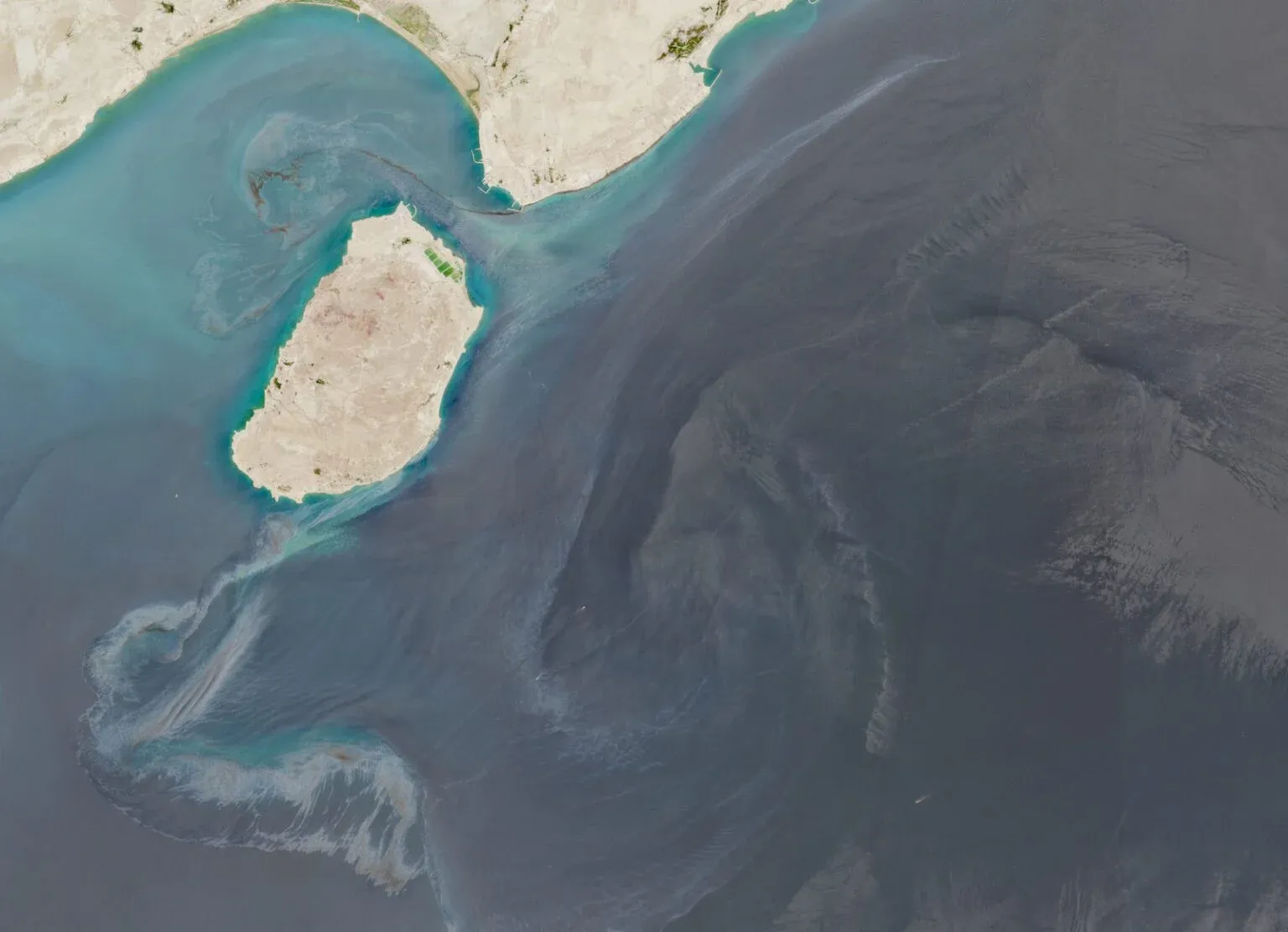
The Iranian side used the scale of the pollution as a pretext to declare colossal economic damage and demand shared responsibility from all countries using shipping through the strait.
The gist in brief
- Satellite images from Copernicus Sentinel-2 and video verified by Reuters have recorded at least two oil slicks in Iranian waters — off the southern tip of Qeshm Island (image from August 10) and off Sirri Island (image from August 13).
- The source of the first slick is the cargo ship Minoan Pioneer, flying the Liberian flag, damaged by an unidentified projectile on August 3 during a suspected Iranian attack in the Gulf of Oman while transiting the Strait of Hormuz; one crew member is listed as missing.
- A separate spill, unrelated to the military conflict, occurred off the coast of Oman: the sanctioned tanker Caroline Bezengi carrying Russian oil ran aground about two months ago in a protected marine area, creating a slick that some estimates put at 2,000 sq km.
- Iranian Foreign Ministry spokesman Esmail Baghaei stated that the cumulative damage from oil spills in the Persian Gulf and the Gulf of Oman over recent decades could reach trillions of dollars, and demanded that all countries benefiting from shipping through the Strait of Hormuz bear responsibility for cleanup efforts.
Two spills, one water area
It is important to distinguish between two separate incidents that coincided in time and place. The spill near Qeshm and, presumably, near Sirri is linked to the attack on the Minoan Pioneer — according to co-director of tanker tracking service TankerTrackers.com Samir Madani, it was the leak from this vessel that became the source of the slick near Qeshm. The second spill — from the tanker Caroline Bezengi, which ran aground near the protected waters of Kibliya Island in southwestern Oman before the escalation of recent weeks and is not directly linked to military actions. On August 5, Iran and Oman agreed on coordinates for a new shipping route through the Strait of Hormuz — an attempt to reduce the risks of such incidents in the future, but the two spills that have already occurred show that the problem has accumulated regardless of these measures.
Environmental threat
Director of SkyTruth, a company that tracks oil spills via satellite imagery, John Amos called the slick near Qeshm the largest in recent months — "essentially since the start of the conflict between Iran and the United States" — and described the incident as a major event. Research ecologist at the Dutch organization PAX Wim Zwijnenburg noted that the dark color of part of the slick indicates the presence of heavy fuel oil. Cleanup is also complicated by the very nature of the conflict: according to a source familiar with the rescue operation for the Minoan Pioneer, a tugboat sent to the vessel was unable to approach it due to problems obtaining permission from Iranian authorities. Environmentalists warn of a threat to mangrove forests, coral reefs, and hawksbill turtle nesting sites near Qeshm Island — all of these ecosystems are located in close proximity to the contaminated coastal areas.
Trillions of dollars — what lies behind Iran's assessment
The wording from the Iranian Foreign Ministry matters in its details: the reference is not to damage from one specific incident, but to cumulative damage from oil pollution in the Persian Gulf and the Gulf of Oman over recent decades. Baghaei emphasized that the condition of the waters and the region's marine ecosystem has deteriorated significantly over a long period, not just because of the recent attacks on tankers. This allows Iran to put forward a broader political demand — to distribute responsibility for cleanup and restoration of the water area among all countries whose vessels use the strait, rather than limiting itself to claims against the specific culprit of the latest spill.
Why this matters for Kazakhstan
The Strait of Hormuz is one of the most important transport hubs in global oil trade: a significant share of all global seaborne oil trade passes through it, and any escalation in this water area is reflected in world oil prices. For Kazakhstan, which exports oil in the volume of about 100 million tons per year and seeks to maintain this level according to the program documents of the country's leading political parties, fluctuations in world oil prices directly affect budget revenues — regardless of the fact that Kazakh oil does not physically pass through the Strait of Hormuz. The conflict around the strait has already affected global energy markets before: the volatility in fossil fuel prices caused by the war around Iran has previously pushed other countries to accelerate the transition to alternative energy sources precisely to reduce dependence on such risks.
Author's conclusion
The incident in the Strait of Hormuz shows how a military conflict can trigger environmental disasters that extend far beyond the immediate combat zone — a damaged vessel leaves behind an oil slick that threatens marine ecosystems regardless of the outcome of the confrontation itself. Iran's stated damage assessment of trillions of dollars is both an acknowledgment of the real long-term accumulated harm to the region and a political argument in favor of collective responsibility for all users of the strait. For the rest of the world, including oil-producing countries like Kazakhstan, what happened is another reminder of the fragility of global energy routes passing through one of the most unstable points on the planet.



Comments ()