Japan's oldest reactor shut down for the second time in four months
A reactor whose restart once required a special life-extension permit beyond its standard term has shut down again — this time just five days after returning to service.
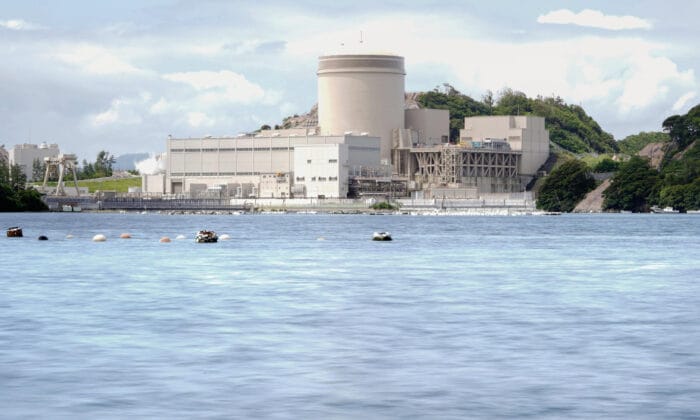
The history of Unit 3 at the Mihama Nuclear Power Plant is shaping into a troubling pattern.
The gist in brief
- Unit 3 at the Mihama Nuclear Power Plant in Fukui Prefecture has once again been manually shut down — staff discovered water droplets near the air vent valve of the steam generator pipeline; Kansai Electric Power Company recorded no radioactive substances or changes in radiation background.
- This is already the second reactor failure in just four months: in May it was shut down due to a steam leak near the turbine, and it was restarted only on September 12 — meaning the new shutdown occurred less than a week after returning to service.
- Unit 3 at Mihama is the oldest operating commercial reactor in Japan: connected to the grid in 1976, and its restart in 2021 required a special permit to extend operation beyond the standard 40-year term.
- In 2004, the same unit experienced an accident with human casualties — a high-pressure steam pipe rupture killed five plant employees, and six more suffered severe burns.
Japan's oldest reactor — with a special history
The Mihama Nuclear Power Plant is one of Japan's oldest nuclear stations, with construction beginning back in 1967. Initially, three reactors operated here, but the first two — with capacities of 340 and 500 MW — were permanently shut down in 2015, as modernizing outdated equipment to meet new safety requirements was deemed economically unfeasible. Unit 3, with a capacity of 826 MW, turned out to be the only one for which the company secured an extension of its operating life — but it was precisely this unit that in 2004 experienced one of the most severe accidents in the history of Japanese nuclear power: the investigation commission established that the operating company had for years checked only the water composition in the pipelines, but not the reactor's pipe fittings themselves, which led to the rupture and loss of life.
A string of incidents in recent years
After the Fukushima-1 accident in 2011, all commercial reactors in Japan were shut down, and Unit 3 at Mihama returned to service only in 2021 — becoming the oldest restarted reactor in the country after the catastrophe. Even then, former deputy chairman of the Atomic Energy Commission under the Cabinet, Tatsujiro Suzuki, publicly expressed doubts about exactly how the operating life extension permit had been obtained. Subsequent years confirmed the validity of such wariness: in August 2022, seven tons of radioactive water leaked at the unit; in May 2026, the plant was shut down due to a steam leak near the turbine; and now, just five days after the September restart, there is a new manual shutdown due to water droplets on the steam generator pipeline.
Why they extend the service life instead of building anew
The readiness of Japanese authorities to accept such risks is explained by energy necessity, not by a lack of alternatives. According to IAEA data, of the 60 power units built in Japan between 1963 and 2009 with a total capacity of nearly 51 GW, by 2023 only 10 reactors with a combined capacity of less than 10 GW were generating regularly — meaning the vast majority of the country's pre-disaster nuclear fleet never returned to operation after Fukushima. Against this backdrop, representatives of the relevant Ministry of Economy, Trade and Industry visited Fukui Prefecture more than 50 times in 2020 alone, specifically studying the possibility of restarting Unit 3 at Mihama — the budget and industry of an island deprived of its own large coal and gas reserves needed electricity so badly that it was decided to overcome public wariness after Fukushima and extend the life of a reactor that will turn half a century old next year.
Connection to an already familiar nuclear topic
The Mihama story logically continues the theme we examined using the example of Lithuania's Ignalina Nuclear Power Plant — the life cycle of a nuclear station does not end with commissioning and regular operation, but requires constant management of equipment aging risks, sometimes for decades beyond the originally planned service life. The difference between the two stories is telling: Lithuania is dismantling Soviet-designed reactors, having recognized further operation as unfeasible, whereas Japan, faced with an acute energy deficit after Fukushima, took the opposite path — extending the life of an already nearly half-century-old reactor, despite expert warnings and the growing frequency of technical failures. For countries like Kazakhstan, which are just beginning construction of their first nuclear power plant, both scenarios serve as a warning that the question of "what to do with the station in 40–50 years" needs to be built into planning now, rather than postponed for later.
Author's conclusion
Formally, each of the recent incidents at Mihama individually appears non-critical — water droplets with no traces of radiation, a steam leak detected and resolved before developing into a serious problem. But the frequency of these failures — the second in four months, the third in several years — at the country's oldest reactor, which has already survived a fatal accident and received an exceptional permit for extending its service life, adds up to a troubling statistical pattern rather than a random coincidence. The question Japan will have to answer in the coming years: how many more technical failures is public trust in the reactor prepared to withstand before the country acknowledges, as it already has with the first two units of the same plant, that further operation is economically and technically unfeasible.
Comments ()