Kazakh farmers cannot get subsidized fertilizers — plants send them for export
Despite subsidies and local fertilizer plants, Kostanay farmers are forced to buy imported fertilizers.
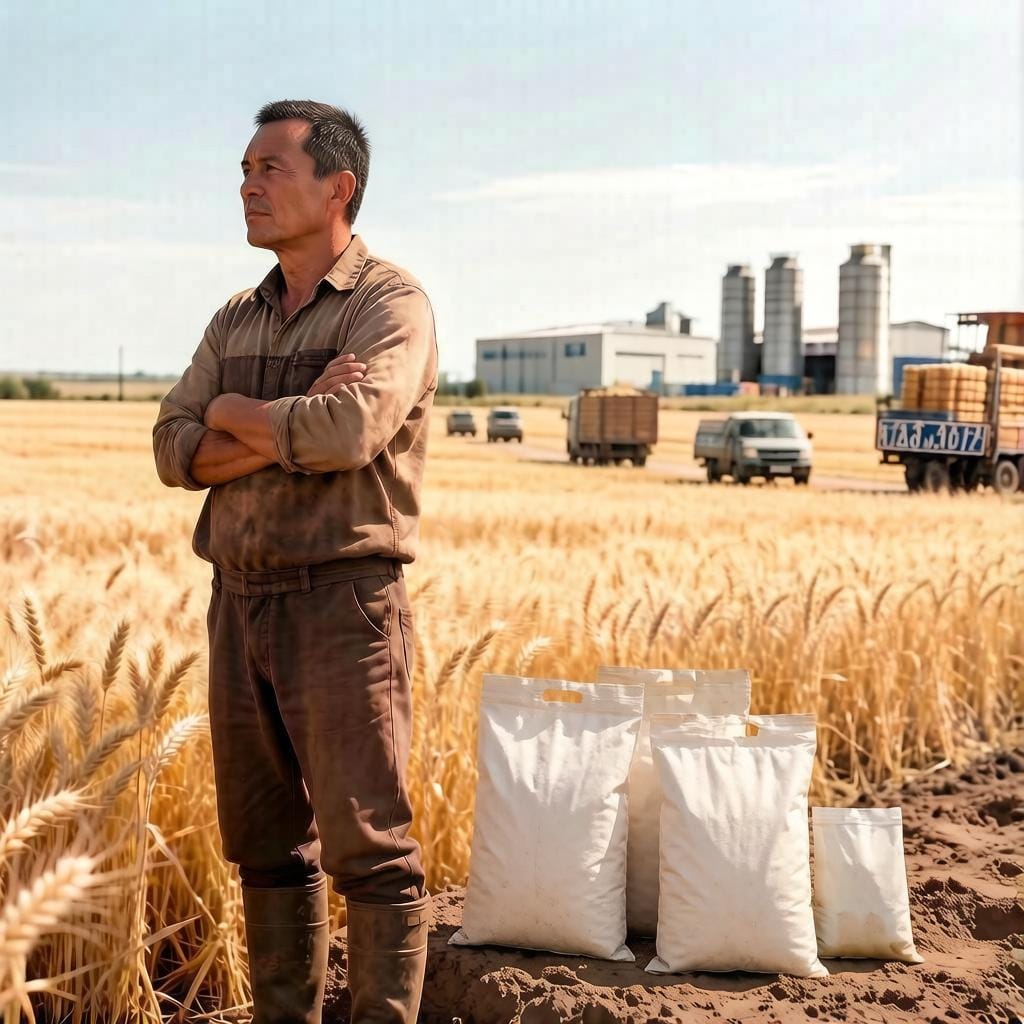
The state is increasing subsidies to encourage farmers to apply more fertilizers and boost crop yields. But in practice, the system is stalling at the most basic stage: domestic plants are simply refusing to accept farmers' applications, writes Inbusiness.kz. The plants prefer to sell their products abroad, where prices are higher.
The gist in brief
- Kazakhstani farmers have been unable for months to obtain subsidized domestic fertilizers — the plants Kazphosphate and KazAzot are rejecting applications, citing unfulfilled delivery volumes, while their products are being exported at higher prices.
- In Kostanay Region alone, 11.1 billion tenge was allocated for fertilizer subsidies this year, but just over 8 billion has been disbursed — the money is there, but farmers cannot get the product under the preferential scheme (where the farmer pays only 40% of the cost).
- The alternative — buying imported fertilizers at full price and then waiting for a subsidy — is economically unviable for most farms compared to the direct triple-contract payment scheme for domestic products.
- This situation has been recurring for years: last year, unspent funds were redirected to subsidize imported fertilizers instead — farmers fear the same scenario will repeat this year.
How the subsidy system works (and doesn't)
Director of Saryagash LLP Utegen Murtazin described the situation at the inter-industry council under the Kostanay Region Chamber of Entrepreneurs: "We have been trying to submit an application to Kazphosphate since February, we contact the plant every Monday, but it keeps getting rejected. In our dry zone, applying fertilizer to fallow land is the most optimal solution."
According to him, the plant's manager explains the rejections by saying the producer still hasn't fulfilled its May delivery volumes, and farmers who have already paid for fertilizers still haven't received them. The economic difference for the farmer is fundamental: when working with a domestic plant, he pays 40% of the cost under a triple contract, whereas with a foreign supplier he must pay the full price upfront and then join a separate queue for a subsidy of unknown duration.
Why exports are more profitable for the plants
Director of Turar LLP Kairat Ospanov put the essence of the problem bluntly: "The program to increase mineral fertilizer application was created, but it practically doesn't work. We are urged to apply more fertilizers and improve the soil. But domestic plants are export-oriented — it's more profitable for them to sell fertilizers abroad because prices there are much higher. And we are left with nothing."
In his assessment, one of the root causes of the situation is the absence of any liability for producers who fail to deliver fertilizers to the domestic market: the state finances demand from farmers, but in no way guarantees that the plants will direct the corresponding volumes to the domestic market rather than to exports.
Bureaucratic dead end
The regional agriculture department openly acknowledges the problem. Deputy Head of the Kostanay Region Agriculture and Land Relations Department Yesimzhan Baimakanov confirmed that disruptions in domestic fertilizer supplies have persisted for years: in spring, regions are assigned planned product volumes, but then the plants stop signing contracts. When farmers asked about the mechanism for forming the regional application, Baimakanov explained that the region does not submit an application directly — there is a general plan, although three years ago a survey of farmers was conducted on required volumes, and even then producers did not deliver the full requested amount. The issue has been raised repeatedly with the Ministry of Agriculture, but so far there is no solution — farmers are being told to turn to other suppliers, including foreign ones.
A parallel with growing export ambitions
The situation looks especially contradictory against the backdrop of what we have already covered: Kazakhstan is actively building new large-scale mineral fertilizer production facilities with a clear export focus — the KazAzot Prime chemical complex in Mangystau Region and the Qazaq Kalium potash project, with the latter already acknowledging that even if domestic demand grows to 300 thousand tons per year, it would cover only about 20% of the plant's design capacity. While new export-oriented plants are being built, existing domestic producers, judging by the Kostanay story, already prefer the more profitable foreign market over domestic, state-subsidized demand. This raises a legitimate question: what guarantees are there that the new export-oriented capacities won't face the same logic if the price gap between domestic and foreign markets persists.
Author's conclusion
The paradox of the Kostanay story is that all elements of the system formally work correctly: the state allocates subsidies, farmers are ready to apply more fertilizers, and the plants produce the product. What doesn't work is only the link between them — because for the producer, selling abroad is more profitable than fulfilling domestic obligations under subsidized applications. Until this economic logic changes, neither increased budget funding nor new Ministry of Agriculture roadmaps will guarantee that fertilizers actually end up in the hands of the Kazakhstani farmers for whom they are intended.

Comments ()