Kazakhstan established a scientific institute for monitoring the Caspian Sea.
Kazakhstan marks Caspian Sea Day on Aug. 12 by reporting enhanced scientific monitoring of the planet's largest enclosed water body.
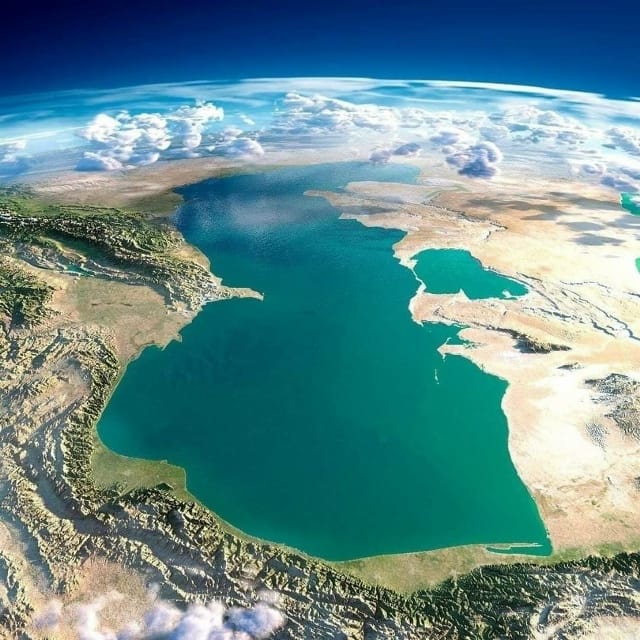
Since September 2025, a specialized research institute has been operating in the country, and the government has allocated more than one billion tenge for marine monitoring equipment, reports inbusiness.kz.
The gist
- Since September 2025, the Kazakh Research Institute of the Caspian Sea has been operating, established for the comprehensive study of processes in the national sector of the water area.
- The government has allocated 1.1 billion tenge from the reserve for the purchase of marine monitoring equipment and the outfitting of hydrobiological and hydrochemical laboratories.
- In 2026, research in the water area is being conducted on 50 parameters within the framework of two marine expeditions covering 21 stations, and in the coastal zone — on 26 parameters at 22 points.
- In parallel, Kazakhstan is working on an interstate program and an Action Plan of the Caspian states, and from August 6 to 12, the International Volunteer Week Caspian Sea Action Week was held in the Mangistau region with the participation of delegations from five countries of the region.
The institute and its tasks
The Kazakh Research Institute of the Caspian Sea is the country's first specialized scientific institution fully focused on studying the Kazakh sector of the water area. The 1.1 billion tenge allocated from the government reserve went toward the purchase of marine monitoring equipment and the outfitting of two specialized laboratories — hydrobiological and hydrochemical. This is not one-time funding for a specific expedition, but an investment in permanent infrastructure that allows research to be conducted directly in the sea's water area on a regular basis rather than sporadically.
What exactly is measured
The scale of the monitoring program, which the institute developed last year, covers both the open water area and the coastal zone. In 2026, research at sea is being conducted on 50 parameters — meteorological, hydrological, hydrochemical, and biological indicators, including assessment of bottom sediment conditions — within the framework of two marine expeditions covering 21 observation stations. Separately, monitoring in the coastal zone is being carried out on 26 parameters of instrumental and visual control at 22 points. This coverage makes it possible to obtain not isolated scattered measurements, but a systematic picture of the sea's condition that can be compared from year to year.
The international dimension
The date of August 12 was not chosen arbitrarily — it is associated with the entry into force of the Tehran Convention, which became the basis for international cooperation among the Caspian states on protecting the marine environment.
"Kazakhstan, together with other countries of the Caspian region, continues work on the Interstate Program. Its task is to unite the efforts of states in adapting to ongoing changes and preserving the natural wealth of the Caspian," the Government of Kazakhstan reported.
One of the practical mechanisms of this cooperation should be the Action Plan of the Caspian states, which is currently at the discussion stage, and the Kazakh Research Institute itself has already joined the Association of Universities and Research Centers of the Caspian countries. The practical expression of this cooperation was Caspian Sea Action Week — an international volunteer week with the participation of delegations from Azerbaijan, Russia, Iran, and Turkmenistan, as well as representatives from Uzbekistan, Kyrgyzstan, and Tajikistan. The program included a scientific seminar in Aktau, an ecological marathon for coastal cleanup, the planting of an "Alley of Friendship" with a time capsule, cleanup of the unique Bozzhyra landscapes, and the international hackathon Caspian Innovation Lab, culminating in the Caspian Talks summit on August 12.
The Caspian as part of a broader picture
Scientific monitoring is developing against the backdrop of the Caspian simultaneously becoming an increasingly saturated infrastructure corridor. We have already written that the laying of the Trans-Caspian fiber-optic communication line between Kazakhstan and Azerbaijan along the seabed has been completed, and in the future, a "green" energy cable under the Caspian — Black Sea — Europe project may also run along a similar route. The growing infrastructural load on the Caspian makes scientific monitoring not a side initiative but a necessary condition: the more cables, platforms, and shipping routes appear in the water area, the more important it is to have systematic data on the state of the ecosystem to assess the cumulative impact on it.
Author's conclusion
The institutional formalization of Kazakhstani Caspian science — the creation of a specialized institute, allocated funding, and a regular observation program — demonstrates a transition from one-off environmental initiatives to a permanent system. For a sea that is simultaneously a unique ecosystem, a source of biological resources, and an increasingly congested infrastructure corridor, it is precisely this systematic approach to observation that will become the foundation for future decisions — from catch quotas to parameters for new infrastructure projects on its seabed.


Comments ()