Kazakhstan hosts an international uranium reserve under IAEA control.
In Ust-Kamenogorsk, on the site of the Ulba Metallurgical Plant, sits one of the country's most unusual international facilities — the IAEA Bank of Low-Enriched Uranium.
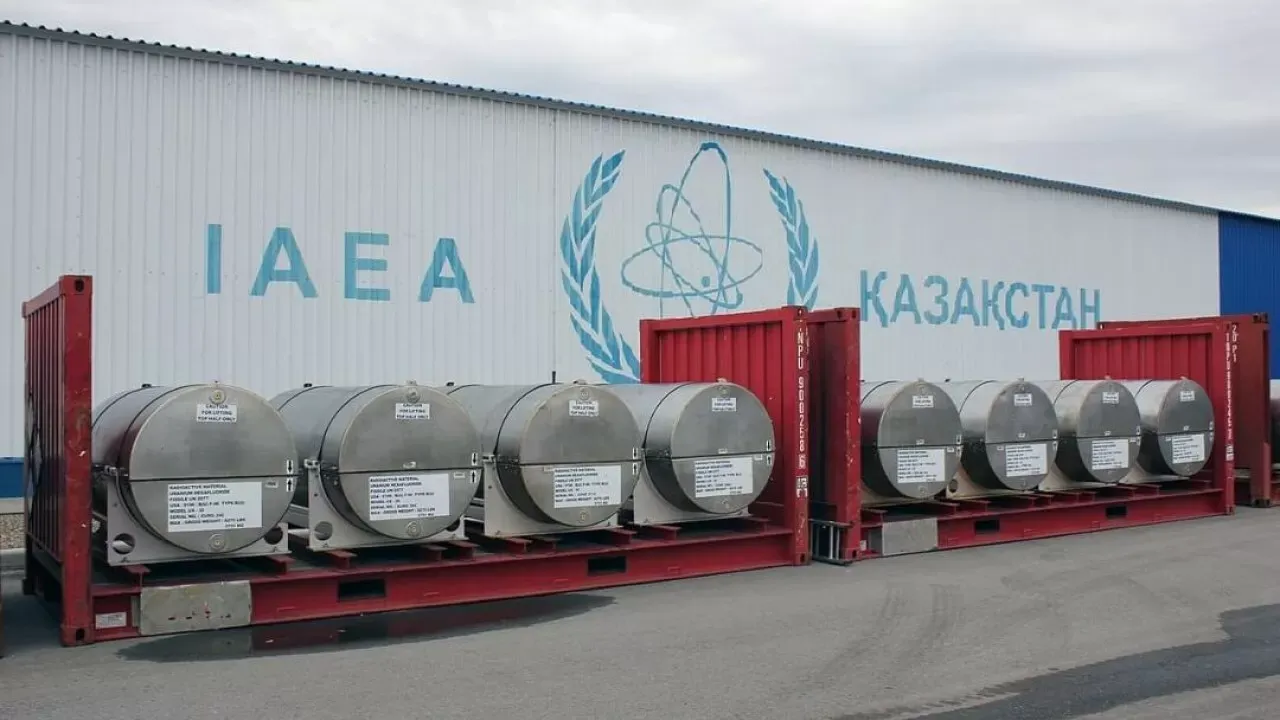
Up to 90 tonnes of uranium is stored here, which formally does not belong to Kazakhstan, although it has been physically located on its territory for several years, writes Inbusiness.kz.
The gist in brief
- The IAEA Low-Enriched Uranium Bank is located in Ust-Kamenogorsk — up to 90 metric tonnes of uranium in the form of hexafluoride, intended for emergency supplies to the agency's member states in the event of disruptions to regular supply chains.
- The material is stored in sealed steel cylinders in solid form; the uranium-235 content does not exceed 4.95% — this is low-enriched uranium suitable for producing fuel for light-water reactors, but not for weapons.
- An important legal nuance: the uranium in the bank does not belong to Kazakhstan — it is an international IAEA reserve, and the host country cannot use the material at its own discretion.
- The bank opened in 2017 under a 2015 agreement; the first batch came from the French company Orano Cycle, and the final one from Kazatomprom in December 2019.
What the bank is and why it is needed
The Agency of the Republic of Kazakhstan for Atomic Energy explained the very idea: "The idea behind creating such a reserve is to enable countries using nuclear energy for peaceful purposes to gain access to low-enriched uranium in an exceptional situation."
The IAEA defines the bank as a physical stockpile of material that supports the reliability of nuclear fuel supplies when access from other sources is disrupted. At the same time, it is important to understand what the bank is not: no uranium enrichment, no fabrication of fuel assemblies, and no storage of radioactive waste takes place on its premises — it is exclusively a raw material repository.
How storage is arranged
The basis of the storage system is special sealed steel cylinders, certified and designed for long-term operation, in which uranium hexafluoride is kept in solid form. The agency emphasized why sealing is so critical: uranium hexafluoride requires protection from moisture exposure, and for the industry, the principle of long-term storage means not just placing the material in a facility, but regularly checking the equipment and the condition of the containers. The bank building itself is designed with potential external impacts in mind, including earthquakes, and in June 2023, the bank underwent the first stage of re-certification of 30B cylinders with the participation of an IAEA expert mission.
International status of the facility
A key feature of the bank is that physical placement on Kazakhstan's territory does not mean Kazakh ownership of the material. The agency emphasized this distinction unequivocally: the host country cannot independently use the uranium located there at its own discretion — its purpose is exclusively related to ensuring guaranteed supplies of raw material to IAEA member states in exceptional circumstances. Nuclear material accounting and confirmation that it is used only for peaceful purposes are under the agency's constant control.
Why this matters for Kazakhstan
The placement of the international reserve specifically in Kazakhstan is not a coincidence, but a consequence of the country's already established status on the uranium market. At the time the bank was created, the Ulba Metallurgical Plant had more than 45 years of experience working with uranium hexafluoride, the necessary infrastructure, and trained personnel — while Kazakhstan itself remains the undisputed world leader in uranium mining, supplying more than a third of global output; demand for Kazakh uranium is already growing from major buyers such as France. The placement of the IAEA bank further cements the country's role not just as a major raw material producer, but as a trusted link in the international nuclear safety system — a status whose significance will only grow as more countries, including Kazakhstan itself with its future Balkhash NPP, expand their own nuclear programs.
Author's conclusion
The low-enriched uranium bank in Ust-Kamenogorsk is a rare example of infrastructure that operates not for profit or the national interests of a specific country, but as a safety net for the entire global nuclear energy system. For Kazakhstan, this means a dual responsibility: the country simultaneously remains the largest commercial supplier of uranium on the open market and the custodian of an international reserve fund that states with no direct ties to Kazakhstan itself may need access to in a critical situation.
Comments ()