Kazakhstan legalizes waste-to-energy conversion and is already building three plants
Kazakhstan’s Ministry of Ecology has legally enshrined waste-to-energy technology for municipal solid waste for the first time.
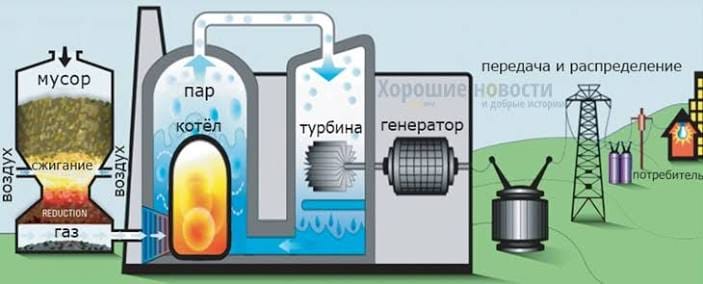
A document registered on June 22, 2026, introduces new concepts, establishes a waste management hierarchy, and obliges akimats to build the corresponding infrastructure, reports Inbusiness.kz. In parallel, preparations are already underway for the construction of three waste-to-energy plants in Astana, Almaty, and Shymkent.
The Gist
- The order of the Minister of Ecology, Yerlan Nysanbayev, was registered with the Ministry of Justice on June 22, 2026. The document introduces two new concepts: waste-to-energy facility and waste-to-energy — the thermal treatment of waste to produce electrical and thermal energy.
- A new hierarchy is established: first sorting, then energy recovery of the remaining non-recyclable fractions, and only as a last resort, landfilling. Direct landfilling without sorting is permitted only in the absence of alternative capacities.
- Akimats are obliged to allocate land plots for the plants and guarantee the supply of waste to them — this is a key condition for attracting investors.
- Mandatory digitalization of control over waste removal is introduced: transporters must use software that confirms service provision in real-time. Akimats will have access to this data.
- In the autumn of 2025, Kazakhstan signed an agreement with Chinese investors to build three plants in Astana, Almaty, and Shymkent. Investment — 293 billion tenge, launch — 2028.
What Changed Legally
Before the adoption of the order, Kazakh legislation had two pathways for municipal solid waste: recycling into secondary raw materials or landfilling. The waste-to-energy technology had been used de facto worldwide for decades, but in Kazakhstan, it had no legal status.
Now a third pathway has emerged — a legal one. This is fundamentally important for investors: without a clear regulatory framework, neither banks nor contractors are ready to finance the construction of waste-to-energy plants. The state has essentially created the legal infrastructure for already announced projects.
It is separately stipulated that obtaining biogas from organic waste does not constitute energy recovery — the new norms apply only to thermal processing, i.e., incineration.
Guaranteed Supply as the Key to Investment
The most significant norm for attracting investors is the guaranteed supply of waste to the plants. Without a stable flow of "raw material," a waste-to-energy plant is unprofitable: such facilities require constant loading to recoup capital costs.
This is precisely why the document obliges akimats not only to allocate land but also to ensure waste streams while adhering to sorting principles. In essence, the state takes on the role of guarantor of raw material supply — removing the main commercial risk from the investor.
Waste as Fuel — The Global Context
The waste-to-energy technology is not new. In Japan, Germany, Denmark, and Sweden, it is a standard part of the waste management system. In Copenhagen, the Amager Bakke waste-to-energy plant with a ski slope on its roof has become a city landmark. Scandinavian countries have developed recycling so successfully that they are forced to import waste from other countries to feed their plants.
However, the technology has its critics: waste incineration emits CO₂ and other pollutants, which, under tightening climate standards, requires modern emission cleaning systems. This is why the technical requirements Kazakhstan will set for future plants are important — this issue is not yet addressed in the order.
The global trend of alternative energy recovery from waste is not limited to incineration alone. We have previously written about how Australian scientists have learned to turn plastic waste into hydrogen using sunlight — a technology that, in the long term, could become a cleaner alternative to thermal utilization.
Three Cities — Three Plants
The regulatory framework was not adopted abstractly: it underpins specific projects. In the autumn of 2025, Kazakhstan signed an agreement with Chinese investors to build three plants in Astana, Almaty, and Shymkent. Each facility will take two years to build, with a total investment of 293 billion tenge. Design, land allocation, and utility connections were planned to begin in 2026, with commissioning in 2028.
The three cities were not chosen by chance: they concentrate the largest volume of municipal waste, and the landfills around these metropolises have long been operating at capacity.
Author's Conclusion
The order of the Ministry of Ecology is not a revolution in waste management, but a necessary legal foundation for already made investment decisions. Kazakhstan is moving towards a model where waste ceases to be just a problem and becomes a resource. The quality of this transition will be determined by two things: the technical standards for the plants — how clean the incineration will be — and the actual discipline of sorting, without which material that could have been recycled will end up in the furnace.
Comments ()