Kazakhstan PCR test detects meat substitution in sausage
Seifullin University created a PCR test to identify meat species. It detects DNA from 17 animal and bird species, for raw meat and processed products, from sausages to canned goods.
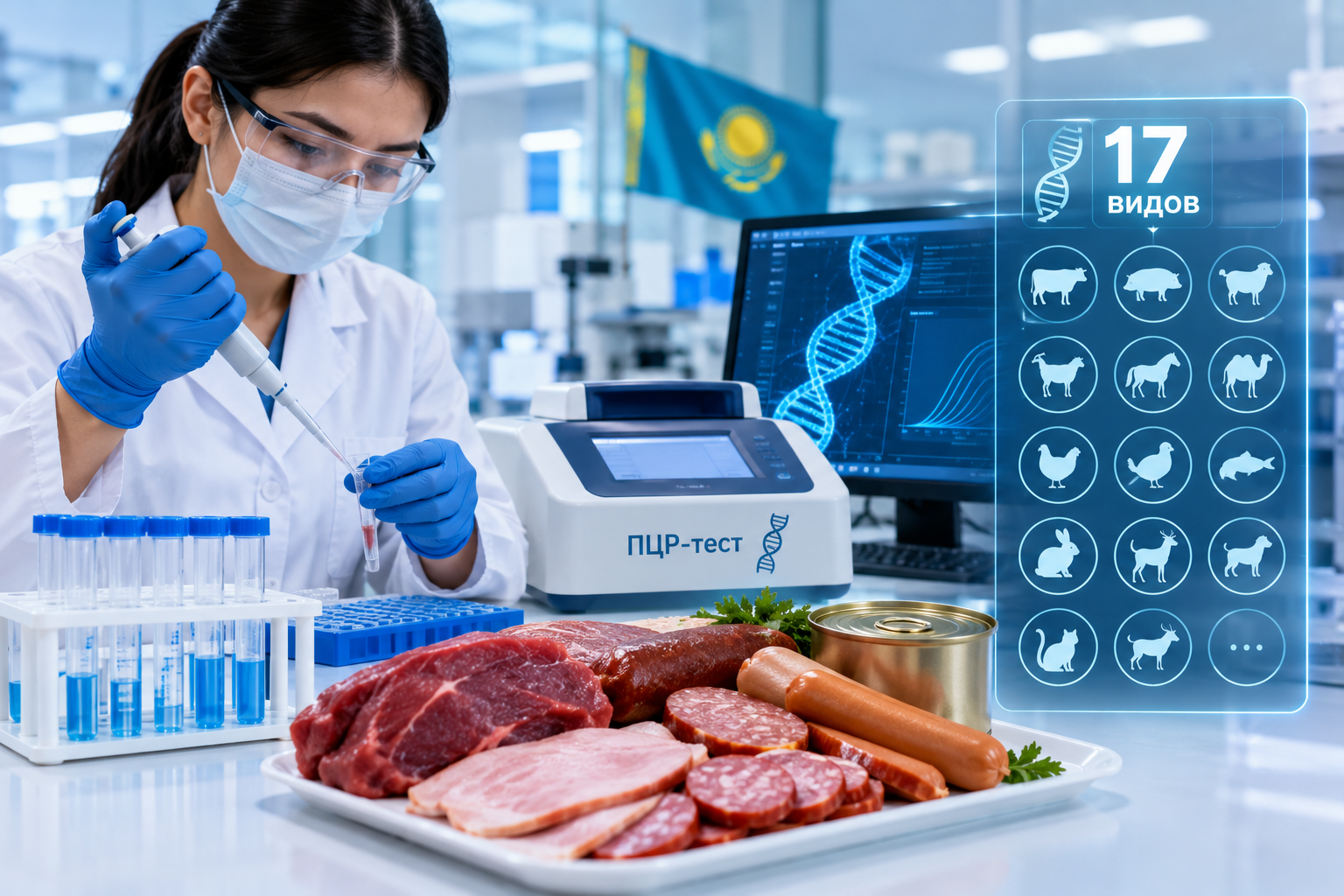
The development was funded by the Ministry of Agriculture of the Republic of Kazakhstan, according to the ministry's press service.
The gist in brief
- The test identifies the DNA of 17 species of animals and birds, including the saiga antelope, dog, and cat.
- Multiple species can be detected in a single sample, which reduces the number of analyses and reagent consumption.
- The method is suitable for raw meat, sausages, ham, and canned meat.
Why the test is needed
The composition of sausages, semi-finished products, and canned goods does not always match what is stated on the packaging. After grinding, heat treatment, or mixing different types of raw materials, it is virtually impossible to determine the origin of the meat by eye, so laboratory methods are needed.
The test was created by scientists at the S. Seifullin Kazakh Agro Technical Research University, which is part of the "NANOC" NJSC, according to the Ministry of Agriculture of the Republic of Kazakhstan. The work was carried out under the scientific and technical program "Improving the Level of Food Safety" for 2024-2026, which is funded by the ministry.
How it works
The test is based on polymerase chain reaction (PCR) and detects species-specific regions of the mitochondrial cytochrome b gene, meaning it uses DNA to determine which animal or bird meat is present in a sample. The key feature is its multiplex format: the DNA of several species can be searched for simultaneously in a single sample. This is particularly convenient for products made from different raw materials. The method is protected by a utility model patent, and the scientific and technical documentation for production and application has been approved by the university's scientific and technical council.
What it can detect
Among domestic animals, the test recognizes the DNA of cattle, horses, pigs, sheep, goats, donkeys, dogs, and cats. Among wild animals - the saiga antelope, maral, roe deer, argali, rats, and mice. Among birds - chicken, duck, and turkey.
Who will benefit from it
The test is intended for the analysis of raw meat and processed products, including sausages, ham, and canned goods. It can be used by testing and veterinary laboratories, state control bodies, and food enterprises. Determining species composition should help identify labeling discrepancies, protect consumer rights, and address veterinary and sanitary control tasks. The ministry also believes that the domestic test system will expand laboratory control capabilities and reduce dependence on imported diagnostic solutions.
Author's conclusion
For the market, not only the development itself matters, but also how it will be applied. The report contains specifics: the target of the analysis is named (the cytochrome b gene), the list of 17 species, the patent, and the documentation. But there is no data that typically demonstrates that the method works outside the laboratory: whether it has been tested in operating laboratories, what minimum proportion of admixture it can detect, and how much it will cost. The Hunn.kz editorial team consistently draws attention to how Kazakhstani developments are presented to the public. In the article about BioDrop drones, neither the sample size nor the number of replicates was mentioned, and in the report about "marble lamb" there was not a single figure. In the case of the PCR test, there are more details, but so far there is no information about sensitivity and cost, so it is too early to judge how much it will reduce dependence on imports.



Comments ()