International Fund for Agricultural Development to provide Kyrgyzstan with $21.4 million for pastures and livestock
IFAD will provide Kyrgyzstan a $21.4M concessional loan for the Livestock and Market Development Project-3, mostly to manage forest and pasture ecosystems.
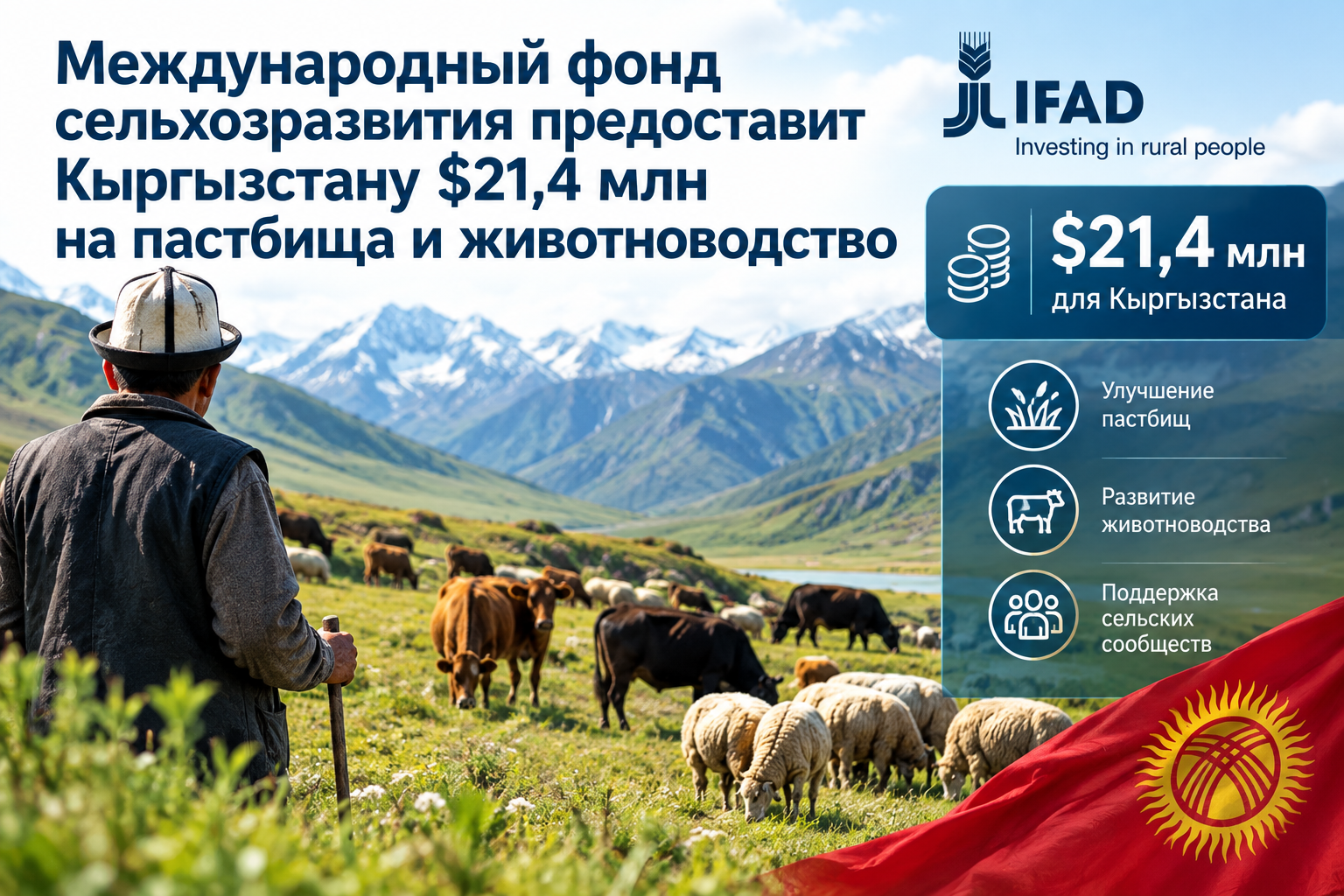
The project implementation period is five years. The ratification of the loan agreement in the first reading was approved by the Jogorku Kenesh Committee on Finance, Budget, Entrepreneurship and Competition Development, 24kg reports.
The essence in brief
- The IFAD loan amounts to $21.4 million, the project is designed for five years, and the report does not mention final approval of ratification.
- According to the IFAD document, about 69% of the funds will be allocated to forest and pasture ecosystem management, about 14% to veterinary safety and food safety, and about 13% to climate-resilient value chains.
- The ratification of the agreement in the first reading was approved by the relevant parliamentary committee; the report does not mention final approval.
- The project will cover about 30 thousand rural households, and according to IFAD estimates, more than 82% of the country's winter pastures have severely degraded.
At what stage the agreement is
The Jogorku Kenesh Committee on Finance, Budget, Entrepreneurship and Competition Development approved the ratification of the loan agreement in the first reading. The report does not mention the final decision of the parliament. According to Deputy Minister of Water Resources, Agriculture and Processing Industry Ilich Marsbek uulu, the goal of the project is the comprehensive development of the sector, increasing the resilience of the agricultural sector to climate change and improving product marketing. The project is the third phase of the program that IFAD supports in the republic. The interest rate, the share of a possible grant and the repayment schedule are not mentioned in the report.
What the money will be spent on
The project includes three areas. The main one is sustainable integrated management of forest and pasture ecosystems at the community level: it accounts for about 69% of the funds. About 14% is intended for veterinary and phytosanitary safety of food products, about 13% for the development of climate-resilient value chains and expanding access to concessional financing. The remaining about 4% constitutes program management. This distribution is specified in the IFAD proposal of November 2025.
According to the same document, the project will cover about 30 thousand rural households, approximately 141 thousand people, in 100 aiyl okmotus and forestry enterprises. At least 40% of participants must be women and at least 30% must be youth. The program aims to reduce livestock morbidity and mortality by at least 10% and to train 500 young veterinarians and veterinary assistants.
What the loan terms are
According to the IFAD document, the total cost of the program is about $21.5 million, including contributions from the state and participants. IFAD financing consists of two loans. The first, about $16.8 million, is interest-free, with a service fee of 0.10% per annum, a term of 50 years and a grace period of 10 years. The second, about $4.2 million, is also interest-free, with a service fee of 0.75% per annum, a term of 40 years and a grace period of 10 years. These terms are specified in the November 2025 proposal; the final parameters of the agreement that the parliament ratifies may differ.
Why pastures
The main emphasis on pastures is explained by their condition. According to IFAD estimates, more than 82% of winter pastures have severely degraded, and more than half of all pastures are in serious condition. In addition, rural poverty grew from 22.4% in 2018 to almost 30% in 2023, while milk yields decreased by 2% from 2015 to 2023, and carcass weight by 5%.
Author's conclusion
So far this is only approval in the committee: the parliament must make a decision on ratification, and then the final terms will become known. But it is already clear that the project is built around pastures, and not only around livestock farming itself.
Comments ()