Kazakhstan to allocate 214.6 billion tenge for water-saving technologies
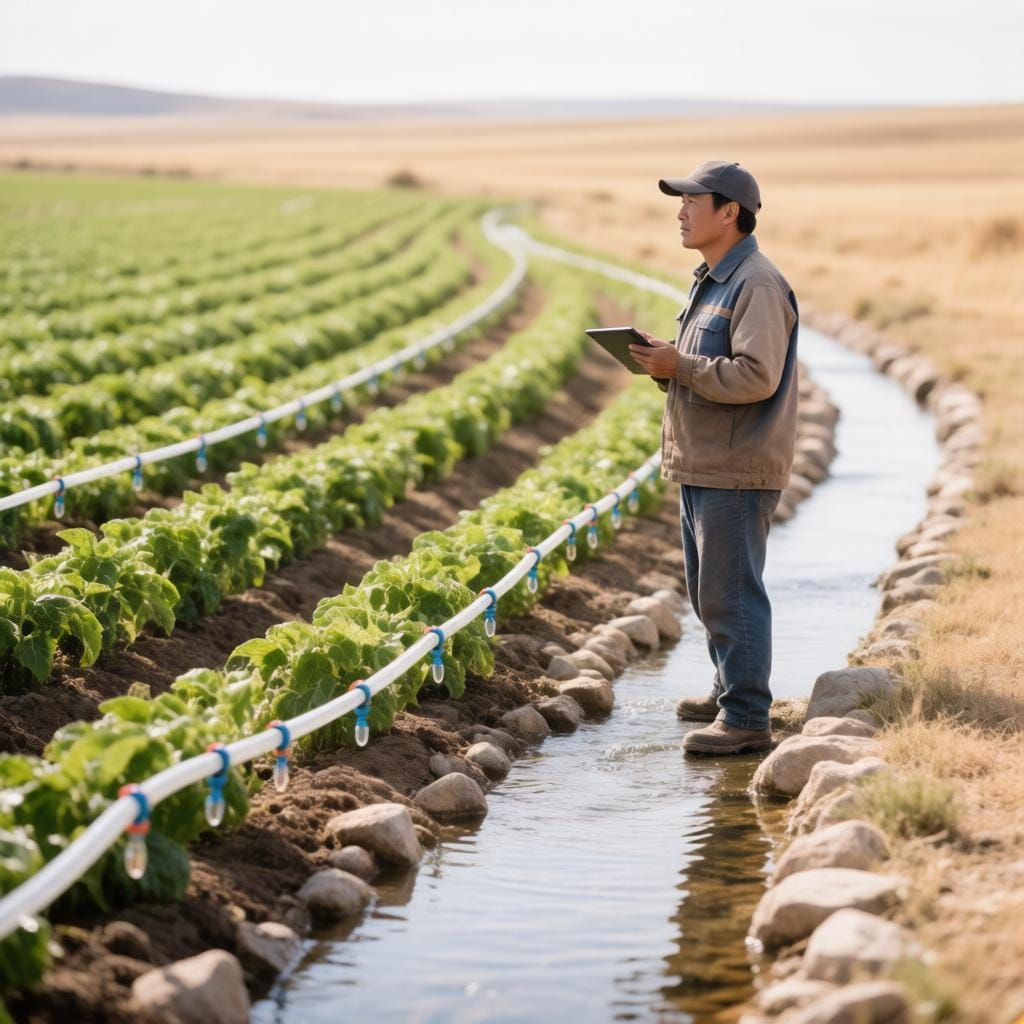
Kazakhstan's Water Resources Ministry has significantly increased financial support for farmers switching to water-saving irrigation.
In response to an official request from Kazinform, the agency disclosed specific figures for the next three years.
The essence in brief
- The share of reimbursement of farmers' expenses for water intake and supply infrastructure, as well as for the purchase and installation of water-saving technologies, has been increased from 50% to 80%.
- For investment subsidies for the introduction of water-saving technologies in 2026–2028, 214.6 billion tenge is envisaged: 58.5 billion in 2026, 74.6 billion in 2027, and 81.5 billion in 2028.
- Separately, another 13.5 billion tenge has been allocated over three years to subsidize the cost of the water supply service itself.
- Through the "Agroleasing" program of KazAgroFinance JSC, sprinkler irrigation systems are financed at a rate of 12.6% per annum for a term of up to 10 years, and drip irrigation for a term of up to 5 years; the country already has 7 domestic plants producing the relevant equipment.
Support growth of almost one and a half times
The increase in the reimbursement share from 50% to 80% is a significant step: for a farmer, this means that when switching to modern irrigation systems, only one-fifth of the expenses will need to be covered out of pocket instead of half. The ministry clarified that the size of the subsidy for the water supply service itself also varies depending on the specific technology used and the current tariff — that is, the system is designed to incentivize a transition specifically to the most efficient solutions, rather than simply any formally water-saving measures.
Where the money will go by year
The breakdown of the budget by year shows an increasing dynamic: 58.5 billion tenge in 2026, 74.6 billion in 2027, and 81.5 billion in 2028 — that is, the state is planning an almost one-and-a-half-fold increase in financing in just three years. In parallel, another 13.5 billion tenge is envisaged for subsidizing the cost of the water supply service, distributed more evenly — from 4 billion in 2026 to 4.8 billion in 2028.
Preferential financing of equipment
In addition to direct subsidies, the state is also developing preferential lending for irrigation equipment itself. Through "Agroleasing," sprinkler irrigation systems are available at a rate of 12.6% per annum for a term of up to 10 years, and drip irrigation at the same rate but for a shorter term of up to 5 years. The presence of seven domestic plants already producing such equipment shows that the program relies not only on imported machinery but also on developing local production.
Part of an already familiar picture
The growth of support for water-saving technologies logically continues several directions we have been following this year. In parallel with subsidies for the equipment itself, Kazakhstan is considering a fivefold reduction in the tax on groundwater extraction for farmers — another tool for reducing the cost of access to water for irrigation. We also wrote about the launch of the National Water Resources Information System, which unites data on water bodies into a single platform — it is precisely such a system that in the future will make it possible to more accurately track how effectively the allocated hundreds of billions of tenge are being spent locally. Technologies are not being introduced in a vacuum: since 2023, Kazakhstan has sent almost 500 water sector specialists for training abroad, including internships in Israel — the world leader specifically in water-saving technologies under conditions of water scarcity. The eight basin plans for water security mentioned in the material show that subsidies for water conservation are only one element of a much broader strategy for managing the country's water resources. It also complements the infrastructure side of the issue: Kazakhstan is simultaneously modernizing thousands of kilometers of main irrigation canals, where water losses during transportation in some systems reach , — that is, subsidies for water-saving technologies solve the problem at the level of an individual farm, while canal reconstruction solves it at the level of the main system delivering water to that farm.
Author's conclusion
The increase in the reimbursement share from 50% to 80% and the almost one-and-a-half-fold increase in the budget over three years show that water conservation in agriculture is moving from the category of voluntary recommendations to a priority area of state policy with real financial weight. But subsidies alone do not guarantee results — what matters is how many farmers actually take advantage of this support and how effectively the installed equipment will be used in practice. It is precisely this difference between the money allocated and the water actually saved that will become the main criterion for whether the increase in financing has justified itself.

Comments ()