Kazakhstan's pasture standards are changing again — now in favor of farmers
Russia's Agriculture Ministry proposes lowering the threshold for recognizing pasture as unused from 50% to 30% of the maximum allowable grazing load.
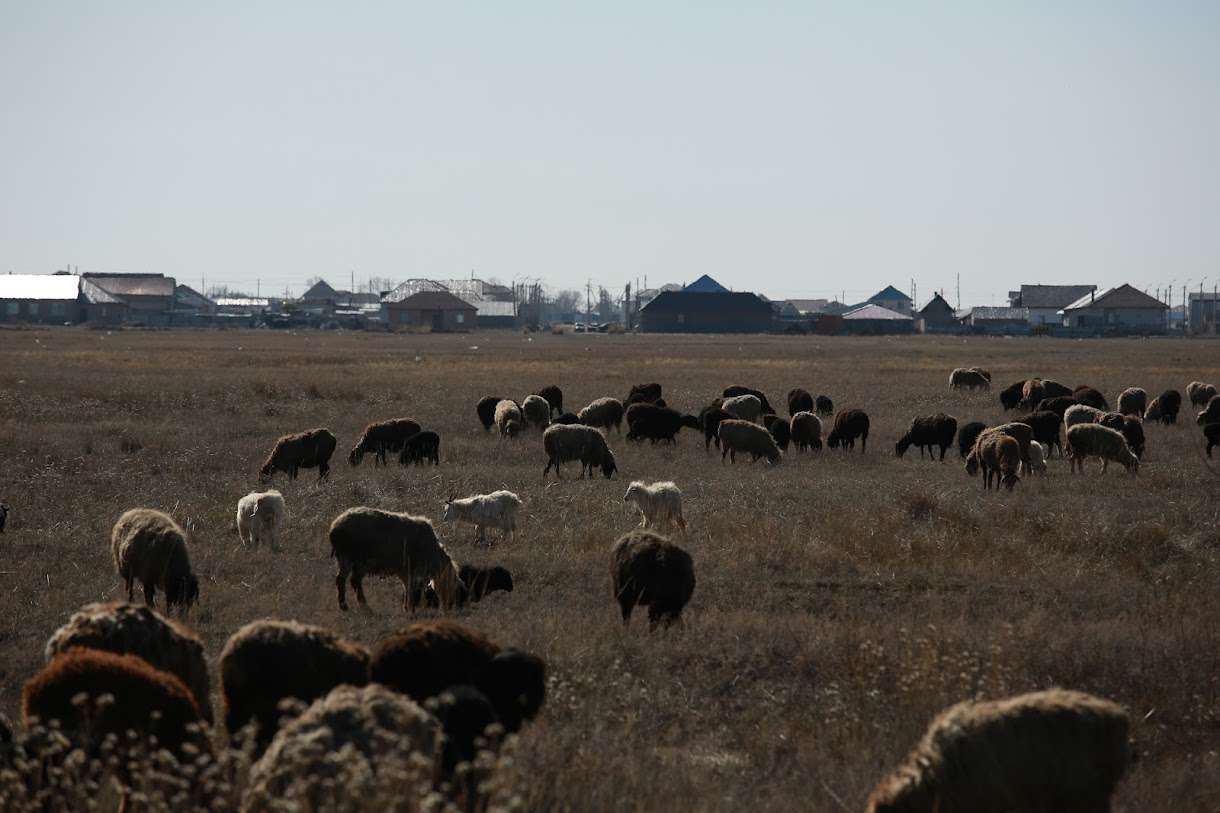
Behind the dry bureaucratic wording lies a story of how an overly strict standard for several years in a row pushed farmers toward overgrazing livestock, just to avoid losing the right to land.
The gist in brief
- The Ministry of Agriculture has prepared a draft amendment reducing the threshold for the presence of livestock from 50% to 30% of the maximum allowable grazing load rate, below which a pasture is deemed unused; the draft has been posted for public discussion until September 15.
- The standard is being brought in line with the law of July 14, 2026, on issues of state administration and local self-government, which introduced amendments to Article 92 of the Land Code.
- This is already the second adjustment of the threshold in recent years: initially, the criterion for non-use was 20% of the grazing load rate, then it was raised to 50% — deputy Nurzhan Ashimbetov previously criticized this increase, pointing out that it forced farmers to keep more livestock than the pasture could sustain, just to avoid losing the land.
- According to the deputy's assessment, due to such standards, about 20 million hectares of land in the country are used irrationally.
How the grazing load rate works
The mechanism works as follows: for each pasture, a maximum allowable grazing load rate is established — the maximum number of livestock that the territory can support without degradation. If the actual number of animals falls below a certain percentage of this rate, the plot is formally deemed unused, which creates risks for the land user — up to and including land seizure. It is precisely this percentage that has become the subject of several revisions in recent years.
From 20% to 50% and back to 30%
The history of the threshold is telling in itself. Initially, the criterion for pasture non-use was the presence of livestock at a level below 20% of the grazing load rate — a relatively lenient requirement. Then the standard was tightened, raising the bar to 50%: to avoid being considered a "non-user" of the land, a farmer had to maintain a herd size of at least half the maximum allowable load. Deputy Ashimbetov had already pointed out the problem with this approach — it effectively forced farmers to increase their herds beyond the ecologically sound level simply to formally comply with the standard, which directly contributed to overgrazing and the depletion of pastures that the standard was, in theory, supposed to protect. The current reduction to 30% is a partial — but not complete — rollback to the more lenient original value.
The link to pasture degradation
The problem this regulatory change seeks to address is already familiar to hunn.kz readers: more than 26 million hectares of pastures in the country have degraded, and Majilis deputies have previously noted that about 40% of all pasture lands in the country are subject to degradation. A specific example from the Pavlodar region is telling: specialists who studied the land records of the Kyzylzhar rural district found that a significant portion of households keep no livestock at all — despite the fact that there is no formal pasture shortage in the region and land is sufficient. The reason turned out to be not a lack of area but its accessibility: the pastures are physically located too far away or in a condition inconvenient for specific farms. It is precisely such households that risk formally falling under the strict "non-use" standard, even though the cause is not mismanagement but a structural problem of access to land. The paradox is that part of the degradation may have been a direct consequence of the regulation itself: the standard, conceived as an incentive for rational land use, in practice pushed farmers toward the opposite result — overgrazing to preserve the formal right to pasture where access existed.
Author's conclusion
The story of the grazing load standard is a good example of how well-intentioned regulatory goals can produce unexpected side effects when specific threshold values are not aligned with the actual ecological capacity of the land. Lowering the bar to 30% is an attempt to find a more balanced point between two extremes: too lenient a standard risks encouraging underuse of pastures, while too strict a one pushes toward their depletion through excessive grazing. Whether the new threshold will pass public discussion unchanged and, crucially, whether it will have an impact on the actual condition of Kazakhstan's pastures, will only become clear after several seasons of practical application.
Comments ()