Kyrgyzstan establishes fund to protect glaciers and Lake Issyk-Kul
Kyrgyz President Sadyr Japarov signed a decree establishing a fund for the preservation and protection of Kyrgyzstan's glaciers and Lake Issyk-Kul.
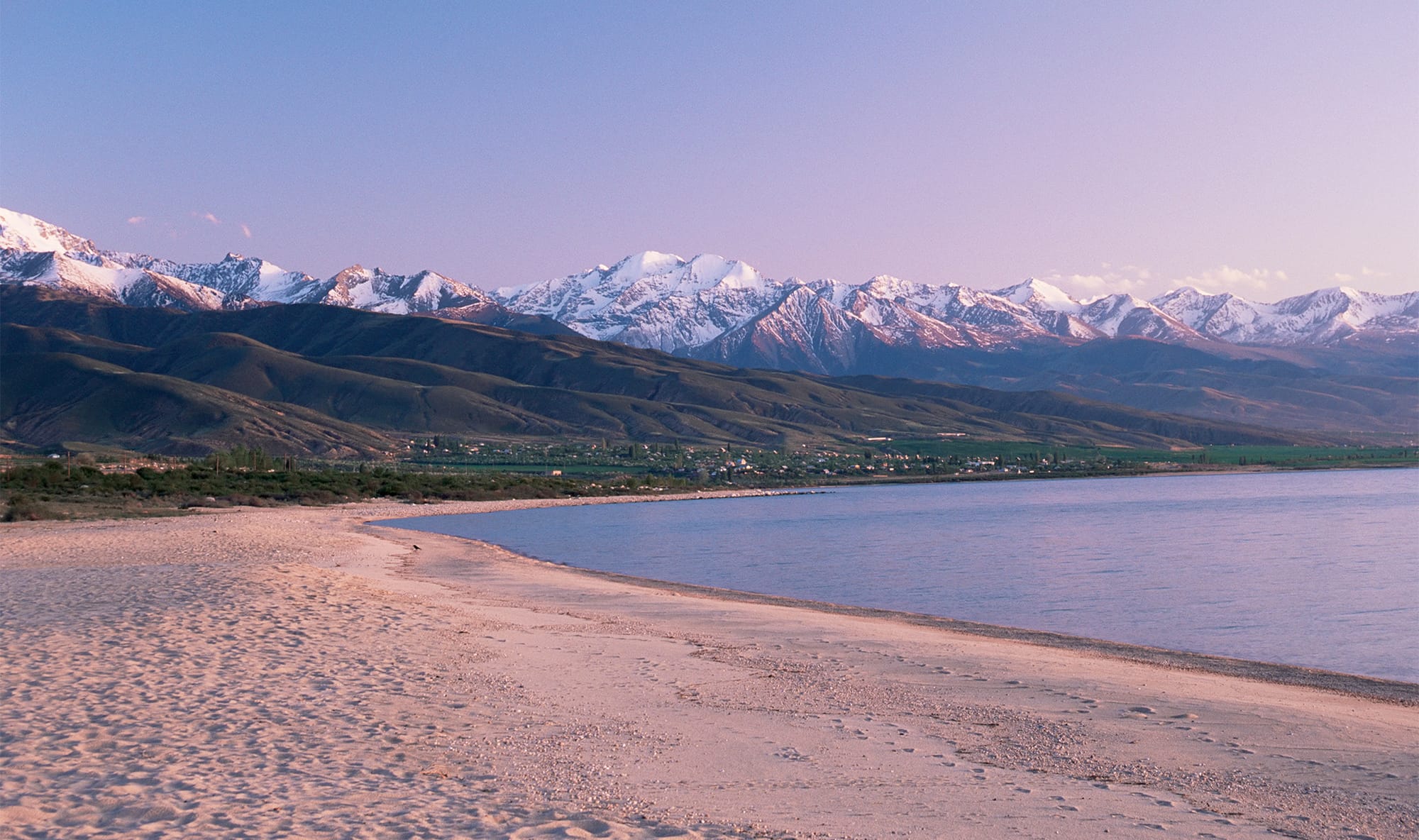
The foundation's task is to halt a process that the head of state himself described back in April with alarming figures: the rapid shallowing of the country's largest lake and the degradation of the glaciers that feed it.
The gist in brief
- The President of Kyrgyzstan Sadyr Japarov signed Decree No. 313 of September 4, 2026, on the establishment of the Foundation for the Conservation and Protection of the Glaciers of Kyrgyzstan and Issyk-Kul — the document comes into force 10 days after official publication.
- The foundation's main task is to attract grants and investments from international organizations, climate funds, financial institutions, and donor states for projects aimed at protecting glaciers, reducing the rate of their melting, preserving water resources, and introducing water-saving technologies.
- The Cabinet of Ministers has been tasked with determining, by October 1, 2026, the organizational and legal form of the foundation, the procedure for its establishment and operation, mechanisms for selecting and financing projects, as well as requirements for transparency, reporting, and auditing.
- Control is distributed among three agencies: the Ministry of Water Resources coordinates the creation of the foundation as a whole, the Ministry of Natural Resources is responsible for protecting the Issyk-Kul ecosystem, and the Ministry of Emergency Situations is responsible for monitoring and protecting the glaciers.
The scale of the problem in the president's own words
Back in April 2026, speaking in the context of reforming the International Fund for Saving the Aral Sea, Japarov cited figures that explain the urgency of the current decree: the water level in Issyk-Kul has dropped by almost 14 meters over recent decades, and the number of rivers flowing into the lake has more than tripled in decline — in his words, this indicates a significant reduction in the annual volume of water inflow. At the same time, the president emphasized that Kyrgyzstan consistently fulfills its water-sharing obligations with its neighbors and invests significant resources in preserving water ecosystems. The new foundation is an attempt to translate these declarations into a concrete financial instrument capable of attracting funds not only from the budget but also from international donors.
Three agencies — one foundation
The governance structure of the foundation shows that the Kyrgyz authorities view the problem comprehensively, rather than as a narrow task for a single agency. The Ministry of Water Resources, Agriculture and Processing Industry acts as the main coordinator for establishing the structure as a whole. The Ministry of Natural Resources, Ecology and Technical Supervision is responsible specifically for the Issyk-Kul ecosystem — the country's largest lake and an object that the decree itself describes as having national and global significance. The Ministry of Emergency Situations oversees matters directly related to glaciers — their monitoring, study, and protection, including the development of early warning systems for emergencies associated with glacier degradation.
Part of the regional water cluster
The Kyrgyz foundation logically fits into a series of articles we have already covered this year. We wrote about how the region's countries are jointly promoting the construction of the Kambar-Ata-1 HPP on the Naryn River, and how Kazakhstan has been promoting the idea of creating an International Water Organization under the UN at the international level for almost a year — both stories show that water and related infrastructure are becoming subjects of increasingly systematic regional diplomacy. It is also symbolic that the Kyrgyz decree appeared amid the ongoing discussion on reforming the International Fund for Saving the Aral Sea — a structure uniting all five Central Asian countries: the shallowing of Issyk-Kul and the drying up of the Aral Sea are problems of different scale but similar nature in the same region, which depends on the same mountain glaciers as a source of fresh water.
Author's conclusion
The creation of the foundation is a necessary but not sufficient step: the decree itself merely launches the process, while the specific rules of the game — the organizational form, project selection mechanisms, transparency requirements — are yet to be determined by the government only by October 1. For now, this is more of an institutional framework than a working mechanism. But the very fact that the head of state publicly cites specific, alarming figures of shallowing — 14 meters over decades, a threefold reduction in inflowing rivers — instead of vague formulations, shows that the Kyrgyz authorities openly acknowledge the scale of the problem, and that is the first condition for the new foundation to become not a declaration but a working tool.
Comments ()