Largest wheat producers: Kazakhstan is not in the top ten
Key global wheat players producing over half of the world's supply are reshaping trade dynamics amid shifting demand and climate pressures.
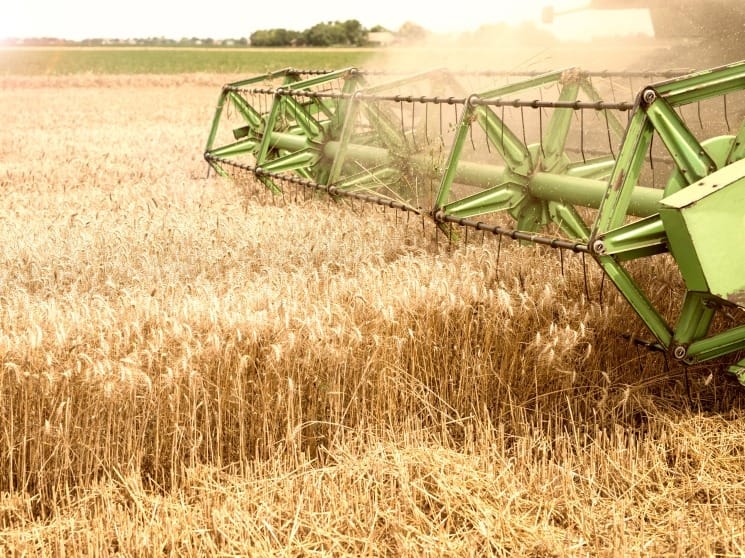
The global wheat market is shaped by several key players, with China holding the top spot for many years running, Proagro reports. Together with India and the European Union countries, they account for more than half of all production, forming the foundation for price and supply stability. For Kazakhstan, which is among the major grain exporters, understanding this hierarchy is not an academic question but a practical one: the balance of power in the global market directly affects prices for Kazakh wheat and access to traditional sales markets in Central Asia and Afghanistan.
In Brief
• China, India, and the EU together produce over 55-60% of the world's wheat but export almost none — their harvest goes to domestic consumption.
• Russia remains the dominant exporter, directly competing with Kazakhstan in Central Asian markets.
• Ukraine maintains its position in the top 10 despite war risks, putting additional pressure on prices.
• Kazakhstan, not in the top ten by volume, is critically dependent on the price environment set by these giants.
Global Production Scales: The Numbers Shaping Reality
Wheat is not just a crop. It is the dietary staple for billions of people, raw material for flour, baked goods, pasta, animal feed, and even biofuels. Global production fluctuates between 800–844 million tons per year depending on the marketing season. In the 2025/26 season, according to USDA estimates, it reached record levels of around 844 million tons, while for the 2026/27 season, FAO and USDA forecast a decline to 806–820 million tons due to weather risks in key regions.
About 40% of the global harvest comes from China, India, and Russia combined. Adding the European Union as a single bloc, these four "players" account for over 55-60% of the global volume. The crucial point for Kazakhstan: China and India are production giants, but they barely enter the external market, consuming their harvest domestically. Russia, however, is a direct competitor, actively expanding its exports to Central Asia.
Key Players and Their Market Influence
China (137–140 million tons) holds the lead thanks to intensive irrigation and state self-sufficiency programs. Yields reach 5.5–5.9 t/ha — among the highest in the world. However, China remains a net importer of certain wheat varieties, creating a niche for suppliers of high-quality grain, potentially including Kazakh wheat.
India (107–117 million tons) sows wheat on 30–32 million hectares — the largest area in the world. But yields here are more modest: 3.4–3.6 t/ha. Dependence on monsoons makes Indian production highly volatile: in 2023, drought forced the government to impose an export ban, instantly driving up global prices. For Kazakhstan, this means any disruption in India opens a window of opportunity but also increases price risks.
Russia (85–104 million tons) is Kazakhstan's main competitor. With yields of 2.8–3.5 t/ha and an area of 28–32 million hectares, Russia not only feeds itself but dominates export markets. In 2024, it set a record for wheat exports, actively displacing Kazakh grain from traditional markets in Uzbekistan and Tajikistan.
USA (45–54 million tons) and Canada (22–35 million tons) are high-tech producers with yields of 3.0–3.5 t/ha. They focus on exporting durum wheat for the pasta industry. Kazakhstan could compete with them in the niche of high-quality durum wheat but currently lags in logistics and standardization.
Australia (28–36 million tons) is another major exporter whose products are valued for quality. However, Australian production is highly vulnerable to droughts, which periodically removes significant volumes from the market and raises prices.
Ukraine (20–23.5 million tons) demonstrates remarkable resilience. Despite the war, Ukrainian farmers harvest yields of 3.8–4.2 t/ha on black soil. Ukraine's export potential is limited by logistics, but even current volumes create competition in the Middle East and North African markets, where Kazakhstan also seeks a presence.
What This Means for Kazakhstan
Kazakhstan is not in the top ten producers — its annual harvest fluctuates between 12–16 million tons. However, the country is in the top ten exporters, sending 7–9 million tons to foreign markets annually. The problem is that Kazakhstan is a price-taker, not a price-maker, on the global market.
When Russia has a record harvest and undercuts prices, Kazakh exporters have to reduce margins or seek alternative markets. When drought in Australia or India reduces supply, Kazakh grain becomes more expensive. This dependence on external factors makes the industry extremely vulnerable.
The only path for Kazakhstan is to move from competing on volume to competing on quality and logistics. Developing processing, entering the Chinese market with durum wheat varieties, and creating its own flour brands — these are what can reduce dependence on the volatility created by the giants of the top ten.
Author's Conclusion
The global hierarchy of wheat producers has remained stable for decades, and Kazakhstan should not try to catch up with China or Russia in volume. Instead, the strategy should be built on niche positioning: high quality, deep processing, and diversification of sales markets. As long as Kazakh grain is sold as a commodity, the country will remain hostage to harvests in Australia, India's policies, and Russia's ambitions.

Comments ()