Network City in Burabai: Kazakhstan combines IT hub with resort's protected status
PM Olzhas Bektenov met Network School founder Balaji Srinivasan to discuss creating an international innovation hub, with Burabay village considered as a site for the Network City tech town.
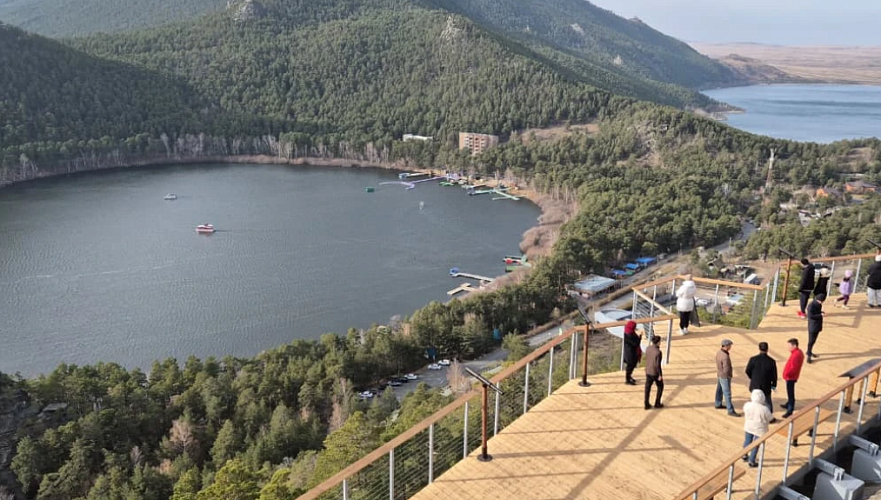
Prime Minister Olzhas Bektenov met with the founder of Network School, Balaji Srinivasan, to discuss the creation of an international innovation hub — the village of Burabay is being considered as one of the sites for the Network City technology town. The project is doubly interesting: on one hand, it is Kazakhstan's bid for the status of an international IT hub; on the other, the site has been chosen within the boundaries of a specially protected natural area with a history of conflicts between development and the protected area regime.
The Gist Briefly
- The Prime Minister of Kazakhstan, Olzhas Bektenov, met with the founder of Network School, Balaji Srinivasan, to discuss creating an international innovation hub in the Akmola Region, with expansion into Alatau City.
- The Network City technology town is proposed to be built in the village of Burabay, on the territory of the "Burabay" State National Nature Park.
- The project is being implemented without state funding — solely through private investments from Network School.
- Burabay has already been the scene of a similar conflict: in 2008, a special economic zone was created there by presidential decree, which sparked protests from environmental organizations.
Who is Balaji Srinivasan and Why Does Kazakhstan Need Him
Balaji Srinivasan is a former CTO of Coinbase and a well-known investor in the startup and crypto industry, who has been developing Network School since 2024 — an informal educational community for entrepreneurs, developers, and researchers, already operating in Malaysia's Forest City special economic zone. The format combines educational programs, co-working spaces, accelerators, conferences, and hackathons. During the meeting with Bektenov, the parties discussed not only the idea of Network City, but also holding the AI Film Festival with a prize fund from Srinivasan himself, as well as organizing the Network State Conference as part of the international AI & Digital Bridge forum with the participation of major technology companies.
How Network City Fits into Kazakhstan's Digital Strategy
The initiative does not appear out of nowhere. The current year has been declared the Year of Digitalization and Artificial Intelligence in Kazakhstan, and the country is already implementing the National Strategy for Digital Transformation and Artificial Intelligence Development, Digital Qazaqstan.
The existing infrastructure includes Astana Hub, the "Data Center Valley" in Ekibastuz, the Alem.ai International Center for Artificial Intelligence, TUMO educational programs, and Tomorrow School. The idea of a technopark in Burabay with subsequent expansion into Alatau City logically continues this list — according to Bektenov, attracting international expertise and expanding ties with the global tech community aligns with the long-term priorities of developing human capital, science, and personal data protection.
Why Burabay Was Chosen
Burabay, widely known as the Borovoe resort, is not an ordinary village but the territory of the "Burabay" State National Nature Park, established by a government resolution in 2000 and under the jurisdiction of the Presidential Administration. Within the park's protected zones, any economic activity and even recreational use are prohibited — the regime here is equivalent to that of a nature reserve.
The territory is home to over 750 plant species, more than a hundred of which are protected, and 12 are listed in the Red Book of Kazakhstan. The Network City project involves modular infrastructure "harmoniously integrated into the natural landscape," but the very construction of an international technology town within the boundaries of a specially protected natural area inevitably raises the question of which part of the park's territory will be used for this purpose — the protected core or a less strict recreational zone.
Burabay Has Already Been Through a Similar Dispute
This is not the first time Burabay has become an arena of conflict between economic development and conservation status.
Back in January 2008, a presidential decree created the "Burabay" special economic zone on the park's territory, and by April of the same year, the public association "Ecos" published an open letter criticizing the very idea of locating an SEZ within a national park.
Since then, the resort has been balancing between its status as a nature reserve of republican significance and a point of attraction for tourism and investment projects. The new technopark repeats the same dilemma in a much more modern guise — only instead of hotels and cottages, the talk now is of data centers, co-working spaces, and housing for international IT specialists.
Author's Conclusion
The idea of an international tech hub in Burabay simultaneously serves two competing agendas for Kazakhstan: the desire to become a notable point on the global AI market map and the obligation to preserve the unique ecosystem of one of the country's few such natural complexes. For now, the project exists at the level of negotiations and a concept, not an approved master plan, so it is unclear which specific section of the park will be developed and what environmental impact assessments will be conducted. It is this — not the big names or the announced amounts of private investment — that will become the main indicator of whether Kazakhstan can combine the status of a technology hub with the status of a protected area.
Comments ()