Oil dispute in Mangistau settled without trial, but compensation amount not disclosed
The Energy Ministry signed an agreement ending a years-long dispute over the Dunga oilfield production sharing agreement in the Mangystau region.
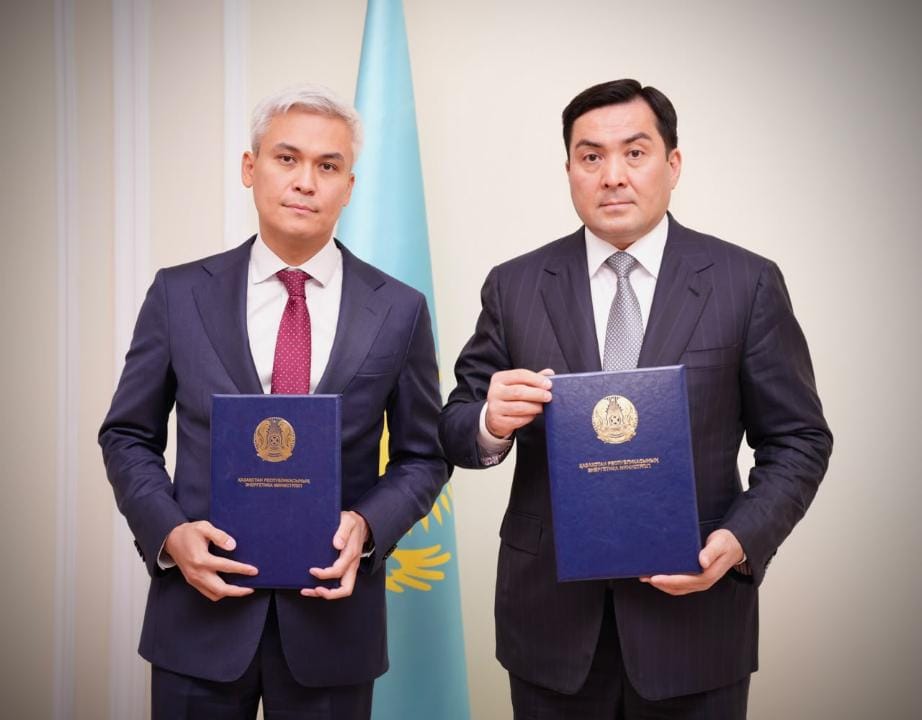
The project partners will pay Kazakhstan compensation for costs that the state did not recognize as reimbursable. The amount is not disclosed.
The gist in brief
- On October 5, Energy Minister Yerlan Akkenzhenov and Deputy Chairman of the Management Board of KazMunayGas Ruslan Balykbayev signed an agreement to settle disputed issues under the PSA for the Dunga field. The document has yet to be signed by the foreign partners, Oman Oil Company and PTTEP.
- The dispute concerned the reimbursability of certain historical contractor costs. Under the agreement, Kazakhstan will receive agreed financial compensation, the amount of which the ministry did not disclose.
- The settlement paves the way for a new development plan for 2026-2039, which envisages production of 67.4 million barrels of oil.
- Since 2023, 60% of the project has belonged to KazMunayGas itself, so a significant portion of the compensation will effectively be paid to the state by the state company.
What was signed in Astana
The document was signed by Energy Minister Yerlan Akkenzhenov and Deputy Chairman of the Management Board of JSC NC KazMunayGas Ruslan Balykbayev. Representatives of the competent authority of PSA LLP and the Dunga project operator, Dunga Operating GmbH, took part in the ceremony. The next step is for the agreement to be signed by the foreign members of the consortium, Oman's Oman Oil Company Limited and Thailand's PTTEP Corporation.
According to the ministry, the parties had for many years disagreed on which contractor costs could be reimbursed from produced oil. According to Yerlan Akkenzhenov, the accumulated disputes over non-reimbursable expenses had long hindered the development of the project. The agreements, the minister emphasized, make it possible to "protect the economic interests of the state without lengthy court proceedings" and open the way for a new investment cycle.
Who is actually paying
The Dunga PSA has been in force since May 1, 1994, and has been extended until 2039. For most of that period, the project operator was France's TotalEnergies, which owned 60%. In November 2023, KazMunayGas bought from TotalEnergies the company Total E&P Dunga GmbH along with that stake. Currently, the project participants are Dunga Operating GmbH (60%, owned by KMG), Oman Oil Company Limited (20%) and PTTEP Kazakhstan Corporation (20%).
Since the dispute concerned historical costs specifically, it appears to be about expenses accumulated under the French operator. But the compensation will have to be paid by the current consortium. If it is distributed in proportion to the stakes, then 60% of the amount will be transferred to the state by KazMunayGas, and the real money from foreign investors will amount to only the remaining 40%. The ministry did not disclose either the amount or the procedure for its distribution.
New development plan
At the end of 2025, 677,300 tonnes of oil were produced at Dunga, 7.5% more than a year earlier. The new plan envisages production of 67.4 million barrels over 14 years, that is, an average of about 4.8 million barrels per year. Converted, this is approximately 650,000 tonnes annually, almost as much as the field produces now. In other words, the "large-scale investments" the ministry speaks of are designed more to keep production steady at a mature field discovered back in 1966 than to achieve significant growth.
Dunga against the backdrop of other disputes
The Dunga agreement came at a time when the state had noticeably tightened its relations with subsoil users. The pressure is coming along two lines. The first is environmental. Over Kashagan, Kazakhstan is seeking 2.3 trillion tenge from the operator NCOC, and the Atyrau Region court in September refused NCOC's request to cancel the recovery. The Tengiz operator Tengizchevroil in the summer was found to have accumulated waste without an environmental permit. Metallurgy also fell under the same wave: Vostoktsvetmet was fined more than 100 million tenge over a mine whose liquidation the court recognized as illegal.
The second line is contractual and financial. For the extension of the Tengiz contract, which expires in 2033, Kazakhstan wants to receive $10 billion. The Dunga dispute belongs specifically to the second line: the question was which contractor costs the state was prepared to recognize as reimbursable. And here, for the first time in recent memory, the matter ended in a settlement rather than a court ruling. Hence the ministry's emphasis on the fact that the state's interests were protected without lengthy proceedings.
Author's conclusion
The ministry presents the agreement as an example of a predictable investment climate and of resolving disputes through dialogue. However, the key parameters remain closed: neither the amount of compensation, nor the volume of disputed costs, nor how the payment will be distributed among the participants is known. With KMG's 60% stake, the settlement largely looks like moving money within the state sector. Comparing it with Kashagan and Tengiz, where the world's largest oil companies stand against the state, can be done only with great caution. The real test will be the position of Oman Oil and PTTEP, which have yet to sign the agreement.
Comments ()