Oil refining capacity in Kazakhstan will grow to 39 million tons
Kazakhstan plans to nearly double its total refining capacity from 18 to 29.2 mln tonnes at existing plants, with a new complex adding up to 10 mln tonnes more.
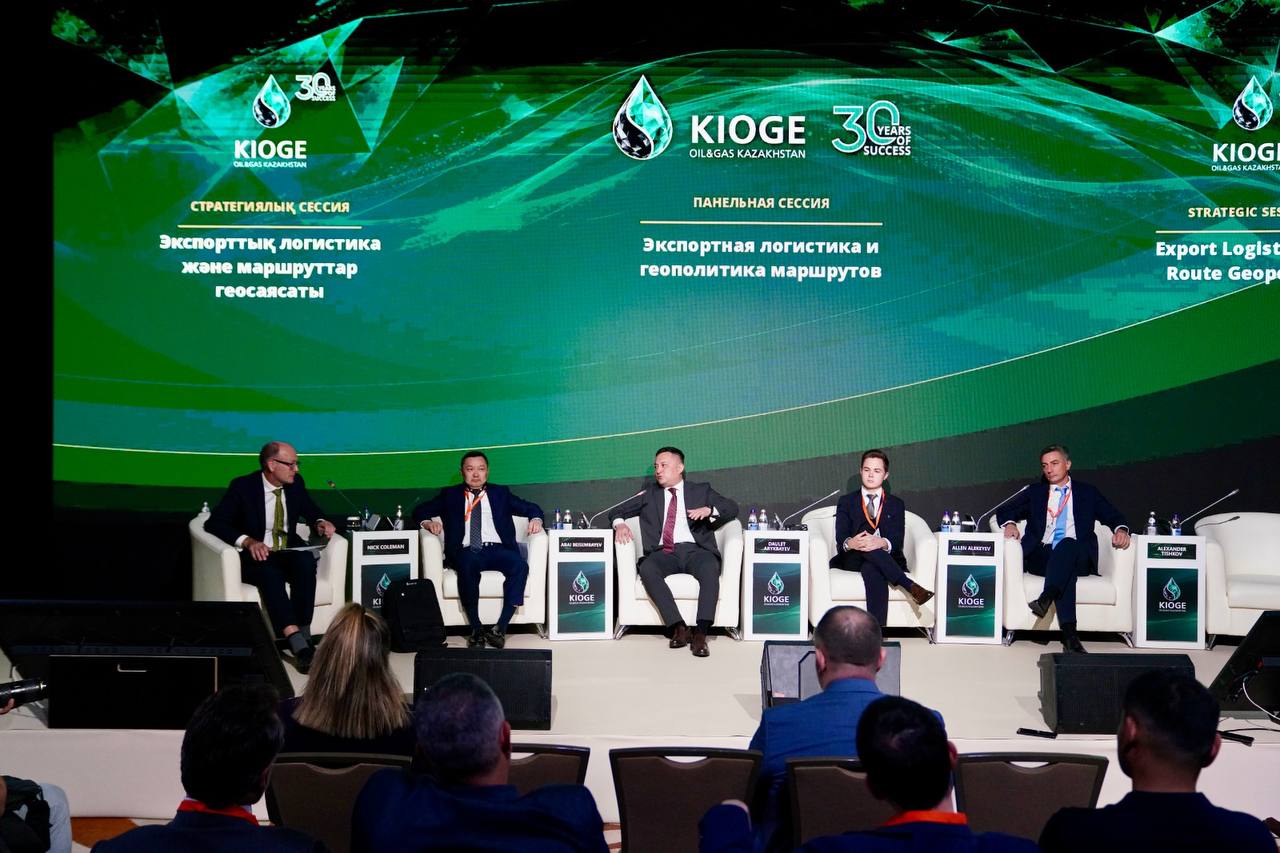
The final goal announced at the KIOGE 2026 conference in Almaty is 39 million tons of refining per year, reports the Ministry of Energy.
The essence in brief
• The Director of the Department of Oil Transportation and Refining of the Ministry of Energy of the Republic of Kazakhstan, Daulet Arykbayev, said that the country intends to bring total oil refining capacity to 39 million tons per year through the expansion of existing plants and the construction of a new large-tonnage oil refining and petrochemical complex.
- The new complex with a capacity of up to 10 million tons per year is planned to be commissioned by 2033; a pre-feasibility study and comparison of four potential sites — in the Ulytau, Atyrau, Mangystau, and Turkistan regions — are currently being completed, and the final choice of region is promised to be made by the end of 2026.
- The capacity of existing plants will grow from 18 to 29.2 million tons: the Shymkent refinery — from 6 to 12 million tons by 2030 (the feasibility study is being prepared by the East China Design Institute of CNPC), the Pavlodar petrochemical plant — from 5.5 to 9 million tons by 2031, and the Atyrau plant — from 5.5 to 6.7 million tons by 2028 with a transition to a three-year turnaround cycle.
- About 80% of the oil produced in Kazakhstan goes to export, and more than 80% of these foreign supplies account for the Caspian Pipeline Consortium (CPC); the Atyrau — Samara route, the direction to China, and the Trans-Caspian International Transport Route through the Aktau port are also used.
Why another plant is needed
Arykbayev outlined the logic of the project briefly: "We have decided to accelerate the implementation of the new refinery project."
According to him, the new plant should become the core of a modern petrochemical cluster — that is, the task is not simply to increase the volume of refining, but to create a site around which broader production of petrochemical products may subsequently take shape. The choice among the four regions under consideration, judging by the ministry's wording, will be made on the basis of a comparative analysis that is currently being completed, and not predetermined in advance.
Expansion of existing plants is proceeding at different speeds
The country's three operating refineries are being expanded according to their own, unsynchronized schedules. The Atyrau plant is moving fastest — an increase of only 1.2 million tons by 2028, but with a concurrent transition to a three-year turnaround cycle, which should improve the overall operational efficiency of the enterprise. The Shymkent refinery will receive the largest increase in relative terms — exactly double, from 6 to 12 million tons by 2030, and it is precisely for this plant that technical design is already being carried out by the Chinese institute CNPC. The Pavlodar plant will increase capacity by almost 3.5 million tons, but later than all the others — by 2031.
Infrastructure for the increased volumes
The growth of refining capacity is meaningless in itself without the ability to deliver raw materials to the plants, and the ministry is paying separate attention to this. To supply the expanding Shymkent refinery, the expansion of the Kazakhstan — China oil pipeline is being worked out — five new pumping stations and a looping (a duplicate pipeline section to increase throughput capacity) with a length of 189 km; the project is being considered on a parity basis with the Chinese side. The throughput capacity of the Kenkiyak — Atyrau oil pipeline is planned to be increased to 15 million tons, and of the Kenkiyak — Kumkol section — to 20 million tons per year. The already completed expansion of the Caspi Bitum plant to 1.5 million tons of refining, with an increase in road bitumen output to 750 thousand tons per year, is mentioned separately, as are plans to establish production in the country of Jet A-1 aviation kerosene — a fuel that Kazakhstan, apparently, currently partially imports.
The export side of the issue
The export structure cited by Arykbayev — about 80% of produced oil goes abroad, and over 80% of this volume goes through the CPC — shows that even a multiple increase in refining capacity does not turn Kazakhstan into a country that fully refines its own oil domestically: a significant portion of the raw material will still be exported in unprocessed form. We have already written that Kazakhstan occupies a notable place among global oil exporters and is structurally independent of the Strait of Hormuz, unlike many major importers — Kazakh oil flows along other, mainly overland and Caspian routes. The plans to expand refining logically complement this picture: the country is increasing not only the volume of production and export of crude oil, but also its own refining capacity, without abandoning the export orientation of the industry as a whole.
Author's conclusion
The plans announced at KIOGE 2026 add up to a consistent and technically detailed picture — with specific capacities, timelines, and even named contractors such as CNPC for the Shymkent refinery. But the key decision — the choice of site for the new large-tonnage complex — has not yet been made and is due to be determined only by the end of the year, while the new plant project itself is designed for a period up to 2033, that is, for a horizon several years ahead. The real test of these plans will not be the target capacity figure of 39 million tons, but the consistency in implementing each of the parallel projects — the expansion of the three operating plants and the construction of infrastructure capable of supplying them with raw materials — throughout the entire stated period up to 2033.
Comments ()