Recovery of the fine from the Kashagan operator has been suspended — but not cancelled
Kazakhstan's Justice Ministry explained the suspension of enforcement proceedings to recover 2.3 trillion tenge from NCOC, the Kashagan operator, saying it does not mean the state is dropping the claim.
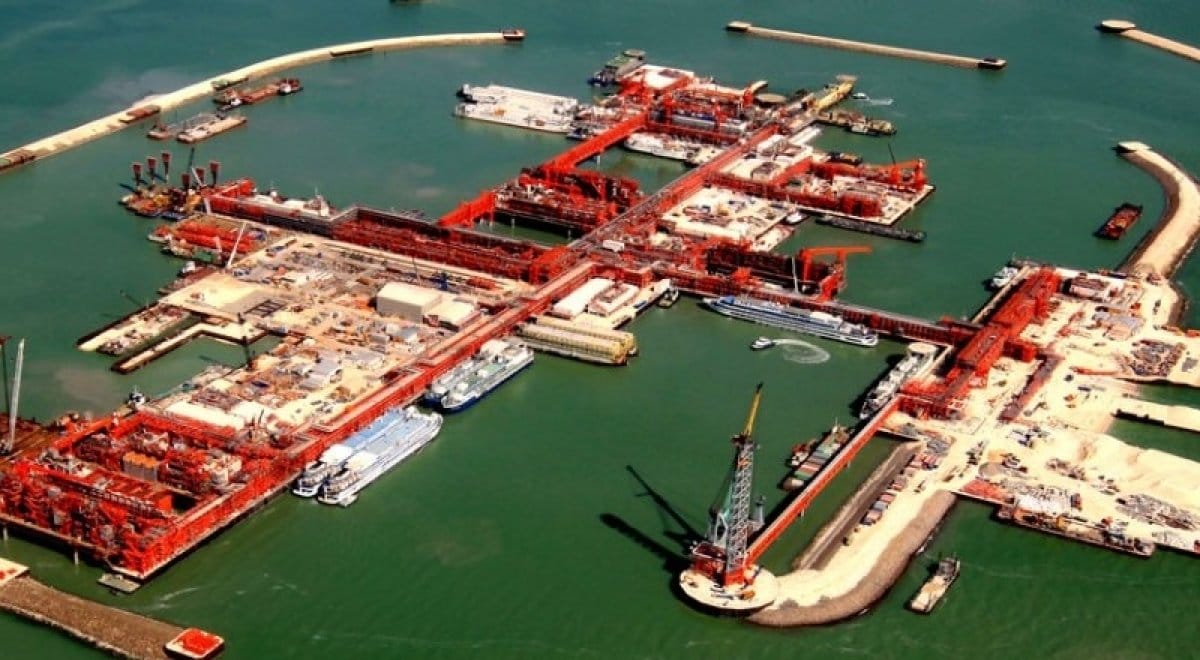
The news of the suspension of the collection of the largest environmental fine in Kazakhstan's history could have created the impression that the state had backed down in its dispute with the Kashagan operator. The Ministry of Justice hastened to clarify: this is not a refusal of the money, but a standard procedural pause, reports Excluzive.kz.
The essence in brief
- The Ministry of Justice of the Republic of Kazakhstan explained the suspension of enforcement proceedings for the collection of 2.3 trillion tenge from North Caspian Operating Company (NCOC), the operator of the Kashagan field — this is not a refusal by the state to collect.
- The reason is that NCOC appealed the actions of the state bailiff, and the Specialized Interdistrict Administrative Court of Atyrau Region requested the materials of the enforcement proceedings; by law, while the case is before the court, the proceedings are suspended automatically.
- The dispute relates to environmental claims against the Kashagan operator over the storage of sulfur in excess of established volumes; NCOC and its international shareholders are challenging the fine in UNCITRAL international arbitration.
- On July 16, 2026, the arbitration tribunal adopted an interim measure prohibiting Kazakhstan from forcibly collecting the fine until a decision is rendered, but the Kazakh Ministry of Justice stated on the same day that this does not prevent the enforcement of the national court's decision.
Timeline of the dispute
The story became public this summer, and we have followed its development from the very beginning. Kazakhstan set NCOC a deadline of July 20 for voluntary payment of the fine. After this deadline expired, the Ministry of Justice warned the head of the consortium, Giancarlo Ruiu, of criminal liability for non-execution of the court decision. Already on July 16, NCOC reported that the UNCITRAL arbitration had imposed an interim measure prohibiting forced enforcement until a final decision — but the Ministry of Justice responded on the same day that the international arbitration measure does not stop the work of the Kazakh court. A few days later, Kazakhstan initiated enforcement proceedings and entered NCOC into the Unified Register of Debtors, and on August 6, the company's property was seized — the case moved from paperwork to practice. The case status changed to "suspended" in the automated system of enforcement proceedings bodies on September 7, which gave rise to the first wave of reports about a possible refusal to collect — but, as the agency has now explained, this is merely a technical procedural pause caused by NCOC's own court appeal.
The legal mechanics of the pause
The key detail in the Ministry of Justice's explanation is the reference to a specific legal provision: according to subparagraph 13 of Article 42 of the law "On Enforcement Proceedings and the Status of Bailiffs," while the case materials are before the court, the enforcement proceedings are suspended automatically, regardless of who filed the appeal and why. After the court procedure is completed and the documents are returned, the collection must be resumed — that is, the pause is procedural rather than substantive in nature and does not mean a reconsideration of the state's position on the merits of the fine.
What is behind the dispute
The conflict is based on environmental claims against the operator of Kazakhstan's largest oil field over the storage of sulfur in excess of established norms. Seven administrative cases were initiated against NCOC last year for a total of 2.3 trillion tenge; six of them have already been closed, and the company paid 1.5 billion tenge into the local budget for them — meaning NCOC complies with court decisions where it does not dispute the very essence of the claims. The entire principled confrontation is concentrated around one, but many times larger, case — the very fine that the company considers unjustified and is challenging in UNCITRAL international arbitration. Kashagan remains Kazakhstan's second-largest oil asset with production of around 430–450 thousand barrels per day, which explains why both sides act cautiously even in the midst of a public confrontation.
Author's conclusion
The Ministry of Justice's clarification is an attempt to prevent the public perception of a technical pause as a political retreat. Formally, the agency is right: a procedural suspension during the consideration of an appeal in court is a standard and predictable part of any such proceeding, not a signal of abandoning the claims. But the very scale of the case — 2.3 trillion tenge, parallel proceedings in international arbitration, public statements by both sides almost in real time — shows that the dispute around Kashagan has outgrown an industry issue into a story that is now being closely followed far beyond the narrow circle of oil and gas lawyers.


Comments ()