Scientists have found five tipping points where climate recovery may become irreversible
Climate news is usually alarming, but a new study offers a rare look from the other side.
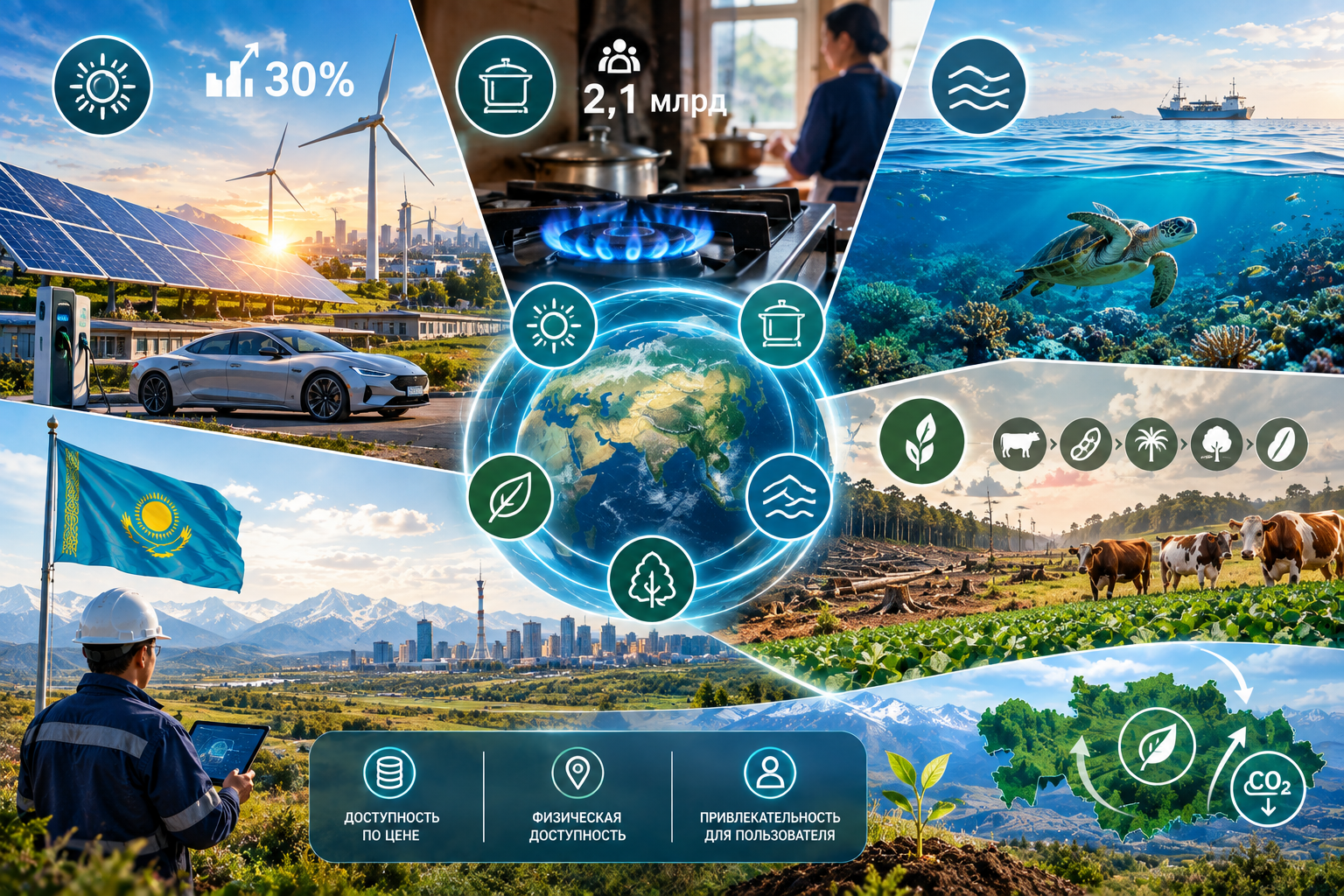
The authors claim to have found specific areas where progress can become self-reinforcing — becoming cheaper, faster and more scalable as it develops, rather than the opposite, Euronews writes.
The gist in brief
- A study by The Earthshot Prize and the University of Exeter identified 51 solutions capable of triggering "rapid and transformative change" over the next five years, singling out five priority areas — the "Earthshots."
- Clean energy is called the "main cascade": in 2025, solar and wind generation accounted for a record 30% of electricity output in the EU for the first time, overtaking fossil fuels, while solar output grew by 20% year on year.
- The three other priority areas are the transition to clean cooking (2.1 billion people still use solid fuel), the expansion of marine protected areas following the entry into force of the High Seas Treaty, and transparency in supply chains for beef, soy and other commodities linked to tropical deforestation.
- To trigger such tipping points, the authors identify three essential conditions: affordability, physical availability and appeal of the solution to the end user.
Clean energy as the engine for the other four
The report's logic is simple: the growth of clean electricity generation simultaneously opens the way for the development of electric transport, heat pumps and green industry, which is why the authors call this transition the highest-impact direction among all five. By 2030, solar power alone could cut EU emissions by 154 million tonnes of CO₂-equivalent per year — comparable to all of the Netherlands' greenhouse gas emissions. At the same time, Africa holds 60% of the world's best solar resources, yet the continent receives less than 2% of global investment in clean energy — a gap that researchers call one of the main constraints on the path to the tipping point.
Supply chain transparency against deforestation
A separate area concerns not so much technology as trade transparency: research from the University of Manchester showed that up to 80% of cleared land in the Amazon is turned into cattle pasture, and gaps in supply chain controls allow deforestation to continue. The report's authors call a small number of large buyers and financiers of beef, soy, palm oil, timber, cocoa and coffee the de facto "gatekeepers" of tropical deforestation — meaning that regulation requiring transparency in the origin of goods (such as the EU Deforestation Regulation) can change the entire system faster than isolated conservation measures.
The link to Kazakhstan's carbon track
The idea of turning climate policy into a self-sustaining rather than costly process has already been raised in the context of Kazakh climate initiatives. We previously examined the project portfolio of the International Green Technologies Center (IGTIC), where forest-climate projects under Article 6 of the Paris Agreement are listed as a separate area — a mechanism that allows countries to monetize ecosystem restoration through international carbon markets rather than financing it exclusively from the budget. A similar logic is already being applied to Kazakh farmers, who are gaining the opportunity to earn up to $40 per tonne of CO₂ through the transition to regenerative agriculture — both examples show that the self-sustaining climate progress the authors of the new report describe is not pure theory even beyond the wealthy countries of the European Union.
Author's conclusion
The value of the report lies not in the mere existence of climate solutions — that has been discussed for a long time — but in its attempt to determine which of them have already passed or are close to passing the point after which progress begins to accelerate on its own. For countries like Kazakhstan, which are simultaneously expanding renewable energy capacity and building their own carbon infrastructure, the report is not a reason for complacency but rather a checklist: affordability, physical feasibility and appeal of the solution to the end user — these are precisely the three conditions against which any new climate project should be measured to understand whether it can reach a self-sustaining trajectory or will remain dependent on constant external infusions.


Comments ()