Revaluation of mines in China significantly increased rhenium and gold resources
China's Ministry of Natural Resources has released the results of a reassessment of strategic minerals extracted as by-products, from low-grade ores, or under difficult conditions.
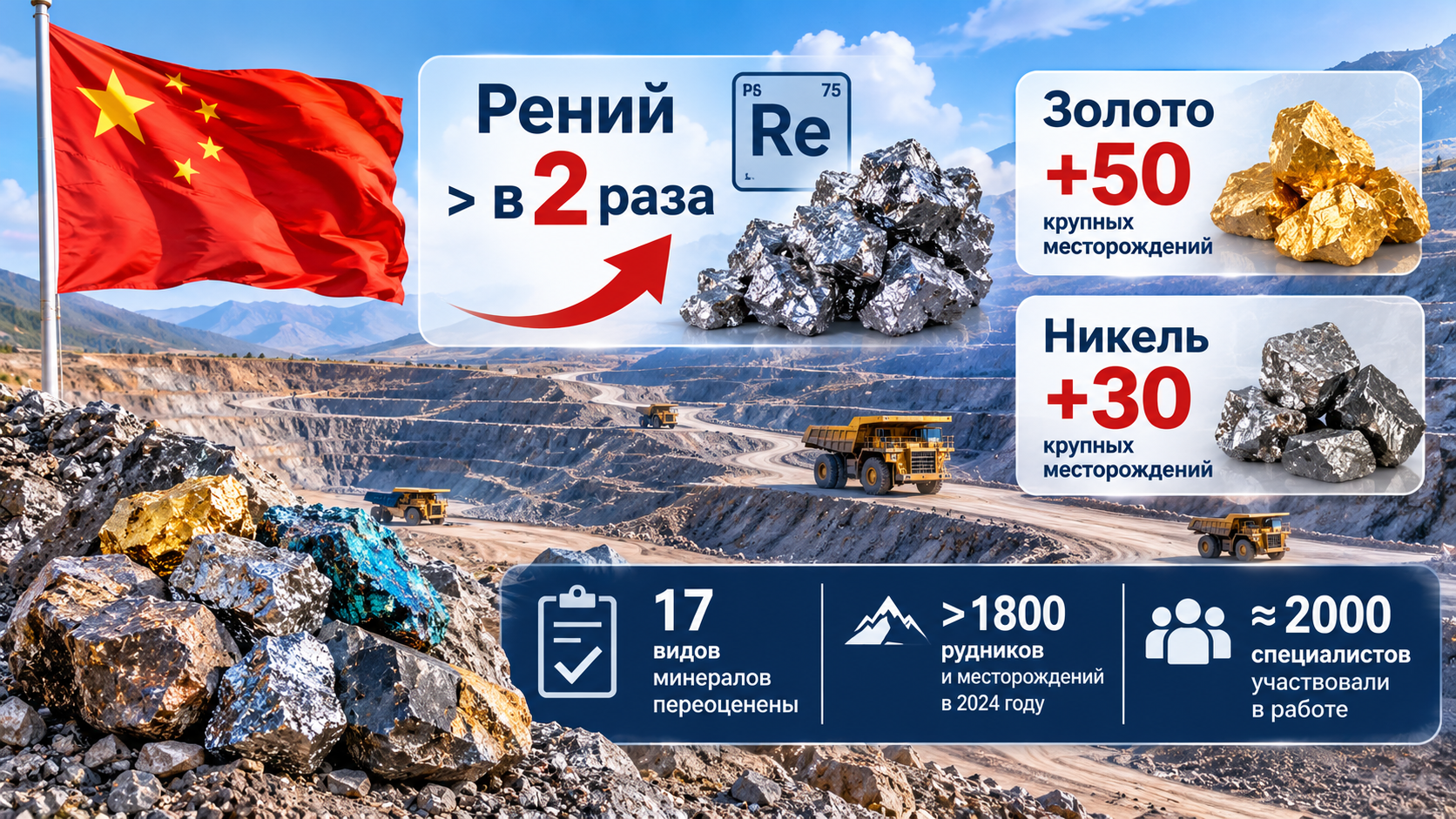
Assessed rhenium resources more than doubled, while the increase for gold and nickel is equivalent to 50 and 30 large deposits, respectively. This was reported by the Xinhua agency on October 31.
The gist in brief
- The ministry reassessed associated, low-grade and hard-to-recover resources of 17 types of minerals, and for 13 of them assessed resources grew noticeably.
- Rhenium more than doubled, gold by 50 large deposits, nickel by 30. Gallium, indium, tantalum and vanadium — by more than 10 each.
- The work was carried out in 2024 at more than 1800 mines and deposits, with about 2000 specialists taking part.
- The report does not provide absolute figures in tonnes or a base period for comparison.
What was reassessed and how
The work was carried out in 2024 in 27 provinces and autonomous regions. More than 100 organizations and about 2000 survey specialists took part. Over the year, more than 1800 operating mines and large and medium-sized deposits were reassessed: they clarified how they are developed and how many resources can be extracted with modern technologies and economics.
The list included 17 types: gallium, germanium, indium, chromite, nickel, cobalt, zirconium, hafnium, niobium, tantalum, vanadium, rare earth elements, rhenium, potash salts, gold, manganese and helium. For 13 of them, assessed resources nationwide grew noticeably.
What grew
Rhenium grew the most: its assessed resources increased more than twofold. The increase for gold equals 50 new large deposits, for nickel — 30. For gallium, indium, tantalum and vanadium, each increase exceeds 10 large deposits.
An important caveat: the "deposit equivalent" shows scale but not the amount of metal. The report does not provide absolute values in tonnes or percentages for gold and nickel, nor does it give the year being compared against. The Chinese text refers to assessed resources, not reserves, that is, not necessarily metal that can be profitably extracted today.
Which discoveries were named
Among the examples, the ministry cited three. In Anhui province, at the Chatting copper-gold project, about 100,000 m were drilled in four months with a major result. In Guizhou, in Bijie, the first fully concealed, high-grade and thick lead-zinc deposit was found and classified as super-large.
In Xinjiang, in Baicheng, China's first placer zirconium deposit of ancient river and lake origin was discovered. It could noticeably increase the country's domestic supply of zirconium. This is a metal used in reactor fuel rod cladding and in heat-resistant alloys for aviation and space, and China's dependence on zirconium imports remains high.
What is happening with the accounting of strategic metals in Kazakhstan
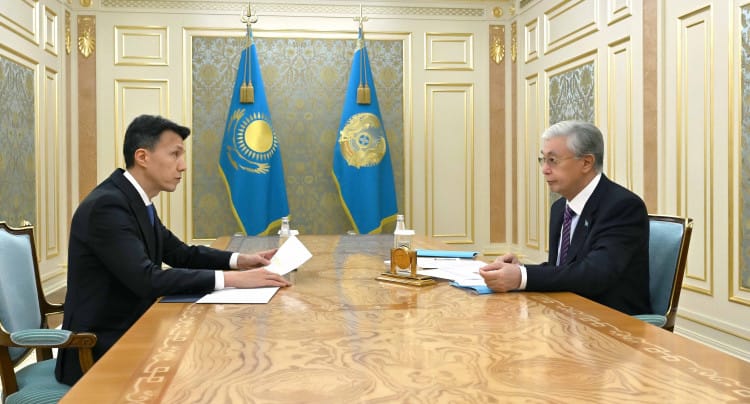
In Kazakhstan, following the results of geological exploration in 2024-2025, the focus is also on resources rather than reserves: the government reported 935,400 t of forecast resources of rare earth metals, with the Kuyrektykol site in the Karaganda region named as the most promising. In his Address, Tokayev proposed creating a national system for managing reserves of critical metals and using offtake contracts. The government is to present its proposals by the end of the year.
Author's conclusion
This news is not about China having acquired a lot of new metals, but about how their accounting is changing: the increase came from associated and low-grade ores at operating mines that were previously not considered worth extracting. Without tonnes and a base period, the figures "equal to 50 deposits" cannot be compared with either Kazakhstan or global markets. More important is the signal: China is systematically expanding its own resource base, especially where it depends on imports, as with zirconium. For the market, the question is what share of these resources will prove economically extractable, and the ministry's report does not answer it.
Comments ()