Romania has for the first time completely shut down its only nuclear power plant due to the Danube's shallowing.
The Danube energy crisis has reached its logical limit. On August 13, 2026, both reactors at Romania's only nuclear plant, Cernavodă, were fully shut down.
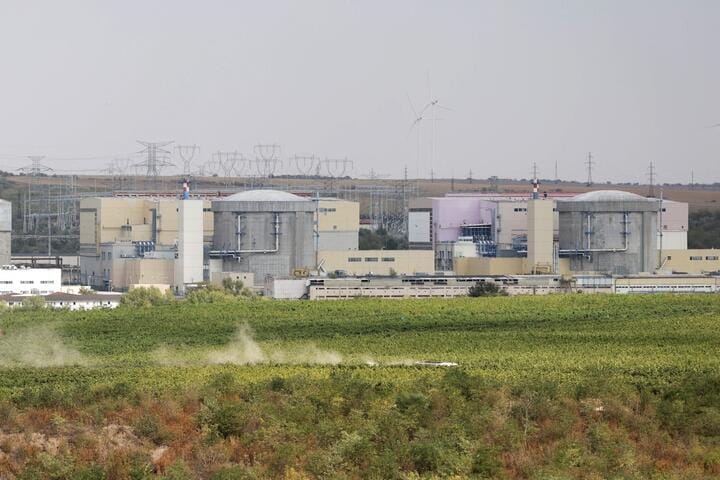
A country that until recently was trying to save its power plant with rock blasts and scuttled barges has begun purchasing electricity from abroad.
The gist
- On August 13, 2026, both reactors of the Cernavodă nuclear power plant were completely shut down; the plant normally provides about 20% of all of Romania's electricity.
- The reason is the Danube's water level dropping below what is required for safe reactor cooling: the water flow fell to 1,370 m³/s against a historical minimum of 1,450 m³/s, and on the morning of August 12 the water level dropped to 182 cm against a critical threshold of 185 cm.
- The rock blasts and scuttling of barges loaded with stones, which Romania had resorted to earlier, delayed the shutdown by only a few days rather than preventing it.
- According to plant director Romeo Urjan, the outage will last about 10 days; the country has for the first time begun importing electricity to compensate for the lost generation.
From the first unit to a complete shutdown
The timeline developed predictably, step by step. The first power unit at Cernavodă shut down as early as July 28 due to the falling Danube level. The second held out longer — largely thanks to emergency engineering measures — but on the morning of August 12 the water level at the plant dropped below the critical mark of 185 cm required for safe operation, and Nuclearelectrica began technical preparations for a controlled shutdown of the last operating unit.
Deputy director of the national administration Apele Române, Sorin Rindașu, stated: "I have never seen such figures... It is absolutely clear that the nuclear power plant will be shut down in the near future," adding that he does not believe there is any chance of changing the situation with additional engineering measures.
Engineering measures failed
Earlier, the authorities had already resorted to emergency measures — blasting a rock on the Danube bed and scuttling barges loaded with stones in an attempt to redirect more water toward the plant. The effect proved temporary: by the Romanian officials' own admission, these measures delayed the inevitable by only a few days rather than solving the problem. Even the reserve coal-fired generation launched amid the crisis failed to fully close the gap that had opened in the country's energy balance.
Romania becomes an importer
The most telling consequence of the plant's complete shutdown is that Romania, which usually balances on the edge of electricity self-sufficiency, has begun importing it from abroad. This is a qualitative shift compared with the partial outages of previous weeks: while at least one unit was still operating, the country managed with domestic reserves and coal-fired generation, but the complete shutdown of both reactors proved to be the line beyond which imports became unavoidable.
The domino effect on neighbors
Romania's energy crisis is not the internal affair of a single country. Moldova imports about 40% of the electricity it consumes from Romania, and the complete shutdown of Cernavodă directly affects the energy balance of the neighboring country — exactly the domino effect we have already recorded in previous chapters of this crisis, when electricity shortages caused by problems on the Danube reached countries that do not even physically border the river.
Author's conclusion
From the first shutdown of a single power unit to the complete shutdown of the plant and the country's transition to importer status, just over two weeks passed — a period in which it became clear that engineering measures such as rock blasts and scuttled barges can buy time but do not replace a sustainable solution. For an energy system designed for the climatic conditions of the last century, the current Danube crisis has become a vivid demonstration that the safety margin of such systems turned out to be smaller than was believed just a few months ago.



Comments ()