Romania has launched its oldest coal-fired power plant amid the energy crisis caused by the Danube.
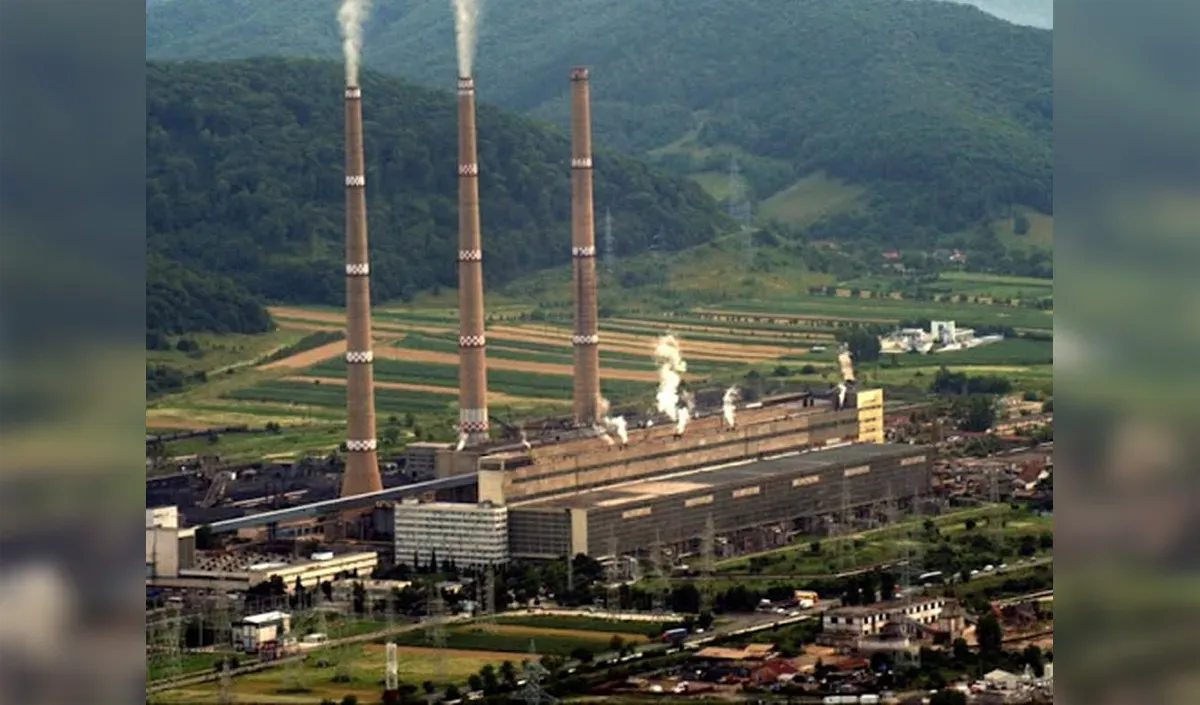
Romania's energy crisis, sparked by the Danube's low water and a shutdown at Cernavodă nuclear plant, has forced the government to restart a coal plant dating back to 1956.
The decision exposed a conflict within the ruling coalition: some consider the return to coal a justified measure of energy security, while others warn of fines exceeding one billion euros for backtracking on climate commitments.
The gist in brief
- Romania has restarted and connected to the national power grid the Paroșeni Thermal Power Plant — the country's oldest coal-fired power station, commissioned in 1956 on the Jiu River, a left tributary of the Danube.
- The first unit of the Cernavodă Nuclear Power Plant has been shut down due to drought and heat, while the second operates in a limited mode; the Danube's water level remains at historically low marks.
- Acting Prime Minister Ilie Bolojan called the situation an "energy crisis of regional scale" and urged citizens, companies, and government agencies to voluntarily reduce energy consumption during peak hours.
- State Secretary of the Ministry of Energy Christian Bușoi warned that restarting closed coal plants could result in fines exceeding €1 billion and block funding from the National Fund for Renewable Energy.
The return of the country's oldest thermal power plant
The Paroșeni thermal power plant was restarted by the Romanian energy company Complexul Energetic Valea Jiului. According to its CEO Samuel Dioane, coal reserves at the plant exceed 40,000 tonnes, and the plant will operate at least through the weekend, and if a request comes from the National Energy Dispatch Center — also on weekends and in the following days. A telling detail: this spring, the power unit in the Jiu River valley celebrated its 70th anniversary — the plant returns to service seven decades after commissioning, even though some similar capacities in Romania had already been shut down under the country's climate commitments.
Cernavodă and the overall picture of the crisis
The restart of the coal plant comes against the backdrop of a picture already familiar from previous articles: the Danube's water level has hit a historic low, the first unit of the Cernavodă NPP has been shut down, and the second continues to operate in a limited mode amid unstable hydrological forecasts. A similar story unfolded a few days earlier in Slovenia — there, the Krško NPP reduced its output to 80% due to the low water level and high temperature of the Sava River, a tributary of the same Danube. Earlier, Romanian authorities had already blasted rocks on the riverbed in an attempt to raise the water level near the plant using engineering methods. Now, the launch of backup coal generation has been added to all these measures — a signal that engineering solutions proved insufficient, and the country is forced to deploy reserve capacities despite the political cost of such a step.
The price of compromise — coal versus "green" commitments
It is precisely this political price that has become the main new twist in the story. Christian Bușoi directly called the resumption of closed coal-fired power plants an "extremely dangerous decision": Romania had previously received European funding for alternative projects in exchange for closing such capacities, and a reverse step could undermine the trust of European partners and block access to funds from the National Fund for Renewable Energy. At the same time, the decision was made amid open disagreements within the coalition: the leader of the Social Democratic Party, Sorin Grindeanu, supported legislative amendments that would delay the closure of part of the coal capacities — meaning the crisis is now not only hydrological and energy-related but also political within the country.
Why this matters for Kazakhstan
The Romanian dilemma — which is more expensive, a fine for backtracking on climate commitments or the risk of an energy deficit — is not familiar to Kazakhstan in this form: the country is not bound by EU commitments and is simultaneously implementing its own national project to develop coal generation worth at least 7.5 trillion tenge, which we wrote about in the context of growing exports of Kazakh coal. But the Romanian case itself is instructive as a warning: a country that had been consistently shutting down coal capacities for years for the sake of climate goals, at the first serious hydrological crisis, found itself forced to return to backup coal on an urgent basis. For Kazakhstan, which is simultaneously building the Balkhash NPP, developing hydropower, and not abandoning coal, the lesson is different: any bet on a single source of generation — whether nuclear, hydro, or coal — creates vulnerability if that particular source turns out to be dependent on climatic conditions that have ceased to be predictable.
Author's conclusion
In a month and a half, the European water-energy crisis has gone from a single news item about French reactors to a story of political division within the Romanian government. The return to coal generation, which the country had been systematically decommissioning for years, shows that when an energy system faces a real deficit, climate commitments and engineering ambitions quickly give way to a simple question — where to get electricity right now. For countries that are only building their own energy mix, this is a curious reminder that diversification of generation sources is not an abstract principle but an insurance policy for the case when one source fails for several neighbors at the same time.
Comments ()