Salinity of the Sea of Azov has reached a historic maximum
One of the planet's freshest seas is rapidly losing that distinction.
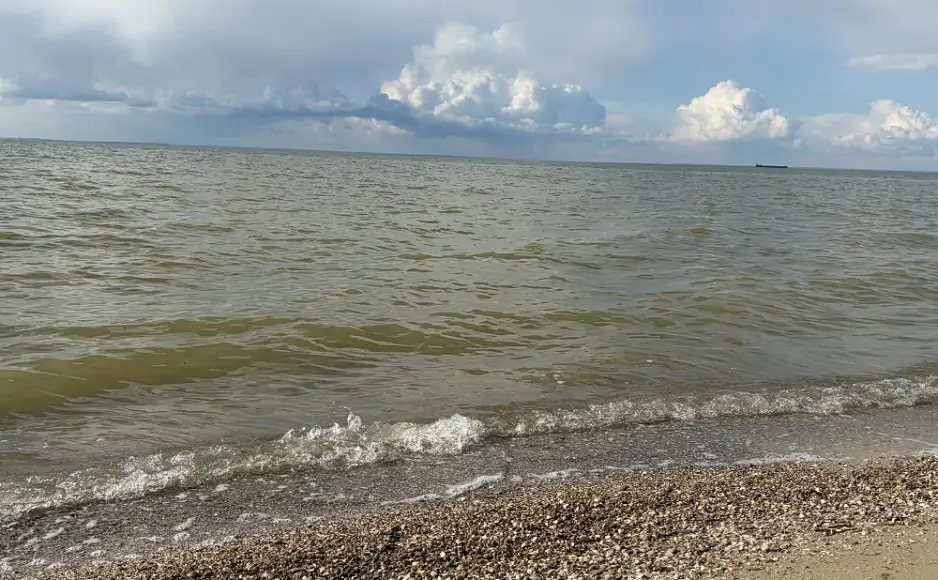
According to the Southern Scientific Center of the Russian Academy of Sciences, the salinity of the Sea of Azov reached its maximum in all 150 years of instrumental observations by 2026 — and came close to the levels of the far more saline Black Sea, TASS reports.
The essence in brief
- The salinization of the Sea of Azov reached a historic maximum by 2026 over all 150 years of instrumental observations — average salinity rose from 10–11 parts per thousand in 2007 to 16 parts per thousand, approaching the salinity of the Black Sea (18–19 parts per thousand).
- The increase was 60% over 19 years — an average of 0.25 parts per thousand annually; in the Taganrog Bay, salinity more than doubled, while in the Sea of Azov itself it increased by one and a half times.
- The main cause is the reduction of freshwater inflow from the Don River due to decreased precipitation in its basin.
- Extreme salinization has changed the composition of commercial fish: instead of valuable species — sturgeon, bream, carp, and roach — the basis of catches now consists of anchovy, gobies, and mullet; scientists cite the growth of the jellyfish population as a separate symptom.
The scale of changes in numbers
Until 2007, the average salinity of the Sea of Azov remained around 10 parts per thousand — a level that for centuries made it one of the freshest seas in the world. Then the salinization process accelerated and has not stopped for nearly two decades: from 2007 to 2026, salinity rose to 16 parts per thousand, and in certain parts of the sea — even more noticeably. In the Taganrog Bay, where the Don flows in, the figure more than doubled. Scientists at the Southern Scientific Center of the Russian Academy of Sciences emphasize that such a prolonged phase of salinization has not been recorded in the entire history of instrumental observations of the sea.
The mechanism: less fresh water — more salt
The Sea of Azov is the shallowest in the world, its depth not exceeding 13.5 meters, and its water balance was historically maintained by a constant inflow of fresh water from inflowing rivers, primarily the Don. When the volume of this inflow decreases while evaporation continues at the same rate, the concentration of dissolved salts in the remaining water inevitably rises. This is exactly what has been happening since 2007–2008: precipitation in the Don basin is noticeably lower, river runoff weakens, and the sea water gradually approaches in composition the far more saline Black Sea, which is far less dependent on river runoff.
The fishing industry is changing along with the sea
Changes in salinity directly affect the composition of marine fauna. The Sea of Azov was historically considered one of the most productive in the world precisely because of the freshwater and slightly saline character of its waters — valuable species predominated in catches: sturgeon, bream, carp, and roach. As salinization progresses, these species lose their usual habitat, and their place in the fishery is taken by anchovy, gobies, and mullet — fish more resistant to increased water salinity. Scientists cite the growth of the jellyfish population, which they associate with the same salinization processes, as an additional indicator of change.
A parallel with the Aral Sea
The mechanism recorded in the Sea of Azov is also well known in Central Asia — although the causes there are different. We have already written that the bottom of the dried-up Aral Sea released 748 million tons of CO₂ into the atmosphere after the inflow of fresh water from the Amu Darya and Syr Darya sharply decreased due to large-scale water withdrawal for irrigation. In the case of the Aral, the main cause was human intervention in the irrigation system, whereas in the case of the Sea of Azov, scientists point to a climatic factor — reduced precipitation in the river basin. But the outcome in both cases is the same: closed or semi-enclosed water bodies dependent on river inflow are extremely vulnerable to any long-term reduction of that inflow, whether caused by climate change or human activity.
Author's conclusion
The story of the Sea of Azov is another reminder of how sensitive the water balance of small semi-enclosed seas is to changes in the river basins that feed them. A salinity increase of 60% over 19 years is not a one-time deviation but a sustained multi-year trend that has already restructured the composition of commercial fish and, by all appearances, will continue to change the sea's ecosystem further until the Don's runoff recovers to its former volumes — and scientists are not yet giving any definite forecasts on that.
Comments ()