Scientists found: Amu Darya lost up to 77% of its flow — and the culprit is not climate, but humans
A study on ScienceDirect reveals a catastrophic decline in the Amu Darya’s flow, one of two key rivers feeding the Aral Sea and Central Asia’s irrigation system.
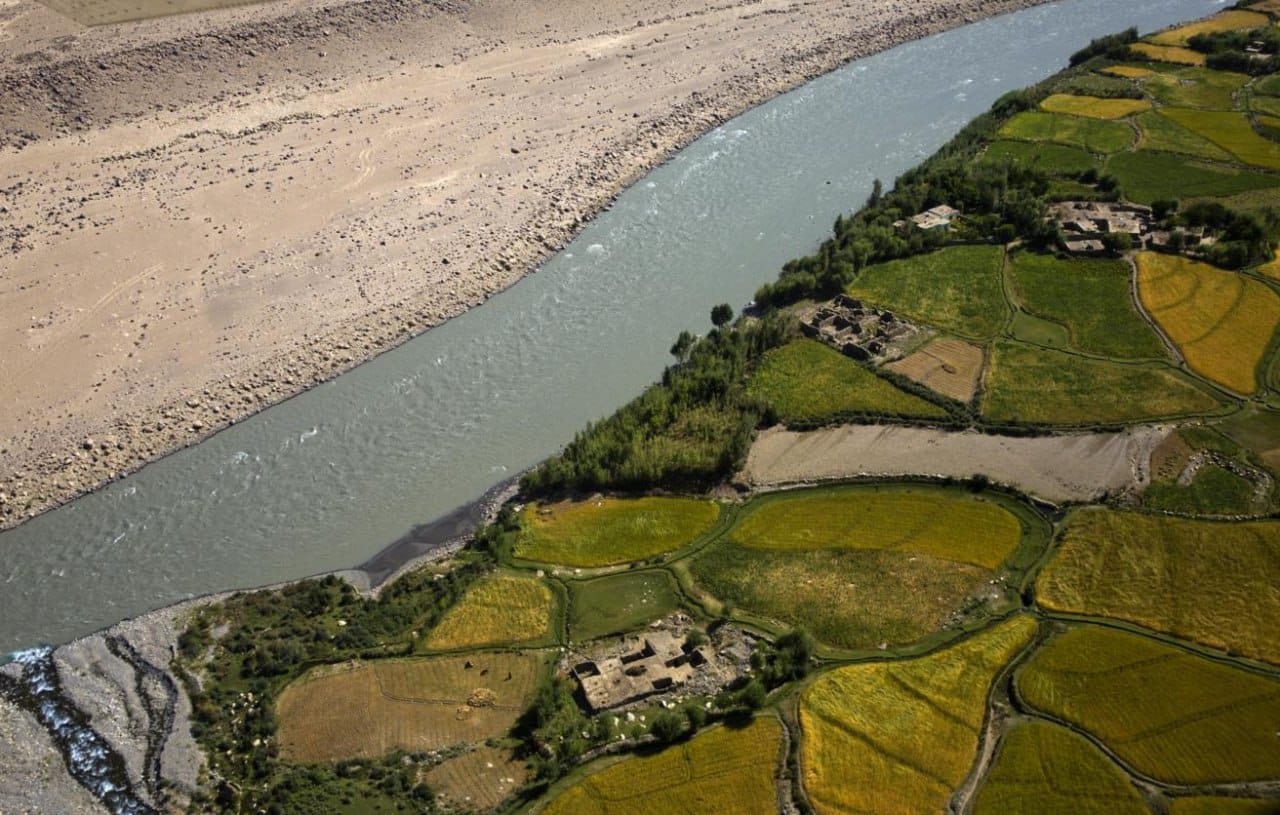
Since the mid-20th century, the water flow of the river in its middle and lower reaches has decreased by 54–77%. The main reason is not climate change, but human activity: water withdrawal, expansion of irrigated lands, construction of canals and reservoirs, reports Asiaplus.news. For Kazakhstan, the lower reaches of the Syr Darya, and a water consumer from the Aral Sea basin, this is not a distant story.
The Gist Briefly
- The study covered the period 1931–2020. The baseline for comparison was the period 1931–1950 — before the start of large-scale Soviet irrigation expansion.
- The flow of the Amu Darya in its lower reaches (Kyzylzhar station) decreased by 77%. In the middle reaches (Kerki) — by 22%. On the main tributaries — from 4 to 34%.
- The climate in the river basin over the same period improved: precipitation increased by 6–13%, which theoretically should have increased flow by 14–20%. But this did not happen — human activity more than offset the natural increase.
- The impact of human activity on the reduction of flow in the middle and lower reaches is estimated at 114–120% — meaning that without irrigation pressure, the river would be fuller than during the baseline period.
- Agriculture accounts for about 92% of all water withdrawal in the basin. During the Soviet period, the area of irrigated land increased by 150%.
The Paradox: More Rain, Less Water
The least obvious — and most alarming — part of the study lies precisely in this paradox. The climate in the Amu Darya basin has changed over the last 90 years, but not for the worse: the temperature has risen by 0.51–0.83°C, and precipitation has increased by 6–13%. By physical logic, more precipitation means more water in the river.
However, the water volume has decreased by 54–77%. This means that human activity has not only neutralized the climatic gain but has also created a colossal deficit on top of it. The study authors directly state: in the middle and lower reaches, the human impact on flow reduction is estimated at 114–120% — that is, without irrigation pressure, the river today would be fuller than it was 90 years ago.
Soviet Legacy: 150% Increase in Irrigated Lands
The scale of the irrigation transformation of the Amu Darya basin is one of the largest in human history. From the 1950s to the 1990s, canals, pumping stations, and reservoirs were actively built in the river basin. The area of irrigated land increased by 150% — primarily for cotton, wheat, and rice. This was a deliberate state policy that provided agricultural productivity at the cost of water depletion.
The result of this policy — the Aral Sea disaster — is well known. The study adds quantitative precision to this picture: a reduction in flow in the lower reaches by 77% means that only a quarter of the water that flowed there in the mid-20th century now reaches the sea. And the key factor is not climate, but irrigation.
Glaciers Provide a Gain — Temporarily
In the upper reaches of the Amu Darya, the picture is somewhat different. There, climate warming provides a temporary positive effect — due to the melting of snow and glaciers. At the Garm station (upper Vakhsh), flow even increased by about 3%. However, the authors warn: this gain is temporary. In the long term, the reduction of glaciers will lead to a worsening of the water supply situation — when there is nothing left to melt.
Data on the Vakhsh shows how human influence increases downstream: in the upper reaches (Garm) it is –5%, in the lower part (Tuktaul) it is already –10%. Further downstream — more withdrawal, less water.
The Kazakhstan Context
Kazakhstan is located in the basin of the Syr Darya — the second main river of the Aral Sea, which is experiencing similar pressure. Our previously published materials note: the Shardara Reservoir started 2026 at 79% of its normal fill level, and snowpack in the upper reaches of the Syr Darya has been below normal for the third consecutive year.
The study on the Amu Darya is a mirror reflecting the situation across the entire Aral basin. The mechanism is the same: irrigation withdrawal dominates over climatic factors, and it is management decisions — not precipitation — that determine how much water reaches downstream users. For Kazakhstan, which stands below Kyrgyzstan and Uzbekistan in this chain, this means a direct dependence on how its neighbors manage their water intake.
The study authors' recommendations — upgrading irrigation systems, water-saving technologies, transboundary cooperation — sound familiar. But the gap between recommendations and practice in Central Asia remains colossal.
Author's Conclusion
The Amu Darya is losing water not because the climate is changing — but because it is being diverted. This is the study's most important conclusion, because it is simultaneously ruthless and hopeful: if the main cause is human activity, then humans are also capable of changing it. But this requires the political will of the five countries sharing the waters of one basin. Until that exists, the river will continue to shrink.


Comments ()