Scientists name EU country with the cleanest rivers
Spanish hydrologists have devised a way to compare rivers across countries on a single scale, using data Eurostat has long collected.
The result turned out to be unexpected: the country that handles the task best is not at all the one famed for environmental friendliness in the public consciousness, writes Vokrugsveta.ru.
The gist in brief
- Scientists at the Institute of Water and Environmental Engineering at the Polytechnic University of Valencia have developed an indicator of anthropogenic pressure on river ecosystems (HPRE) — it converts Eurostat data into a comparable scale from 0 to 100 and reflects river pollution by organic matter and phosphates.
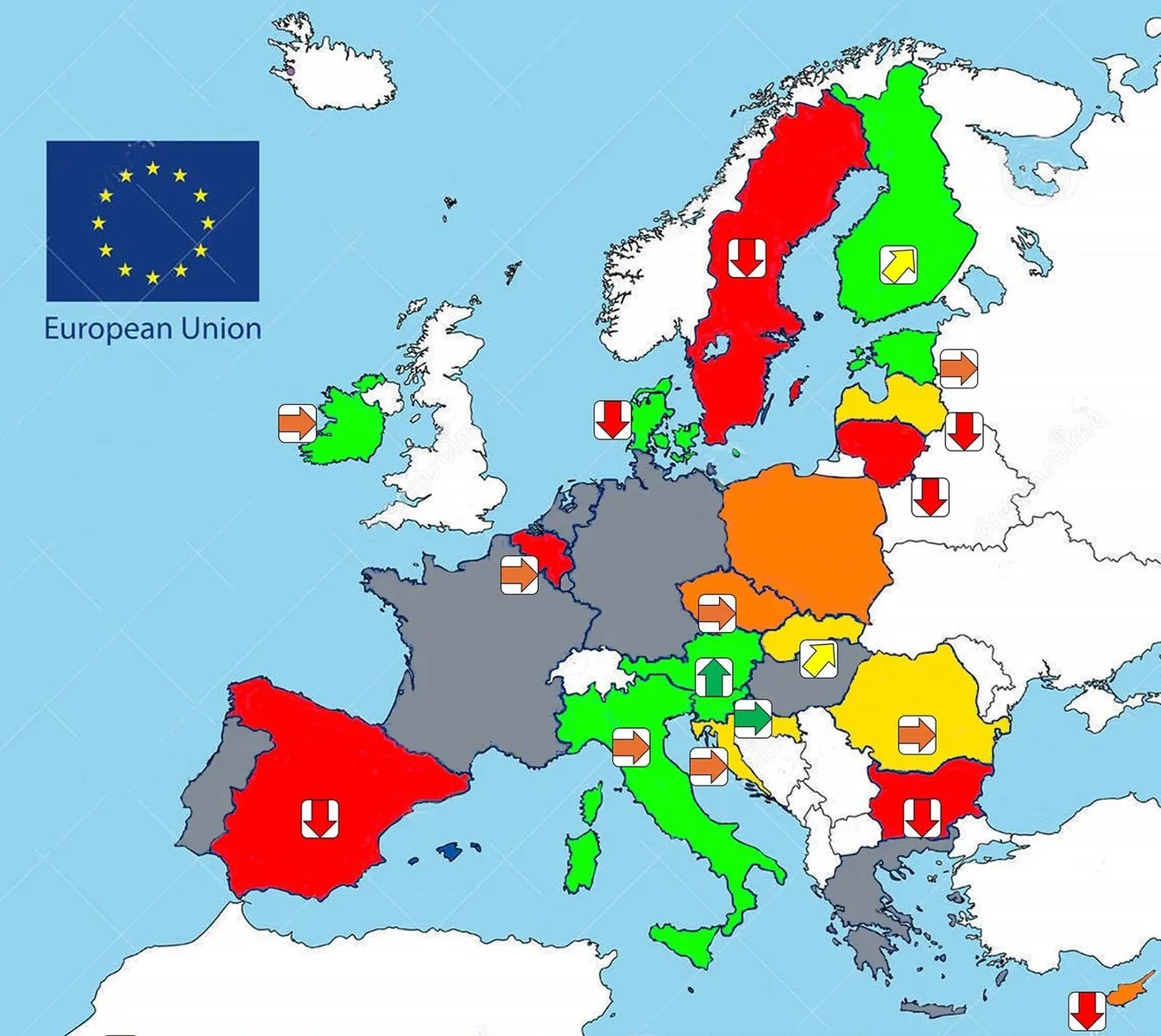
- The study, published in the journal Environmental Science and Pollution Research, covered 18 European countries over 2015–2021; the cleanest rivers in Europe were recognized as those of Slovenia, with Ireland in second place.
- The situation is assessed as favorable in six countries (also Finland, Estonia, Italy, Denmark), but only Slovenia is moving along a trajectory fully consistent with the EU's 2030 environmental goals.
- The most serious problems are in Belgium, Bulgaria, Lithuania, Romania, Sweden, and Spain; in Spain and Bulgaria the situation was assessed as the most critical, and in Spain the concentration of phosphates in rivers even increased from 2015 to 2021.
What stands behind the improvement where it exists
Over 2015–2021, the level of organic pollution decreased in 14 of 18 countries, and the concentration of phosphates — in 11 of 16. But the researchers' overall conclusion is cautious: despite the improvement, the pace of change is insufficient to meet the environmental goals set for 2030. Even the countries with a positive assessment — Finland, Estonia, Italy, Denmark — according to the authors, must continue to make efforts just to maintain the level already achieved, rather than roll back. The positive dynamics where it exists is linked primarily to the modernization of wastewater collection and treatment systems and to measures to reduce nutrient discharges — that is, to concrete infrastructure, and not only to a reduction in industrial activity.
Why this particular method is interesting
The value of the work by the Spanish hydrologists lies not only in the ranking itself, but also in the approach: instead of collecting new data, they took what countries already report annually to Eurostat and turned it into a single, comparable scale. Such methodological solutions are not a one-off story but a growing trend in environmental monitoring as a whole: where the collection of primary data is expensive and slow, what acquires value is precisely the ability to analyze already accumulated statistics in a new way.
The Kazakh parallel — from the other end of the process
The topic of systematic monitoring of the state of rivers also concerns Kazakhstan, albeit from the other side of the process. The National Information System of Water Resources is supposed to unite data on rivers, lakes, and hydraulic structures into a single platform. The difference from the Spanish study is fundamental: HPRE is an analytical index built on top of already existing statistics accumulated over years by Eurostat, whereas the Kazakh system is still solving a more basic task — establishing the very systematic and uniform accumulation of such data. A similar analytical index for Kazakh rivers is in principle possible in the future, but only after an array of observations comparable in quality and duration has been accumulated.
Author's conclusion
The HPRE ranking is interesting not so much because it names a specific leader, but because it shows: the environmental well-being of rivers is not a static state but the result of constant efforts that require maintenance, and even among leading countries like Slovenia. For countries that are only just building their own system for collecting such data, including Kazakhstan, the Spanish study is not so much a guide to "whom to catch up with" as a demonstration of what level of analytics can in principle be achieved over a decade if systematic collection of data on river quality is carried out consistently and without interruptions starting now.
Comments ()