Second life of solar panels: Germany develops full-cycle recycling technology
German researchers developed a technology to almost fully recycle spent solar panels, reusing costly materials to produce new photovoltaic modules.
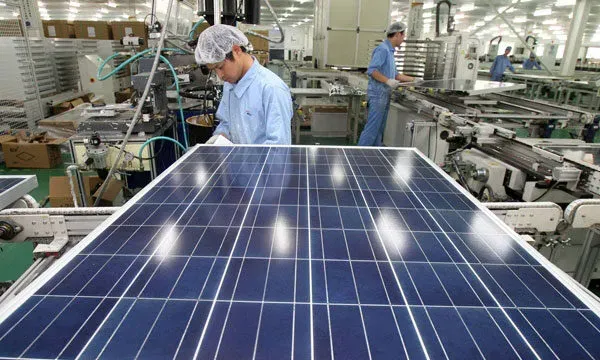
According to scientists, the new method could significantly reduce production costs, lower energy consumption, and decrease the environmental footprint of solar energy.
In a nutshell
· Germany has developed a technology for deep recycling of old solar panels.
· The recovered materials can be used to produce new photovoltaic modules.
· Energy consumption for recycling is reduced by about five times compared to traditional technologies.
· The production cost of new panels could decrease by more than half.
· Scientists believe that the development of such technologies will make solar energy more sustainable.
Europe prepares for a wave of photovoltaic waste
Solar energy in Europe is entering a new phase of development. The first large-scale solar power plants, built over 20 years ago, are gradually reaching the end of their service life, and with this, the volume of photovoltaic waste is growing rapidly.
According to estimates by the German Federal Environment Agency (UBA) and the International Renewable Energy Agency (IRENA), the volume of decommissioned solar panels in Germany alone could exceed 3 million tons by 2035 and approach 10 million tons by 2050. Researchers suggest viewing these panels not as waste, but as a valuable source of secondary raw materials for the new energy sector.
It was this problem that became the starting point for developing the new technology for recycling photovoltaic modules.
Energy savings and cost reduction
One of the main advantages of the new technology is significantly lower energy consumption. Recycling one ton of solar panels requires about 148 kWh of electricity, which is roughly five times less compared to traditional high-temperature pyrolysis. From the materials of one ton of old modules, new panels with a total capacity of about 15 kW can be manufactured.
According to the developers' calculations, the production cost could decrease from 0.225 euros to 0.086 euros per watt, and with the creation of a full recycling cycle, down to 0.05 euros per watt. Additionally, recycling each ton of panels avoids emissions of approximately 2.15 tons of CO₂ and saves nearly 10,000 cubic meters of water.
Why old panels are not waste, but a valuable resource
Today, most solar panels are recycled mechanically. Typically, glass and aluminum frames are extracted from the modules, while the most valuable materials — silicon, silver, and copper — are lost or contaminated to the point where their reuse becomes economically unfeasible.
Meanwhile, each ton of decommissioned photovoltaic modules contains materials worth approximately 1,175 euros. Nearly half of this value comes from about 0.5 kg of silver, whose market price today exceeds 1,100 euros per kilogram. In effect, existing technologies allow for the recovery of relatively cheap components, while the most expensive materials remain unused. This is why German researchers are focusing not just on waste recycling, but on creating a fully closed-loop production cycle.
The main obstacle — legislation
Despite the technological readiness of the solution, researchers note that the industry's development is hindered by current European recycling regulations.
Today, EU requirements are primarily focused on achieving a certain mass of recycled waste. As a result, companies often limit themselves to extracting glass and aluminum, while the recycling of silver and silicon remains economically less attractive. Scientists propose changing the incentive system to encourage the extraction of the most valuable materials and the design of panels that are inherently suitable for disassembly and reuse.
What this means for Kazakhstan
For Kazakhstan, this technology is of particular interest against the backdrop of the active development of solar energy. As new solar power plants are commissioned, the country will also face the need to recycle the first generations of photovoltaic modules in the coming decades.
Previously, Hunn.kz reported on the signing of a memorandum between Utebayev University and the Chinese company AIKO on the creation of a demonstration park for carbon-neutral agriculture in Atyrau, which plans to make extensive use of solar energy and modern digital technologies. The development of such projects makes the issue of recycling solar panels no less important than their production.
Author's conclusion
The story of solar energy is gradually entering a new phase. While the main goal of the last few decades was the mass construction of solar power plants, the question of what to do with the equipment after its service life is becoming increasingly important. The scale of future photovoltaic waste is already measured in millions of tons, making recycling technologies as crucial an element of the industry as the production of new panels. The German development shows that the future of renewable energy lies not only in generating "green" energy but also in creating a full-fledged circular economy.



Comments ()