Super-El Niño 2026: Is Kazakhstan Ready for a Climate Shock?
The World Meteorological Organization predicts a strong El Niño in 2026, potentially causing floods, droughts, and extreme heat globally.
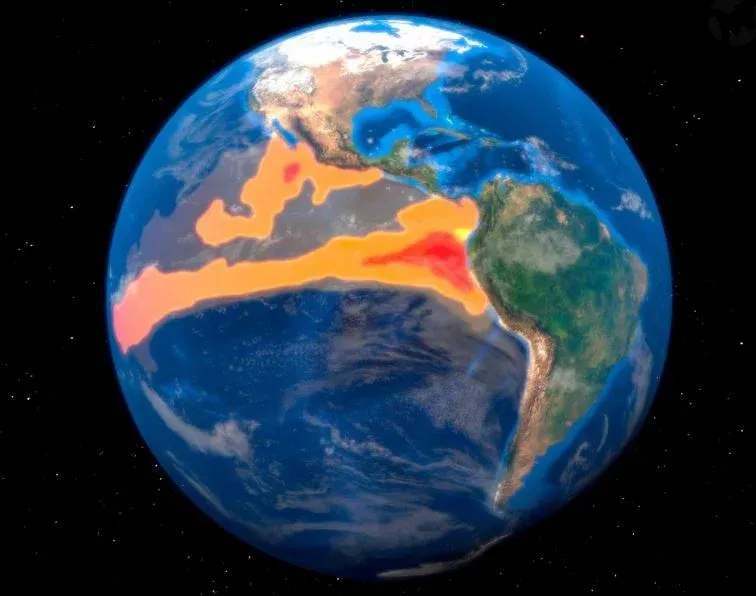
The World Meteorological Organization forecasts the formation of a powerful El Niño in 2026 — one of the strongest on record. For Central Asia, and especially Kazakhstan, this means increased risks of extreme floods, droughts, and abnormal heat, directly threatening the region's food security and water resources.
In Brief
• The El Niño of 2026 could become record-breaking in strength, causing global climate anomalies
• Kazakhstan and Central Asia are in a high-risk zone due to their dependence on meltwater and irrigated agriculture
• Adapting the agricultural sector to new climate realities requires a revision of approaches to land reclamation, crop rotation, and water resource management
• Current climate conditions are already breaking historical records — in 2026, more than 600,000 square miles of forests burned worldwide
Climate Shift: Why 2026 is Exceptional
Shaun Martin, Vice President for Adaptation and Resilience at the World Wildlife Fund (WWF) in the US, reminds us: "Adapt or perish, as always, is nature's inexorable imperative."
The words of H.G. Wells, spoken a century ago, sound today like a forecast for the near future.
Scientists warn: the El Niño of 2026 could trigger floods, droughts, and extreme heat worldwide. For Kazakhstan, where 70% of agricultural land is in a zone of risky farming, this means a direct threat to wheat harvests, livestock feed supplies, and pasture conditions.
Adaptation as a Matter of Survival for Agriculture
Taking climate change seriously means acknowledging that reducing greenhouse gas emissions is no longer the only priority. Adaptation must become the foundation of agricultural planning. This concerns where to build homes, which crops to grow, and how to manage natural resources.
For Kazakhstan's agricultural sector, this means:
- Revising the structure of sown areas in favor of drought-resistant crops
- Implementing drip irrigation systems and water-saving technologies
- Developing breeding programs for tolerance to temperature stress
- Creating insurance funds and rapid response mechanisms for climate disasters
Reality Outpacing Forecasts
For decades, climate policy has been built around mitigation — reducing emissions to prevent future damage. But 2026 demonstrates that climate impacts are outpacing our efforts.
In just the first months of 2026, more than 600,000 square miles of forests burned worldwide — the equivalent of 81 million football fields. This is a record for this period of the year. Ocean surface temperatures have reached historic highs, and Arctic sea ice has hit a record low.
A New Reality for Central Asia's Water Resources
The climate today is fundamentally different from the one that shaped past El Niño events. Heatwaves are hotter, droughts are longer, and precipitation falls in destructive downpours. Even historically cooler periods no longer provide a respite.
Of particular concern is that La Niña — the opposite phase of El Niño — now occurs in a warmer world. Ocean temperatures during the cool phases of La Niña exceed those observed during the "super" El Niño events of 1998 and 2016.
For Kazakhstan, where water resources are 45% dependent on transboundary rivers, and the glaciers of the Tien Shan and Pamir mountains are melting at an accelerated rate, this means:
- Increased risk of low water levels in the Syr Darya and Ili river basins
- Increased frequency of mudflows and floods
- Accelerated salinization of irrigated lands
- Reduced pasture productivity in desert zones
Author's Conclusion
The El Niño of 2026 is not just a meteorological event, but a stress test for the entire food security system of Central Asia. Kazakhstan urgently needs to shift from mitigation strategies to active adaptation: investing in water conservation, crop diversification, and infrastructure capable of withstanding climate shocks. Delay will be more costly — not only economically, but also in humanitarian terms.

Comments ()