Tajikistan has launched a 250 MW solar power plant
A new solar plant can cover almost half the energy needs of an entire region of the country.
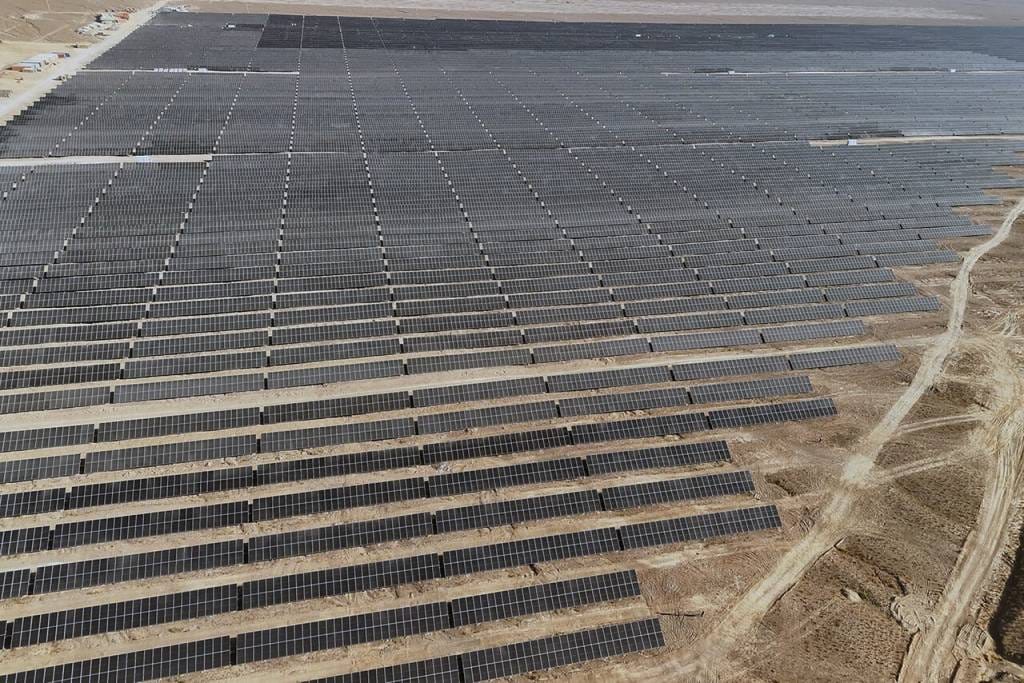
Tajikistan, traditionally associated primarily with hydropower, has taken a notable step toward solar generation.
The essence in brief
- President of Tajikistan Emomali Rahmon commissioned a solar power plant with a capacity of 250 MW in the town of Shaidon in the Asht district of Sughd region — construction began in November 2025, and the facility occupies an area of 793 hectares.
- The project was implemented by the company "Ayon Energy"; to connect to the country's unified energy system, a double-circuit overhead line with a voltage of 220 kV and a length of 9.8 km was built to the "Asht" substation.
- After the station was launched, the region's electricity generation capacity increased by 61%, and the facility itself will be able to provide about 40% of the region's electricity needs.
- For 2027, additional photovoltaic stations with a total capacity of 700 MW have been ordered to be built — that is, the current launch is only the first stage of a far larger program.
Why Tajikistan needs local generation
One of the practical motives for the project is reducing losses during long-distance energy transmission: currently, a significant portion of electricity reaches Sughd region from the south of the country, while local generation directly in the region makes it possible to avoid some of the inevitable losses during transportation over long power lines. For a country whose energy system has historically been built around large hydropower plants, solar generation on this scale is a notable expansion of the technological portfolio, rather than merely a supplement to existing capacity.
Part of a broader regional picture
The Tajik project fits logically into the overall dynamics of energy development in Central Asia, which we have been following throughout this year. In parallel with large hydropower projects such as the Rogun HPP, for whose construction the World Bank recently allocated another $300 million, and the Kyrgyz Kambarata cascade, the countries of the region are increasingly developing solar generation as well — we observed similar steps in Uzbekistan with the "Solar Home" program for households, and in Kazakhstan with industrial renewable energy projects such as Masdar's wind farm. It is telling that the same day Tajikistan reported the launch of its station also brought news of an even more unusual solar project nearby — China tested the world's first underwater solar power plant, demonstrating how quickly the range of technological solutions in this field is expanding across the region.
Diversification as a response to the vulnerability of the unified grid
The expansion of solar generation in Tajikistan takes on additional meaning against the backdrop of another event this year — we already wrote that on August 14, a technological failure at the Toktogul HPP in Kyrgyzstan de-energized four countries of Central Asia at once for several hours, including the southern regions of Kazakhstan. That incident clearly showed that the region's energy systems are synchronized so closely that the loss of a relatively modest 600 MW of generation at one point can cause cascading outages far beyond the country where the problem originated. Local solar generation such as the station in Shaidon, operating for a specific region without the need to transmit energy over long transit lines, is one way to reduce such systemic vulnerability, although it does not fully replace the need for coordinated emergency automation at the level of the entire unified energy system.
Author's conclusion
The launch of the station in Shaidon is part of a more ambitious plan, not a one-off project: the additional 700 MW of photovoltaic capacity announced for 2027 is almost three times the capacity already commissioned. If this plan is implemented within the stated timeframe, Tajikistan will be able to noticeably diversify the structure of its own generation, reducing dependence on hydropower, which remains vulnerable to seasonal fluctuations in river water levels — a trend that many countries in the region have already encountered.


Comments ()